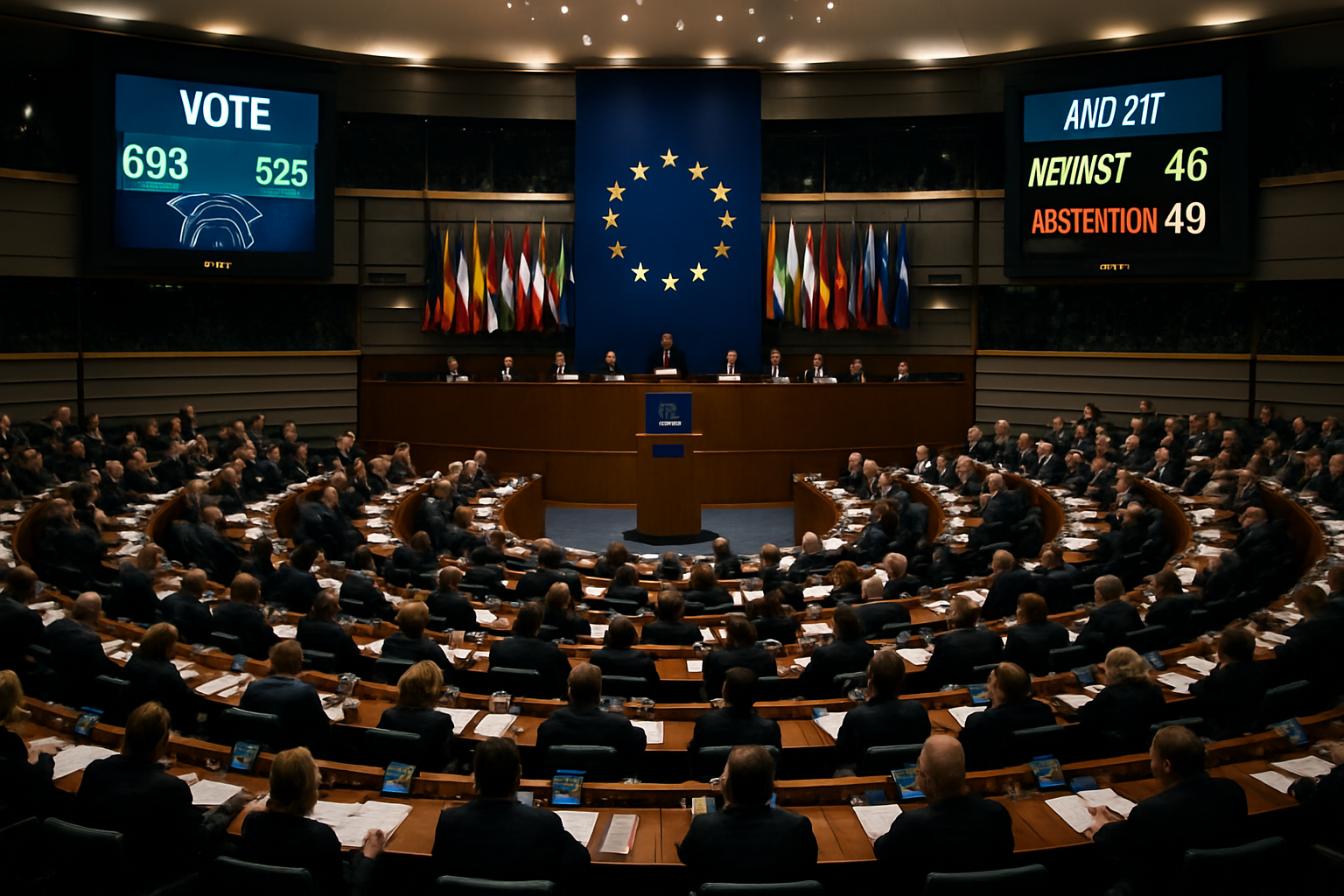
The European Parliament has approved a historic €90 billion support package for Ukraine in an overwhelming vote, marking the largest European Union financial assistance package ever granted to a single nation as the conflict enters its fourth year.
The parliamentary vote, conducted under urgent procedures on Wednesday, February 11, 2026, saw strong support for the comprehensive loan package designed to support Ukraine's defense capabilities and reconstruction needs through 2027. The decision now moves to the EU Council for final adoption.
Presidential Response and Strategic Significance
President Volodymyr Zelensky expressed profound gratitude for the European Parliament's decision, emphasizing that Ukraine will survive thanks to funds that Russia must ultimately reimburse. Speaking from Kyiv, Zelensky described the approval as "precisely the signal that must be sent to the aggressor."
"This is precisely the signal that must be sent to the aggressor. Ukraine will survive thanks to the funds that Russia must reimburse."
— Volodymyr Zelensky, President of Ukraine
The package represents a dramatic escalation in European financial commitment to Ukraine's defense, occurring amid intensified Russian military operations and ongoing diplomatic efforts to end the nearly four-year conflict.
Package Details and Implementation Timeline
The €90 billion loan package covers the critical period of 2026-2027, providing both military funding and civilian budget support. According to multiple European sources, Ukraine is expected to receive its first disbursements beginning in the second quarter of 2026, potentially starting as early as March.
The funding structure divides resources between defense financing for military equipment and operations, and civilian budget support for essential government services, infrastructure repair, and humanitarian assistance. This dual approach reflects the EU's recognition that Ukraine requires both immediate military support and long-term reconstruction capabilities.
European Unity and Notable Divisions
While the package received overwhelming parliamentary support, reflecting broad European solidarity with Ukraine, significant divisions remain within the EU membership. Slovakia, Czech Republic, and Hungary have announced they will not participate in financing the package or interest payments, demonstrating persistent divisions within the European bloc.
This opposition from Central European members highlights the complex political dynamics surrounding EU support for Ukraine, with some nations expressing concerns about the financial burden and geopolitical implications of such extensive assistance.
Military Context and Urgent Need
The parliamentary approval comes during a period of intensified Russian military operations. According to defense analysts, Russian forces captured 481 square kilometers of Ukrainian territory in January 2026, compared to 260 square kilometers in December 2025, showing accelerated territorial gains.
Recent intelligence reports indicate that over 10,000 Russian drones and bombs were launched against Ukrainian targets in January 2026 alone. The systematic targeting of civilian infrastructure during extreme winter conditions has been condemned by NATO leadership as a "winter weapon" strategy designed to pressure Ukrainian civilians.
Humanitarian Crisis and Winter Warfare
The urgency of the EU support package is underscored by the severe humanitarian crisis facing Ukraine during the harsh 2026 winter. Recent Russian attacks on energy infrastructure left over 1,170 buildings in Kyiv without heating during temperatures reaching minus-30°C, affecting millions of civilians.
Ukrainian officials report that more than 17.8 million Ukrainians are currently accessing winter support programs, highlighting the massive scale of civilian hardship. The systematic destruction of energy infrastructure has been characterized by international observers as "energy terrorism" designed to maximize civilian suffering during diplomatic negotiations.
Diplomatic Breakthrough Amid Military Escalation
The EU funding approval occurs alongside significant diplomatic developments. Recent trilateral peace talks in Abu Dhabi between Ukraine, Russia, and the United States achieved a historic prisoner exchange of 314 individuals - the first such swap in five months - and restored US-Russia military communications after a four-year suspension.
Ukrainian Defense Minister Rustem Umerov described these talks as "substantial and productive," with detailed discussions on ceasefire monitoring mechanisms. However, the fundamental sticking point remains the status of eastern Ukrainian territories currently under Russian control.
International Support Framework
The EU package is part of a broader international support framework for Ukraine. Sweden and Denmark have announced a €246 million air defense package featuring advanced Tridon Mk2 systems, while Poland continues to provide fighter jet support for border security operations.
The World Bank has allocated $40 million specifically for Ukrainian energy system restoration, recognizing the critical importance of infrastructure repair for civilian survival and economic recovery. These coordinated international efforts demonstrate sustained Western commitment to Ukrainian sovereignty and territorial integrity.
Nuclear Treaty Context
The EU's historic financial commitment comes amid broader international security concerns, including the February 5, 2026 expiration of the New START nuclear treaty between the United States and Russia. This represents the first time in over 50 years that no nuclear arms control agreement exists between the world's largest nuclear powers.
UN Secretary-General António Guterres has warned that nuclear risks are now "higher than in decades," adding urgency to diplomatic efforts to resolve the Ukraine conflict through negotiated settlement rather than continued military escalation.
Long-Term Implications
The €90 billion package represents more than immediate crisis response; it signals European strategic autonomy and long-term investment in European security architecture. The funding demonstrates EU confidence in Ukraine's eventual victory and statehood persistence regardless of negotiation outcomes.
European officials view the package as essential for maintaining credible deterrence against further Russian territorial expansion while supporting Ukrainian democratic institutions during the most challenging period in the nation's modern history.
Looking Ahead
As the package moves to the EU Council for final ratification, attention turns to implementation mechanisms and coordination with other international assistance programs. The success of this historic financial commitment will largely determine the trajectory of European security policy and the precedent for future collective defense spending.
With the United States having established a June 2026 deadline for comprehensive peace negotiations, the EU's financial commitment provides crucial leverage for diplomatic efforts while ensuring Ukrainian military capabilities remain viable regardless of negotiation outcomes. The package represents Europe's largest ever investment in a single nation's defense, marking a transformative moment in EU strategic policy and international law enforcement.