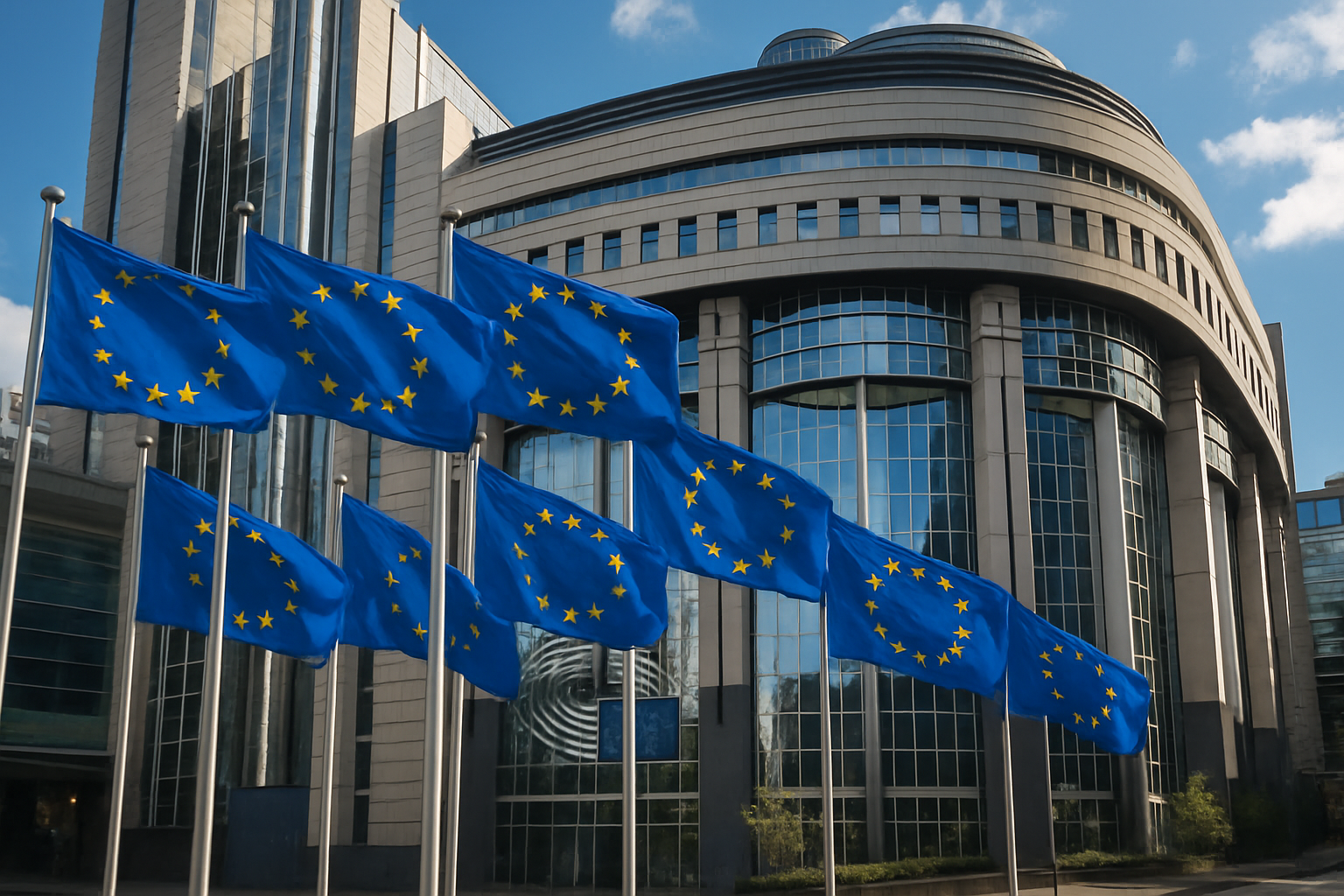
The European Parliament has given its final approval to comprehensive amendments to the Package Travel Directive, marking a significant victory for consumer protection and traveler rights across the European Union as legislative bodies address mounting concerns over travel disruptions and industry accountability.
The historic legislation, approved by parliamentarians on Thursday, March 12, 2026, introduces revolutionary provisions that fundamentally strengthen the rights of travelers who purchase package holidays and organized tours. The amendments specifically expand travelers' rights to cancel bookings without financial penalties under extraordinary circumstances and establish stricter regulations governing travel voucher usage and redemption.
Enhanced Consumer Protections
According to Kristīne Liepiņa, European Parliament press secretary in Latvia, the revised directive significantly expands vacation-goers' rights to cancel travel arrangements free of charge while implementing new voucher utilization regulations that protect consumers from industry exploitation. The legislation comes at a critical time when European travelers have faced unprecedented disruptions from geopolitical conflicts, aviation crises, and climate-related emergencies.
The German Parliament's approval, as reported by Tagesschau, confirms that travelers who have booked package holidays will have simplified access to compensation when cancellations occur. Crucially, the new rules explicitly allow affected travelers to reject vouchers offered by tour operators and instead demand immediate cash refunds, addressing a longstanding consumer grievance where companies used voucher schemes to avoid direct financial compensation.
"These amendments represent the most significant advancement in European travel consumer protection in over a decade. Travelers will no longer be forced to accept vouchers when they are entitled to full refunds."
— Kristīne Liepiņa, European Parliament Press Secretary
Context of Travel Industry Crisis
The parliamentary approval comes against the backdrop of one of the most challenging periods for European travel since the COVID-19 pandemic. Recent months have witnessed the largest coordinated international evacuation operations since the Arab Spring of 2011, with over 500,000 European citizens evacuated from Middle Eastern conflict zones. Airlines cancelled more than 18,000 flights globally, while major aviation hubs including Dubai International Airport faced complete shutdowns due to regional instability.
The travel protection amendments specifically address vulnerabilities exposed during these crises, where traditional travel insurance policies excluded war-related cancellations, leaving individual travelers without recourse unless they had booked through package tour operators offering comprehensive coverage frameworks.
Broader European Policy Landscape
The travel directive approval represents just one component of a broader wave of European Union policy developments across multiple member states. Estonia has achieved remarkable renewable energy leadership with 88% renewable electricity generation in 2024, establishing continental Europe's largest battery storage facility capable of supporting 90,000 households. This environmental leadership aligns with the EU's ambitious climate targets, including the recently approved 90% greenhouse gas emissions reduction goal by 2040.
Meanwhile, migration policy continues to evolve with enhanced cooperation mechanisms allowing smaller groups of member states to advance policies without requiring unanimous consent across all 27 EU countries. Greece has emerged as a leader in coordinating with Germany, Netherlands, Austria, and Denmark to establish external migrant processing centers in Africa, building upon Italy's Albanian model as a template for managing rejected asylum seekers whose countries of origin refuse readmission.
Digital Sovereignty and Economic Independence
The European Union's strategic autonomy initiatives have accelerated significantly, with Slovakia pioneering a €1.3 billion digital euro pilot project that positions the nation as a leader in EU monetary digitalization. This central bank digital currency (CBDC) development represents a fundamental shift away from dependence on US payment systems, particularly addressing concerns about potential "kill switch" scenarios where American financial infrastructure could be weaponized against European interests.
The digital euro initiative operates alongside traditional payment methods while featuring biometric authentication and encrypted transaction protocols designed to provide complete European monetary policy control. This technological sovereignty push extends beyond finance, with Spain implementing world-first criminal executive liability for tech platform violations, while France has escalated enforcement through raids on social media companies' Paris offices.
Travel Industry Transformation
The Package Travel Directive amendments arrive at a moment when the tourism industry faces fundamental transformation challenges. Cyprus recently experienced unprecedented booking cancellations following drone attacks on British military bases, while Croatia has positioned itself as a beneficiary as travelers seek safer European alternatives to traditional Mediterranean destinations.
Industry experts predict that the new legislation will accelerate the shift toward package tours over independent travel arrangements, as operators develop comprehensive coverage frameworks that protect travelers from increasingly complex geopolitical and climate-related disruptions. The amendments specifically mandate that tour operators cannot force customers to accept vouchers in lieu of cash refunds when cancellations occur due to extraordinary circumstances.
Implementation Challenges and Opportunities
The directive's implementation faces several technical challenges, particularly regarding age verification systems that may require biometric authentication infrastructure currently under development across EU member states. Cross-border enforcement will require unprecedented cooperation between national regulatory authorities, while the technology sector struggles with global semiconductor shortages that could delay digital infrastructure deployment until 2027.
However, the legislation also creates significant opportunities for European travel companies willing to invest in comprehensive consumer protection frameworks. Companies that successfully implement the new requirements may gain competitive advantages over international operators that lack similar consumer safeguards, particularly as European travelers increasingly prioritize safety and financial protection when making booking decisions.
International Implications
The European Parliament's action establishes new global standards for travel consumer protection that extend beyond EU borders. As the world's largest single market for tourism services, European regulatory decisions often influence international industry practices and policy development in other regions.
The timing proves particularly significant given ongoing transatlantic tensions over trade policy and regulatory alignment. While the United States pursues bilateral trade deals that bypass multilateral European frameworks, the EU continues to demonstrate leadership in consumer protection standards that may ultimately influence global tourism industry practices regardless of formal trade agreements.
"European leadership in consumer protection creates a template that other regions will likely follow. When you regulate the world's largest travel market, you effectively set global standards."
— European Tourism Industry Analyst
Economic and Social Impact
The travel protection amendments are expected to have far-reaching economic implications across European tourism markets. Spain, which welcomed over 513.6 million tourist nights annually and already benefits from travelers redirecting from less stable destinations, may see additional growth as package tour operators expand offerings with enhanced consumer protections.
The legislation addresses growing concerns about demographic changes affecting European travel patterns. As aging populations seek more predictable and secure travel arrangements, the enhanced protections for package tours may accelerate the sector's growth relative to independent travel booking platforms.
Consumer advocacy groups across Europe have welcomed the parliamentary approval as validation of years of campaigning for stronger traveler rights. The amendments specifically address situations where travelers faced financial losses due to circumstances beyond their control, including geopolitical conflicts, extreme weather events, and public health emergencies.
Future Policy Development
The Package Travel Directive approval signals broader European commitment to consumer-first policy approaches that prioritize individual rights within market-based frameworks. This philosophy extends across multiple policy domains, from digital platform regulation to climate action, where European institutions increasingly emphasize protecting citizens from corporate exploitation while maintaining competitive market conditions.
As implementation begins over the coming months, industry observers expect the legislation to serve as a foundation for additional consumer protection measures addressing emerging challenges in European travel markets. The success of these amendments may influence similar protective legislation in other sectors facing comparable disruption and consumer vulnerability issues.
Looking Forward
The European Parliament's approval of enhanced travel protection rules represents more than technical regulatory adjustment—it demonstrates European institutional capacity to respond effectively to citizen concerns during periods of unprecedented global disruption. As geopolitical instability, climate change, and technological transformation continue reshaping international travel patterns, the EU's proactive approach to consumer protection may prove decisive in maintaining European leadership in global tourism markets.
The legislation takes effect across all EU member states beginning in the second quarter of 2026, with national governments responsible for implementing enforcement mechanisms and ensuring compliance among tourism operators within their jurisdictions. Industry adaptation and consumer awareness campaigns will prove crucial for successful implementation of these historic consumer protection advances.
As Europe continues to navigate complex challenges ranging from energy security to migration management, the travel protection amendments demonstrate that European institutions remain capable of delivering concrete benefits to citizens while maintaining the continent's position as the world's leading tourism destination and regulatory innovator.