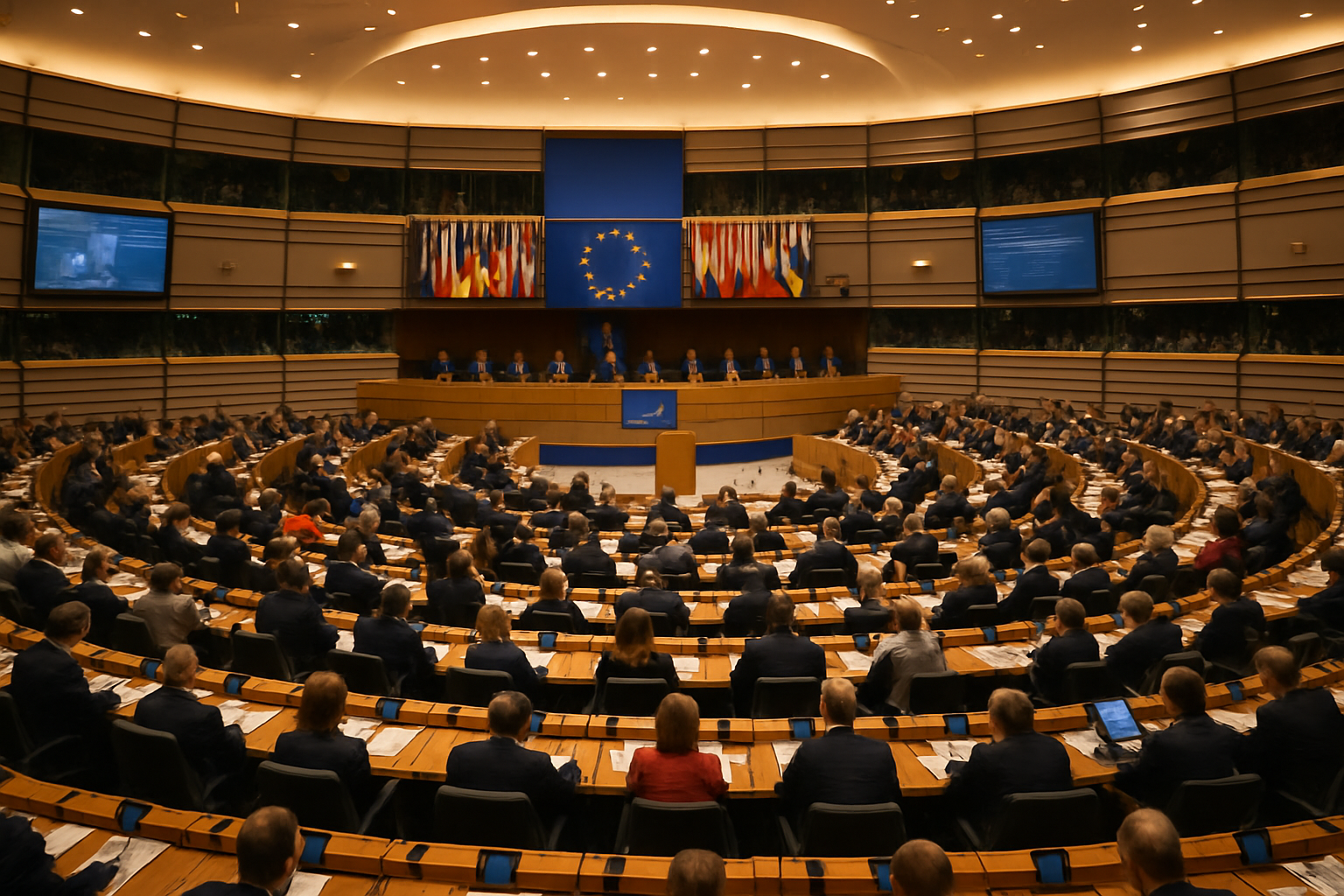
European Union institutions are advancing transformative policies on two critical fronts as MEPs call for accelerated accession negotiations with Eastern European candidates while Commission officials characterize the current period as a "decisive moment" for restructuring EU cohesion policy amid mounting geopolitical challenges.
The European Parliament is actively pushing for faster EU enlargement negotiations with Moldova and Ukraine, according to MEP Siegfried Muresan's announcement following recent parliamentary committee deliberations. This acceleration comes at a time when the European Commission's Executive Vice-President Raffaele Fitto has declared the current period a "decisive moment" for all EU member states in implementing a comprehensive restructuring of European cohesion policy.
Eastern Enlargement Momentum Builds
The push for accelerated negotiations with Moldova and Ukraine represents a significant shift in EU enlargement strategy, building on momentum that has developed throughout 2026. Historical context reveals this acceleration follows extensive groundwork laid in February 2026, when European institutions developed comprehensive strategies supporting eastern regions bordering Russia, Belarus, and Ukraine through the new EastInvest initiative.
The European Parliament's call addresses five priority areas combining cohesion policy with regulatory instruments targeting financing, security, and labor market stability. This represents recognition that border regions require specialized support beyond standard cohesion policies due to unique geopolitical pressures including refugee flows, economic disruption from sanctions, and heightened security requirements.
Simultaneously, the European Parliament has adopted a historic resolution on enlargement strategy, with Serbian sources reporting the institution's comprehensive approach to strengthening EU security through expansion while preventing destabilization of gray geopolitical zones. The enlargement process must remain merit-based, according to parliamentary consensus, ensuring democratic standards are maintained throughout the accession timeline.
Cohesion Policy Restructuring Initiative
Commission Executive Vice-President Raffaele Fitto's characterization of the current period as "decisive" comes amid Austrian parliamentary discussions regarding the comprehensive restructuring of EU cohesion policy. The Austrian Federal Council's EU Committee engaged in detailed discussions with Fitto about realigning cohesion policy frameworks to address contemporary challenges facing member states.
"This represents a decisive moment for all EU member states as we implement fundamental changes to how European cohesion policy operates in the 21st century."
— Raffaele Fitto, Executive Vice-President, European Commission
The restructuring initiative builds upon earlier policy developments from February 2026, when the Commission adopted a comprehensive strategy for eastern regions. That strategy encompassed specialized support mechanisms recognizing that traditional cohesion policy frameworks were insufficient for regions facing extraordinary geopolitical circumstances.
Implementation Challenges and Opportunities
The parallel advancement of enlargement acceleration and cohesion policy reform presents both opportunities and challenges for European institutions. Implementation requires balancing immediate security needs with long-term economic development for eastern regions while maintaining reform momentum amid domestic and external pressures affecting candidate countries.
Evidence from recent months demonstrates the EU's capacity for policy innovation during pressure periods. Croatia's successful absorption of 99.25% of EU funding demonstrates effective implementation when political commitment aligns with technical capacity. Estonia's achievement of 88% renewable electricity with continental Europe's largest battery storage facility shows how member states can leverage European frameworks for transformative development.
Strategic Geopolitical Context
The timing of these developments reflects broader European responses to changing geopolitical realities. With 89% of Europeans demanding greater EU unity according to recent Eurobarometer polling, institutional leaders face unprecedented public support for integration alongside complex implementation challenges.
The enlargement strategy advancement occurs within a framework of enhanced cooperation mechanisms allowing smaller groups of member states to advance policies without unanimous consent. This approach has proven successful in various policy areas and may provide pathways for addressing persistent divisions among member states regarding certain aspects of EU expansion.
Recent developments in EU-candidate country relations demonstrate both progress and ongoing challenges. Armenia's Prime Minister Nikol Pashinyan's March 11 address to the European Parliament highlighted the interconnected nature of regional integration, identifying the "frozen" EU-Georgia political dialogue as a significant obstacle to broader regional European integration.
Democratic Governance and Institutional Resilience
The European Parliament's role in advancing enlargement policy while engaging in cohesion policy restructuring discussions demonstrates institutional resilience during challenging periods. The Parliament's ability to maintain focus on long-term strategic objectives while addressing immediate crisis management requirements reflects democratic institutional strength.
Historical analysis reveals that successful European integration periods have combined visionary policy development with practical implementation mechanisms. The current dual focus on enlargement acceleration and cohesion policy reform follows this pattern, addressing both aspirational goals and operational requirements simultaneously.
The success of current initiatives will be measured through concrete outcomes: whether candidate countries achieve meaningful progress toward membership while existing member states experience enhanced solidarity through reformed cohesion mechanisms. Early indicators suggest positive momentum, though sustained political commitment across electoral cycles remains essential.
Economic Integration and Social Cohesion
The restructuring of cohesion policy occurs alongside broader European economic strategy developments. Recent months have seen the advancement of comprehensive "Buy European" strategies and enhanced coordination mechanisms for critical materials supply chains, reflecting EU efforts to strengthen economic sovereignty while maintaining openness to global partnerships.
Evidence suggests that successful integration of new member states requires sophisticated financial mechanisms beyond traditional cohesion policy frameworks. The experience of eastern regions bordering conflict zones demonstrates the need for specialized instruments combining economic development with security considerations.
Public support data indicates strong European backing for integration initiatives, with 86% of Europeans wanting a stronger global voice according to recent polling. This provides democratic legitimacy for ambitious policy initiatives while creating expectations for tangible results in the coming years.
Future Trajectory and Implementation Timeline
The coming months will be decisive for both enlargement acceleration and cohesion policy reform. Ukraine's 2027 membership aspirations, as articulated by President Zelensky, create concrete timelines requiring unprecedented coordination of conflict resolution, democratic transition, and economic integration processes.
Implementation success will depend on several critical factors: sustained political commitment from member state governments, adequate financial resources allocation, enhanced cooperation mechanisms for controversial policies, and effective coordination between EU institutions and candidate country authorities.
The broader context includes ongoing challenges such as the memory chip crisis affecting smart infrastructure development, climate adaptation requirements, and demographic pressures requiring coordinated European responses. Success in managing these interconnected challenges will influence the EU's capacity for continued expansion and internal cohesion.
As European institutions advance these transformative initiatives, the stakes extend beyond immediate policy outcomes to fundamental questions about the EU's role in 21st-century global governance. The successful integration of enlargement acceleration with cohesion policy reform could establish templates for democratic governance expansion under complex international conditions, with implications extending far beyond Europe's borders.