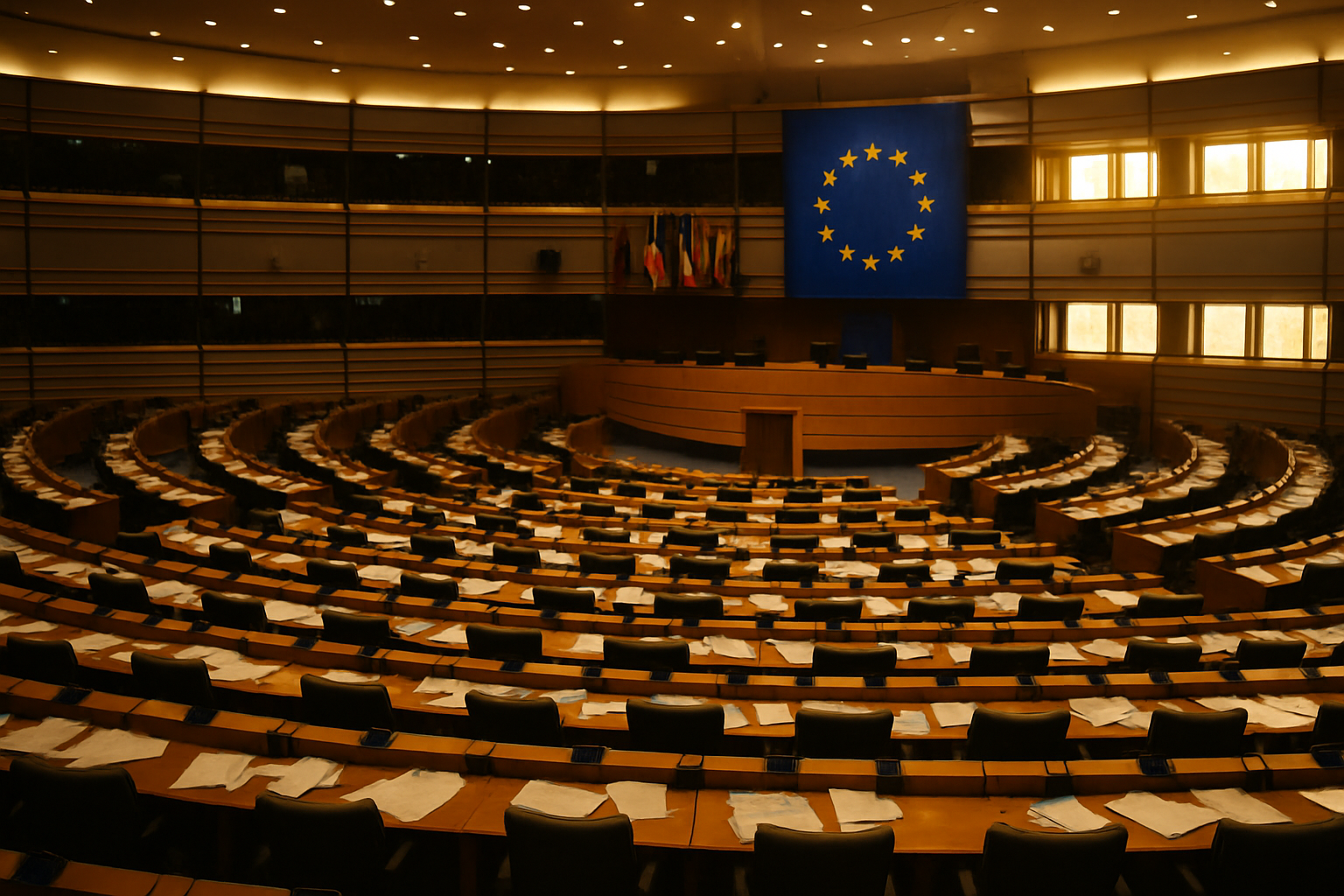
The European Union stands at a critical policy crossroads in late April 2026, grappling with simultaneous challenges across agricultural subsidies, digital regulations, and escalating trade tensions with China that threaten to reshape the bloc's strategic direction for decades.
Multiple sources reveal a convergence of policy pressures testing the EU's institutional capacity and unity. From Romania's push for agricultural subsidy equality to China's explicit warnings over "Made in Europe" initiatives, the 27-nation bloc confronts decisions that will determine whether it achieves strategic autonomy or remains vulnerable to external dependencies.
Agricultural Policy Revolution Gains Momentum
Romania has emerged as a leading voice demanding fundamental reforms to the Common Agricultural Policy (CAP) post-2027, with Secretary of State Emil Dumitru presenting a comprehensive position at the Luxembourg AgriFish Council meeting. The Romanian proposal calls for "continuity of external convergence of direct payments and reduction of gaps in per-hectare support" to ensure "equitable conditions of competition in the European Union."
The agricultural reform push reflects broader tensions within the EU over resource distribution and competitive fairness. Current disparities in agricultural subsidies between Western and Eastern European nations have created structural inequalities that Romanian officials argue undermine the single market's foundational principles.
This agricultural policy debate occurs against the backdrop of unprecedented climate pressures, with January 2026 marking the 20th consecutive month of global temperatures exceeding 1.5°C above pre-industrial levels. The sustained warming represents the longest streak of extreme temperatures in recorded history, forcing agricultural policies to adapt to rapidly changing environmental conditions.
Digital Sovereignty Initiatives Accelerate
Parallel to agricultural reforms, the EU is rapidly advancing its digital sovereignty agenda, with Slovakia's €1.3 billion digital euro pilot project positioning the bloc years ahead of a union-wide rollout. The initiative represents a direct challenge to US payment system dominance and reflects growing European concerns about "kill switch" vulnerabilities in critical digital infrastructure.
European Commission investigations have intensified, with TikTok facing potential billions in penalties under the Digital Services Act for "addictive design" features targeting user dependency. Spain's implementation of the world's first criminal executive liability framework for platform violations has sparked coordinated responses across member states, with Greece, France, Denmark, and Austria developing similar measures.
"The margins are narrowing and we need bold moves for strengthening competitiveness."
— Roberta Metsola, European Parliament President
The digital push extends beyond regulation to infrastructure development. Germany has opened major AI data centers, Sweden launched new AI factories, and Estonia leads with 88% renewable electricity supporting the continent's largest battery storage system. These initiatives collectively represent hundreds of billions of euros in investment toward technological independence.
China Trade Tensions Reach Boiling Point
The most immediate challenge facing EU policymakers comes from Beijing's explicit warnings of countermeasures if the bloc adopts protectionist "Made in Europe" measures. Chinese officials have criticized EU plans to require European content thresholds in strategic sectors including automotive, green technology, and steel production.
China's dominance in critical materials—controlling 60% of production and 90% of refining capacity for lithium, cobalt, and rare earth elements—creates what European officials describe as "kill switch vulnerabilities" for the continent's infrastructure and green transition goals. The EU's response includes the US-EU-Japan Critical Minerals Partnership involving 55 countries and seven African suppliers, but alternative supply chains require years of development and massive infrastructure investment.
The complexity of EU-China relations was highlighted by German Chancellor Friedrich Merz's Beijing visit, which secured 120 Airbus aircraft orders while simultaneously advancing strategic competition policies. This reflects Germany's acknowledgment that China has evolved from a "lucrative market" to a "competitive threat" in high-tech manufacturing, even as commercial relationships remain significant.
Institutional Stress and Democratic Resilience
NATO's consideration of ending annual summits reflects broader alliance strain amid US President Donald Trump's criticism of European defense contributions. Six sources told Reuters that the defense alliance seeks to avoid potentially tense encounters during Trump's final year in office, marking an unprecedented adaptation of institutional frameworks to political pressures.
Despite these challenges, Eurobarometer polling shows 89% of Europeans demanding greater EU unity and 86% wanting a stronger global voice, providing democratic legitimacy for ambitious integration initiatives. This public support contrasts with institutional friction over specific policies, creating both opportunities and pressures for European leaders.
Hungarian Elections and Political Fragmentation
Hungary's political transformation adds another layer of complexity, with the media landscape shifting dramatically following Viktor Orbán's electoral defeat. New leader Péter Magyar has promised to dismantle what critics called Orbán's "propaganda factories," creating opportunities for independent media but also highlighting the challenges of rebuilding democratic institutions after years of state capture.
Poland's experience attempting to create objective, impartial media after similar authoritarian control provides lessons for Hungary's media revolution, though the process has proven more difficult than initially anticipated.
Strategic Implications for European Integration
The convergence of agricultural, digital, and trade challenges tests the EU's capacity for simultaneous reform across multiple sectors. Enhanced cooperation mechanisms allow nine or more member states to advance policies without unanimity, providing institutional flexibility but also risking fragmentation.
March 2027 represents a critical implementation deadline for the "Made in Europe" initiative, requiring coordination across diverse economies with varying levels of Chinese trade exposure. The coming months will determine whether the EU can achieve strategic autonomy without triggering destructive economic warfare with its second-largest trading partner.
Economic and Environmental Context
The policy challenges unfold against complex economic conditions, with the eurozone recording inflation at 1.7% in January—the lowest since 2021—providing fiscal breathing room for ambitious initiatives. However, natural gas prices have surged 24% in Europe, undermining electrification strategies and creating immediate pressure on energy policies.
Memory semiconductor shortages have driven prices up sixfold, affecting European technological competitiveness until new fabrication facilities come online in 2027. These supply chain disruptions highlight the urgent need for technological independence while constraining the resources available for rapid implementation.
Looking Forward: A Template for Global Democracy
The EU's navigation of these simultaneous challenges represents a template-setting moment for 21st-century democratic governance. Success in achieving strategic autonomy while maintaining international partnerships could influence similar initiatives worldwide, while failure risks subordination to US-China systems during a critical period of global economic restructuring.
The stakes extend beyond immediate trade and policy concerns to fundamental questions about democratic societies' capacity to control their economic and technological destinies. As European leaders grapple with these intersecting crises, their decisions will reverberate far beyond continental borders, potentially determining whether democratic governance can adapt to contemporary competitive realities while preserving fundamental values.
The next phase of European integration requires unprecedented coordination across 27 diverse democracies, sustained financial commitments measured in hundreds of billions of euros, and the political will to risk short-term disruption for long-term strategic advantages. Whether European institutions prove capable of this transformation may determine not only the continent's future but also the viability of democratic cooperation in an increasingly multipolar world.