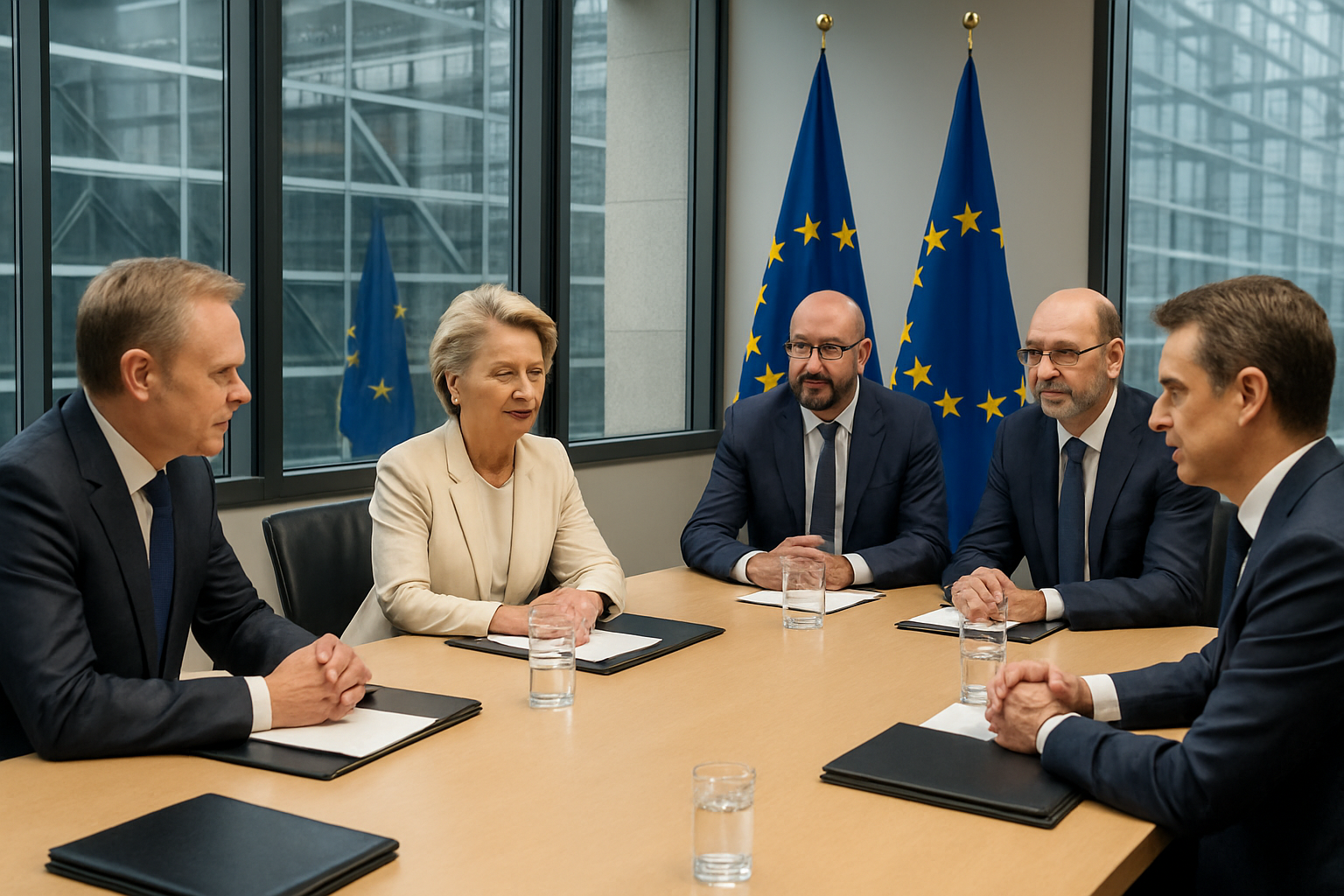
The European Union is implementing a comprehensive strategy to strengthen its strategic autonomy and reduce economic dependencies, with new policies addressing critical raw materials supply, affordable housing initiatives, and accelerated trade negotiations with Southeast Asian partners and the UAE.
The Austrian Federal Council's EU Committee has been examining crucial legislation that will shape Europe's economic future, focusing on supply security for raw materials and affordable housing solutions. These deliberations come as Brussels seeks to diversify its economic partnerships away from over-reliance on traditional major powers.
Trade Diversification Strategy
The European Commission is pressing ahead with accelerated trade negotiations as part of a broader strategy to reduce economic dependence on the United States and China. Current discussions with Southeast Asian nations and the United Arab Emirates represent a significant shift toward multilateral partnerships that could reshape global trade dynamics.
This trade policy evolution reflects growing concerns about supply chain vulnerabilities exposed during recent global crises. The EU's approach emphasizes building resilient partnerships across multiple continents rather than concentrating economic relationships with a few dominant powers.
Critical Materials Security Initiative
The Austrian Federal Council's examination of the EU action plan on critical raw materials highlights a fundamental challenge facing European industry. The continent's current dependence on external suppliers for essential materials has created strategic vulnerabilities that policymakers are now actively addressing.
The initiative encompasses comprehensive measures to secure supply chains for materials essential to Europe's green transition and digital transformation. This includes developing domestic production capabilities, establishing strategic reserves, and creating alternative supply networks with trusted partners.
"The European Union must ensure its strategic autonomy while maintaining open trade relationships that benefit all partners involved."
— EU Policy Official
Housing Policy Framework
Parallel to raw materials security, European leaders are advancing a continental housing plan designed to address affordability crises across member states. The Austrian Federal Council's focus on affordable housing reflects widespread concerns about housing costs that have become a top priority for European citizens.
The European housing initiative aims to coordinate national policies, share best practices, and potentially develop common standards for affordable housing development. This represents an expansion of EU competencies into areas traditionally managed at the national level.
Climate Finance Considerations
Slovakia's Budget Responsibility Council has highlighted the fiscal implications of the transition to climate neutrality by 2050. Their analysis warns that decarbonization could increase public finance deficits by 1.1% of GDP, underscoring the significant budgetary challenges facing EU member states as they pursue ambitious climate goals.
This financial reality is influencing ongoing negotiations over EU budget priorities for 2027, where European Parliament members are struggling to reach consensus on funding allocations between security, competitiveness, and social programs.
Parliamentary Budget Negotiations
The European Parliament faces contentious negotiations over the 2027 EU budget priorities, with MEPs supporting enhanced funding for security, competitiveness, and social programs but disagreeing on specific allocations and funding mechanisms.
These discussions occur against the backdrop of evolving geopolitical challenges and economic pressures that are reshaping European priorities. The need to balance traditional policy objectives with new strategic imperatives is creating complex political dynamics within EU institutions.
Strategic Implications
The convergence of these policy initiatives reflects a broader European effort to adapt to a changing global landscape. The EU's focus on strategic autonomy encompasses economic security, supply chain resilience, and the capacity to pursue independent policy objectives while maintaining international partnerships.
The success of these initiatives will depend on member state cooperation and the ability to balance national interests with collective European objectives. The financial implications of climate policies, combined with trade diversification efforts and housing initiatives, represent a comprehensive approach to addressing multiple policy challenges simultaneously.
Implementation Challenges
Moving forward, EU institutions face significant implementation challenges. Coordinating policies across 27 member states with different economic structures and political priorities requires sophisticated governance mechanisms and sustained political commitment.
The timeline for these initiatives is ambitious, with many policy changes expected to be implemented over the coming years. Success will depend on maintaining political momentum while addressing the practical challenges of policy coordination and resource allocation across the European Union's diverse membership.