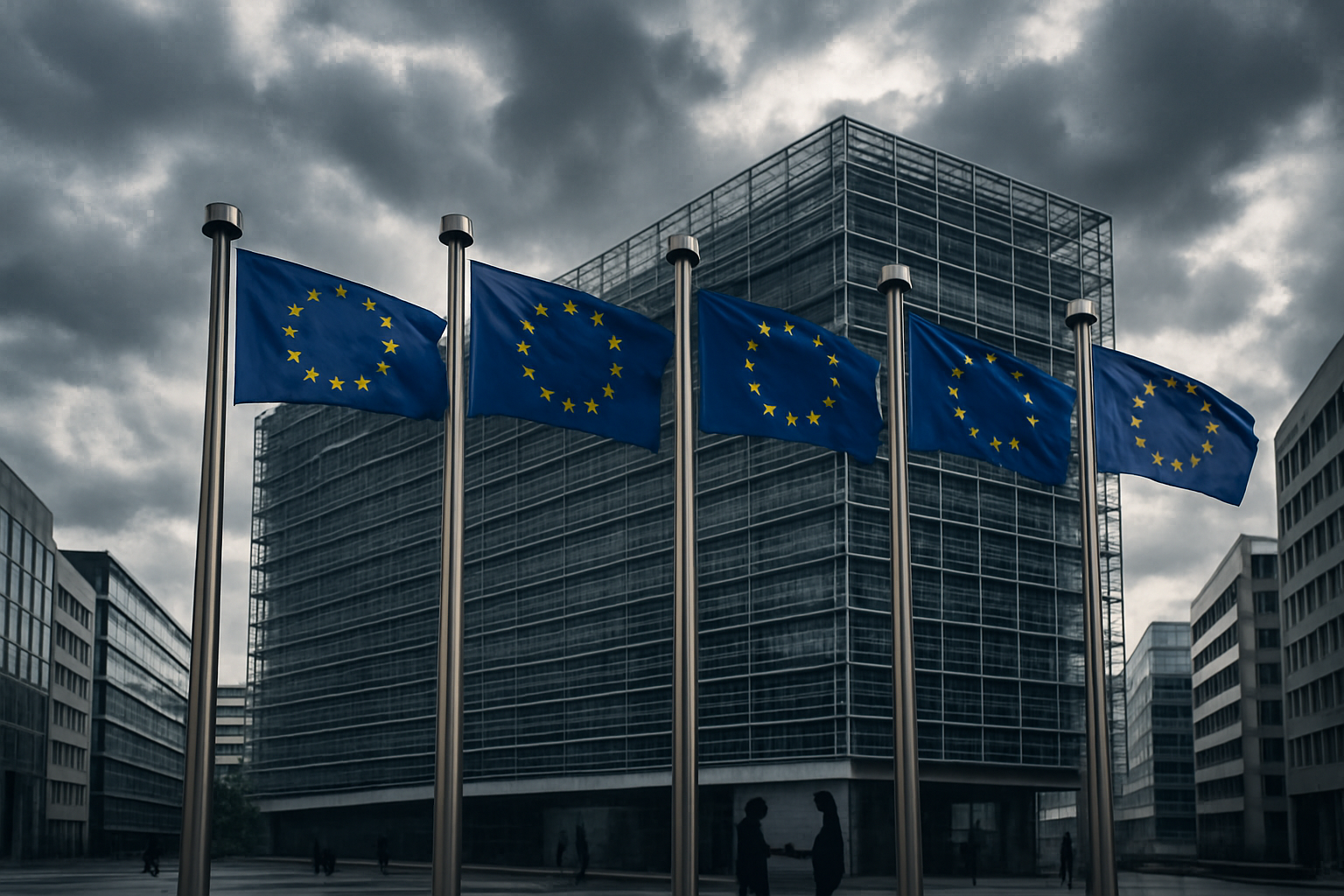
The European Union has demonstrated remarkable institutional adaptability in April 2026, successfully coordinating responses to energy crises, implementing sweeping migration policy reforms, and managing historic political transitions that have fundamentally reshaped the bloc's strategic direction.
After months of unprecedented challenges stemming from Middle East conflicts, internal political upheavals, and global supply chain disruptions, the EU has emerged with strengthened coordination mechanisms and renewed commitment to strategic autonomy. The confluence of events has accelerated decision-making processes and deepened integration in key policy areas.
Energy Security and Coordination Breakthrough
European Commission President Ursula von der Leyen's declaration that EU member states "must coordinate on energy prices" has translated into concrete policy measures following the 22 billion euro increase in fossil fuel bills since the Iran crisis began. The Commission's April 22 proposals for energy price measures represent the most comprehensive coordination effort in the bloc's history.
"We're looking into coordination of member states' gas storage filling to avoid that many member states go to the market at the same time," von der Leyen explained during emergency Brussels meetings. The approach includes coordinated oil stock releases designed to "achieve the largest possible effect" while ensuring emergency measures don't disrupt the single market.
This coordination effort builds on lessons learned during the March 2026 energy crisis, when oil prices surged above $119.50 per barrel and natural gas increased 24% across Europe. Individual member state responses, while necessary for immediate relief, created market inefficiencies that the new coordination framework aims to prevent.
Migration Pact Implementation Accelerates
With just 60 days remaining before the full implementation of the new Migration and Asylum Pact, European member states are intensifying preparations for what represents the most significant transformation of EU migration policy since the 2015-2016 refugee crisis.
Greece has emerged as a leader in implementing enhanced cooperation mechanisms, working with Germany, Netherlands, Austria, and Denmark to establish external processing centers in Africa. These facilities will handle rejected asylum seekers whose countries of origin refuse readmission, building upon Italy's Albanian processing model.
The policy evolution reflects shifting European public opinion, with 89% of Europeans demanding greater EU unity while 72% express border security concerns. Recent Mediterranean tragedies, including the February incident near Chios that claimed 15 lives, have intensified debates over balancing humanitarian obligations with border control effectiveness.
Critics warn that external processing arrangements may violate non-refoulement principles and undermine traditional asylum protections. Human rights organizations are preparing legal challenges, but supporters argue the deterrent effects are necessary for sustainable migration management.
Hungarian Political Revolution Transforms EU Dynamics
The stunning defeat of Viktor Orbán in Hungary's April elections has fundamentally altered European Union dynamics, removing one of the bloc's most persistent internal critics and unblocking crucial policy initiatives.
Péter Magyar's Tisza Party achieved a constitutional supermajority with 138 of 199 parliamentary seats, ending Orbán's 16-year rule with record 80% voter turnout. The victory was particularly striking among young voters aged 18-30, dubbed "Generation Orbán," who decisively rejected nationalist messaging despite coming of age under his leadership.
"We have liberated Hungary. The heart of Europe beats stronger today."
— Péter Magyar, Hungarian Prime Minister-elect
The immediate policy implications are substantial. Hungary's €90 billion Ukraine aid blockade was lifted immediately, ending the deepest EU institutional crisis in recent memory. The frozen €19 billion in EU funding for Hungary is expected to be restored within days, while enhanced cooperation discussions - designed to bypass Hungarian vetoes - are now unnecessary.
European leaders celebrated the result as a victory for democratic governance. The peaceful transfer of power demonstrates that authoritarian systems can be defeated through electoral means when opposition forces unite behind credible alternatives.
Driving License Reform Modernizes Transport Policy
In a less publicized but significant development, the European Union is relaxing regulations for Group B driving licenses, lifting the traditional 3.5-ton limit and providing greater flexibility for caravan users. This technical reform reflects the EU's broader approach to regulatory modernization, removing unnecessary barriers while maintaining safety standards.
The change will affect thousands of drivers across member states, particularly those in recreational vehicle industries and small business operations previously constrained by weight limitations. The reform demonstrates how the EU continues to refine regulations based on practical experience and technological advances.
Strategic Autonomy and Global Positioning
These developments occur within the context of von der Leyen's broader strategic reorientation, including her controversial March declaration that Europe can no longer be "guardian of the old world order." This "realistic" foreign policy approach has gained credibility as the EU successfully managed multiple simultaneous crises.
The bloc's response to Orbán's electoral defeat in Spain has been particularly telling, with Spanish sources indicating that EU leaders want to eliminate veto powers in foreign policy decisions. With Hungary's obstructionist approach removed, there's renewed momentum for qualified majority voting in external relations.
"Hungary has chosen Europe," reflected broader sentiment among EU capitals, where Orbán's defeat is seen as removing a key obstacle to deeper integration and more coherent foreign policy.
Institutional Resilience Under Pressure
The April 2026 developments demonstrate the EU's institutional resilience under unprecedented pressure. Rather than fragmenting under stress from energy crises, migration challenges, and internal political tensions, the union has adapted its decision-making processes and strengthened coordination mechanisms.
The success in managing the Hungarian crisis through democratic elections, rather than institutional confrontation, provides a template for addressing similar challenges. The peaceful resolution reinforces the EU's commitment to democratic values while showing that internal disagreements can be resolved through electoral processes.
Enhanced cooperation mechanisms, initially designed as a workaround for Hungarian obstructionism, are being retained as tools for allowing willing member states to advance integration in specific areas without requiring unanimous consent from all 27 members.
Economic Implications and Recovery
The energy coordination measures are already showing positive effects on market stability. The Hungarian forint appreciated 1.9% to a four-year high against the euro following the election results, reflecting market optimism about resumed EU funding and reduced rule-of-law disputes.
Croatia's achievement of 99.25% EU funding absorption demonstrates the potential benefits of constructive engagement with Brussels, contrasting sharply with Hungary's previous confrontational approach that left billions in development funds frozen.
Estonia continues to lead in renewable energy deployment with 88% renewable electricity and continental Europe's largest battery storage system serving 90,000 households, providing a model for energy independence that other member states are studying.
Future Challenges and Opportunities
While April 2026 represents a breakthrough month for EU coordination and reform, significant challenges remain. The implementation of the migration pact will face practical hurdles, including third-country negotiations for processing facilities and potential legal challenges to external processing arrangements.
Climate targets remain ambitious, with the European Parliament's approval of 90% emissions reductions by 2040 requiring continued coordination on renewable energy deployment, nuclear power expansion, and supply chain diversification to reduce dependence on Chinese critical materials.
The success in managing the Hungarian transition and energy coordination provides momentum for addressing other institutional challenges, including the ongoing debate over qualified majority voting in foreign policy and the development of European strategic autonomy.
As Europe enters the final phase of 2026, the April developments suggest that the union has not only weathered a series of severe crises but has emerged stronger, more coordinated, and more capable of acting decisively in pursuit of common interests. The combination of institutional reform, policy innovation, and democratic resilience positions the EU to play a more assertive role in global affairs while maintaining its commitment to democratic governance and the rule of law.