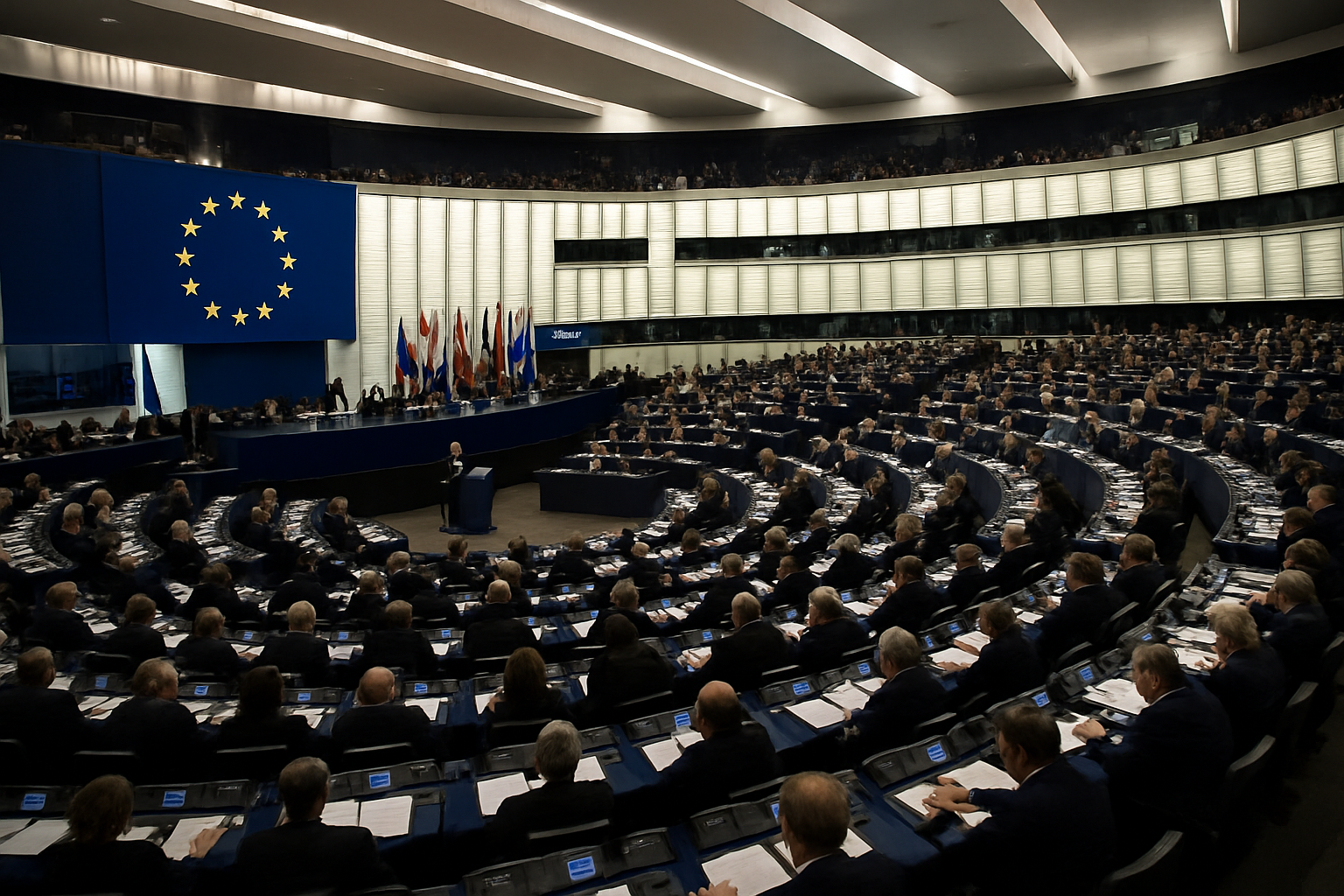
The European Union witnessed significant political and legal developments this week as the European Court of Justice delivered a groundbreaking ruling on religious employment discrimination while the EU Council advanced progressive electoral reforms, highlighting the bloc's evolving approach to workers' rights and democratic participation.
In a landmark decision that could reshape employment law across the EU, the European Court of Justice ruled that leaving a church cannot automatically constitute grounds for dismissal from religiously-affiliated organizations. The case, which originated from a former Caritas worker who left the Catholic Church, establishes crucial precedents for the balance between religious freedom and employment rights in Europe's increasingly secular societies.
Landmark Employment Rights Ruling
The Court's decision addresses a fundamental tension in European employment law: the extent to which religious organizations can impose faith-based requirements on their employees. The ruling emerged from a case involving a Caritas counselor who was dismissed after formally leaving the Catholic Church, a decision that multiple European courts have now determined was unjust.
Legal experts across Germany, Austria, and Switzerland have hailed the decision as a significant step toward modernizing employment protections in an era where traditional religious affiliations are declining across Europe. The ruling suggests that while religious organizations maintain certain rights regarding their core religious functions, they cannot discriminate against employees in secular roles based solely on church membership status.
"This decision recognizes that in pluralistic European societies, employment rights must be balanced against religious freedom in a way that protects workers from arbitrary discrimination."
— Legal analyst, quoted in German media
Democratic Innovation in European Parliament
Simultaneously, the EU Council approved significant reforms to European electoral law, introducing proxy voting provisions for pregnant Members of the European Parliament during late pregnancy and early maternity periods. This progressive measure addresses a long-standing gap in democratic participation, ensuring that elected representatives can maintain their duties during critical periods of their lives.
The reform represents part of broader efforts to modernize European democratic institutions and make political participation more inclusive. Portugal's delegation strongly supported the measure, which passed with overwhelming backing from member states recognizing the need to adapt democratic processes to contemporary social realities.
These electoral reforms build upon recent institutional changes across the EU, including enhanced cooperation mechanisms that have enabled smaller groups of member states to advance progressive policies without requiring unanimous consent from all 27 nations.
Austrian Political Pressure on EU Policies
Adding complexity to the European political landscape, Austria's labor movement has intensified pressure on EU decision-making processes. The Austrian Chamber of Labor (AK) launched a comprehensive campaign criticizing what they term the "28th regime" of European regulations, arguing that current EU policies are bringing deteriorations for workers across the bloc.
Austrian labor representatives have called for a fundamental reorientation of EU priorities, advocating for increased investment in worker protections rather than continued deregulation. This pressure comes as the EU grapples with balancing economic competitiveness concerns against social protection demands from member state populations.
The Austrian position reflects broader tensions within the EU between market liberalization policies and worker protection measures, issues that have gained renewed prominence as the bloc faces increased global economic competition.
Broader European Integration Context
These developments occur within the context of significant institutional evolution across the European Union. Recent memory of major political developments shows the EU navigating complex challenges including the ongoing implementation of the EU-Mercosur trade agreement, constitutional crises with member states, and the acceleration of enlargement negotiations with Eastern European candidates.
The combination of progressive judicial decisions and democratic reforms demonstrates the EU's capacity for institutional adaptation while maintaining its foundational commitments to human rights and democratic governance. The religious employment ruling, in particular, shows how European law continues to evolve in response to changing social conditions across member states.
Institutional Resilience Under Pressure
European institutions have shown remarkable resilience amid mounting pressures from various directions. While some member states have challenged EU authority in specific policy areas, the successful advancement of both judicial precedents and electoral reforms indicates that the European project maintains significant momentum for progressive change.
The EU's ability to simultaneously address complex legal questions about religious freedom and practical concerns about democratic participation demonstrates the maturation of European governance mechanisms. These parallel developments suggest that European institutions can handle multiple complex challenges while maintaining their commitment to fundamental rights and democratic principles.
Implications for Member State Relations
The religious employment ruling will likely have immediate effects across all EU member states, particularly those with significant religiously-affiliated social services sectors. Countries like Germany, where church-affiliated organizations employ millions in healthcare and social services, will need to review their employment practices to ensure compliance with the new European standard.
Similarly, the parliamentary proxy voting reforms may encourage similar democratizing measures at national levels, as European electoral innovations often serve as templates for member state electoral law improvements.
These developments reinforce the EU's role as both a source of legal precedent and a laboratory for democratic innovation, with successful European-level reforms often spreading to national contexts across the continent.
Looking Forward
The convergence of significant judicial and legislative developments this week underscores the dynamic nature of European integration. Despite ongoing challenges in various policy areas, the EU continues to demonstrate its capacity for institutional innovation and progressive legal development.
As European societies continue to evolve, these precedents in both employment law and democratic participation provide frameworks for addressing future challenges while maintaining the EU's commitment to fundamental rights, democratic governance, and social progress. The successful navigation of these complex issues suggests that European institutions remain capable of adaptation and reform in response to changing societal needs.