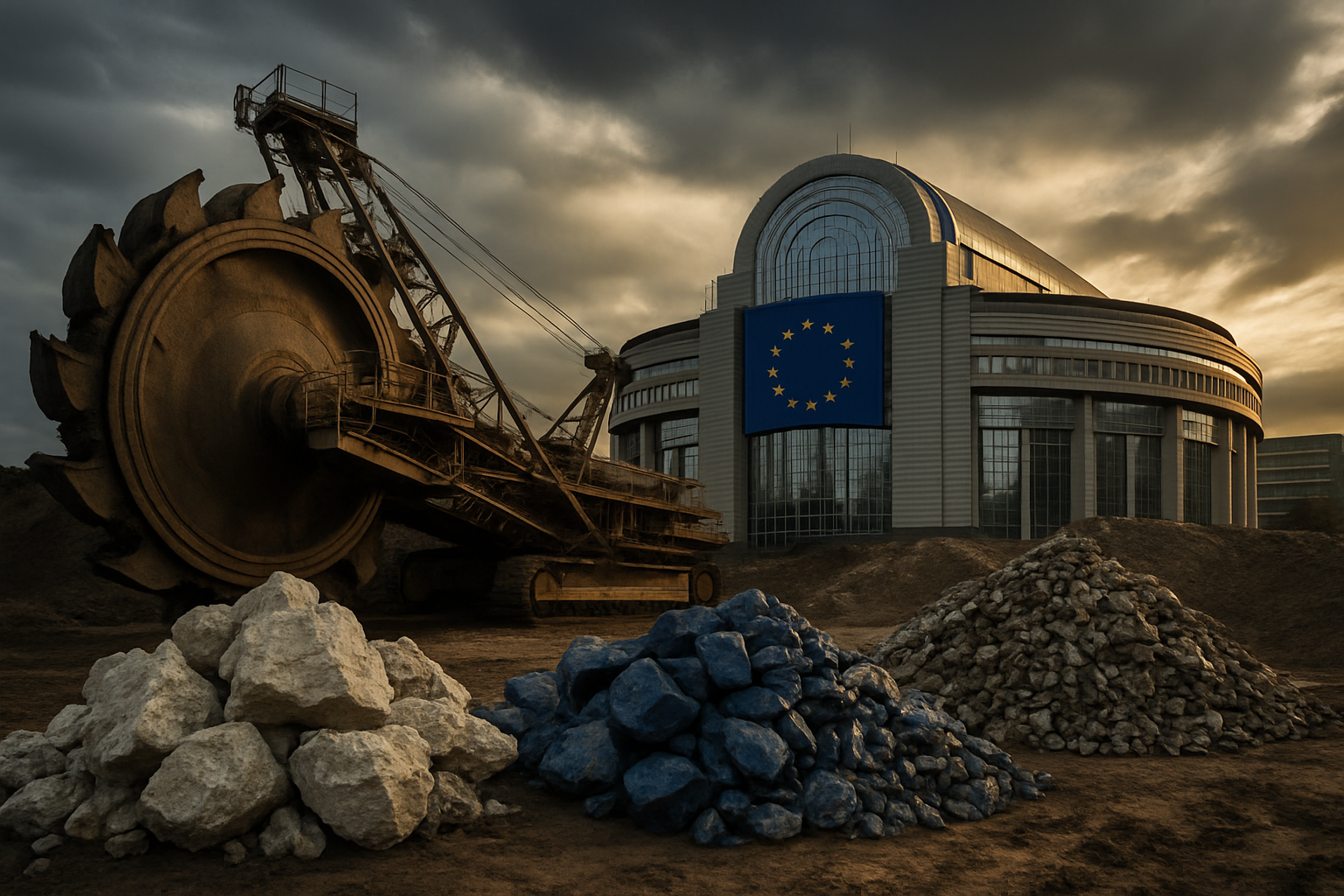
European Union auditors have issued a stark warning that the bloc's ambitious climate goals are in jeopardy due to a critical shortage of raw materials, with the EU remaining dangerously dependent on China for the minerals essential to its green transition.
The warning comes as EU auditors highlight the bloc's continued reliance on a narrow circle of suppliers for materials crucial to building a low-carbon economy. Despite ongoing efforts to diversify supply chains, China maintains an overwhelming dominance in the critical raw materials market, controlling approximately 60% of global production and an staggering 90% of global refining capacity.
The Scale of EU's Dependency Challenge
The European Union's ambitious climate transition plans require massive quantities of critical raw materials including lithium, cobalt, rare earth elements, and other minerals essential for renewable energy technologies, electric vehicle batteries, and clean energy infrastructure. However, current supply chain realities expose a fundamental vulnerability in the bloc's green strategy.
According to the latest audit findings, the EU's efforts to secure alternative supply sources have fallen significantly short of targets. While Brussels has announced various initiatives to reduce dependency on Chinese suppliers, implementation has been slow and the results insufficient to meet the growing demand driven by accelerated decarbonization goals.
The timing of this warning is particularly significant, coming amid broader geopolitical tensions and increasing concerns about supply chain security. Recent developments in the Asia-Pacific region have demonstrated both the vulnerability of current arrangements and potential alternatives, with Japan successfully conducting the world's first deep-sea rare earth mining trial just days ago, extracting materials from 6,000 meters depth off Minamitorishima island.
Critical Materials at the Heart of Climate Strategy
The raw materials in question are not merely commodities but the fundamental building blocks of Europe's climate future. Lithium powers electric vehicle batteries, rare earth elements are essential for wind turbine magnets and solar panels, while cobalt and nickel are crucial for energy storage systems that will enable the renewable energy grid of tomorrow.
Current projections indicate that demand for these materials will increase exponentially as the EU races to meet its 2030 and 2050 climate targets. The bloc aims to become climate neutral by 2050, requiring a transformation of virtually every sector of the economy from transport and energy to manufacturing and construction.
However, the audit reveals significant gaps between ambition and implementation. Several key initiatives designed to boost European raw materials production and processing capacity are running behind schedule, while alternative supplier agreements have failed to materialize at the scale required.
Geopolitical Implications and Strategic Risks
The raw materials dependency extends beyond mere economic considerations into the realm of strategic autonomy and geopolitical security. China's dominant position in critical minerals processing gives Beijing significant leverage over European climate policies and economic planning.
This dependency has become increasingly problematic as global tensions rise and supply chain vulnerabilities become more apparent. Recent geopolitical developments, including various international disputes and trade tensions, have highlighted how quickly secure supply arrangements can become uncertain.
The European Union has recognized these risks and launched several initiatives aimed at reducing dependency, including the Critical Raw Materials Act and various partnership agreements with alternative supplier countries. However, the audit findings suggest these efforts require significant acceleration and expansion to meet the timeline demands of climate goals.
Industry Response and Alternative Solutions
European industries have begun responding to supply chain concerns by investing in recycling technologies, developing alternative materials, and exploring domestic production possibilities. However, these solutions face significant technical, economic, and regulatory challenges that limit their short-term impact.
Recycling of critical materials from electronic waste and end-of-life batteries offers promise but currently operates at a fraction of the scale needed. Domestic mining projects face lengthy approval processes and environmental concerns, while alternative supplier relationships require years to develop and scale.
The recent success of Japan's deep-sea mining trial offers a glimpse of potential technological solutions, but such innovations remain years away from commercial viability and would require massive investment in new technologies and infrastructure.
Immediate Actions Required
The audit report emphasizes that immediate action is required across multiple fronts to address the raw materials challenge. This includes accelerating diplomatic efforts to secure alternative supplier agreements, fast-tracking domestic production projects, and significantly increasing investment in recycling and alternative material technologies.
European policymakers are also being urged to consider strategic stockpiling of critical materials and to develop contingency plans for supply disruptions. The report suggests that current inventory levels are insufficient to weather significant supply chain interruptions that could derail climate transition timelines.
Additionally, the audit recommends strengthening coordination between member states to avoid competition for limited resources and to maximize the effectiveness of collective procurement efforts.
Future Implications for Climate Policy
The raw materials warning carries profound implications for European climate policy and the credibility of the bloc's green transition commitments. Without secure access to essential minerals, many key climate initiatives could face delays or require significant modification.
This challenge also highlights the interconnected nature of climate policy, trade relationships, and geopolitical strategy. The EU's climate goals cannot be achieved in isolation but require careful coordination with broader economic and foreign policy objectives.
The audit serves as a wake-up call that climate transition is not merely a matter of political will and financial investment but also depends critically on securing the physical materials that will power the green economy of tomorrow. As the deadline for climate targets approaches, addressing the raw materials challenge has become an urgent priority that will determine the success or failure of Europe's climate ambitions.