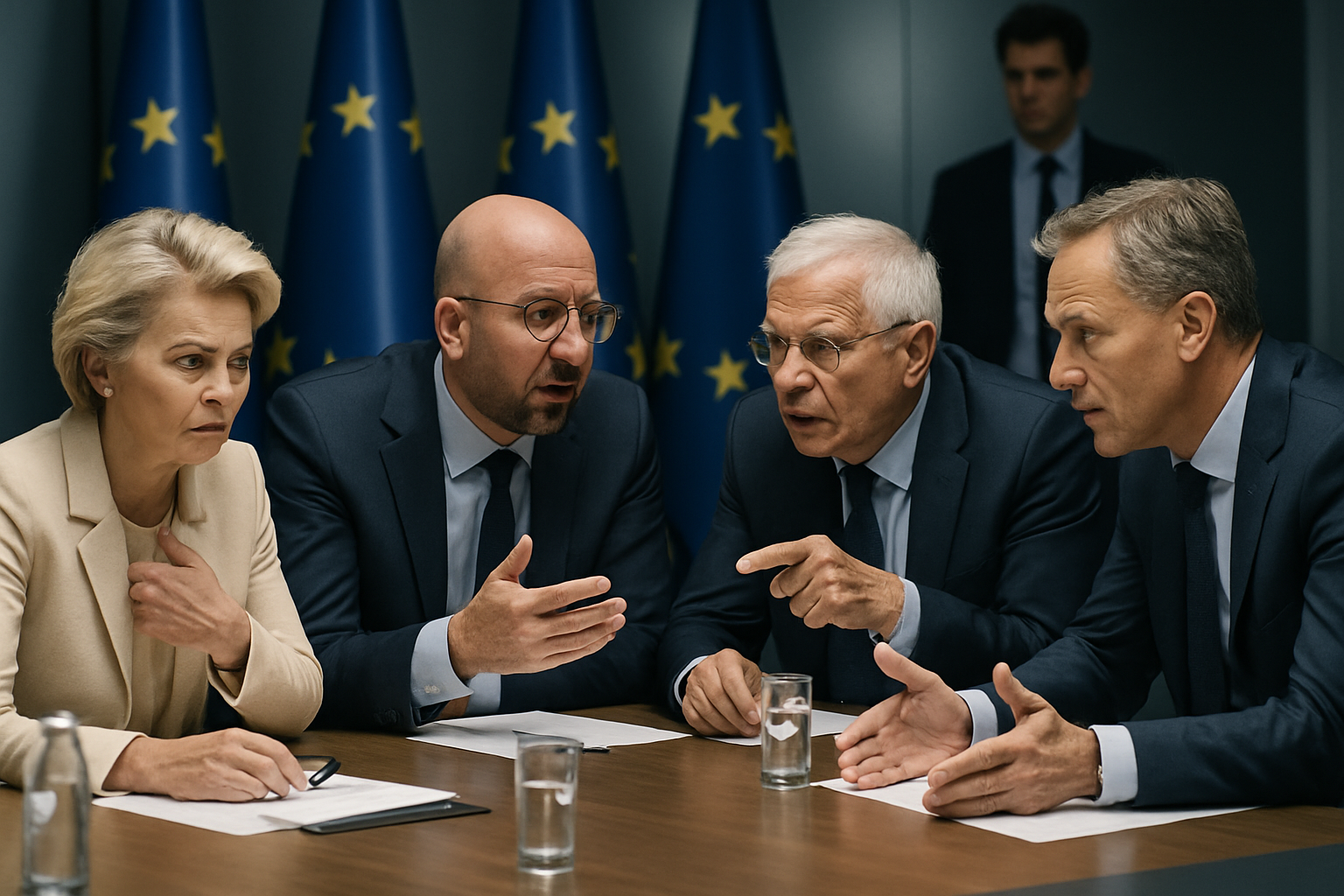
European Commission President Ursula von der Leyen was forced to publicly recommit to international law principles after her controversial declaration that the EU could no longer be the "guardian of the old world order" triggered a constitutional crisis within the bloc and drew sharp criticism from member states.
The crisis erupted when von der Leyen's March 9 remarks about moving beyond traditional diplomatic frameworks sparked immediate pushback from EU member states, particularly Spain, whose Prime Minister Pedro Sánchez warned that "the world is changing, but the values and principles of Europe should not change."
The controversy comes at a critical moment for the European Union as it grapples with multiple simultaneous crises: the ongoing Middle East conflict following Iran's Supreme Leader's death, internal divisions over energy policy, and fundamental questions about the bloc's role in global governance.
Von der Leyen's Controversial Remarks
Speaking at what sources describe as a closed-door meeting, von der Leyen declared that the international rules-based system "has disappeared and will not return," marking what analysts call a watershed moment in European strategic thinking. The Commission President argued for moving beyond traditional diplomatic frameworks, acknowledging their limitations when facing actors who systematically violate international law.
The remarks represented a dramatic departure from the EU's traditional commitment to multilateral diplomacy and international legal frameworks, reflecting growing frustration with the bloc's ability to respond effectively to global crises ranging from the Ukraine war to the current Middle East conflict.
Parliamentary Revolt and Member State Opposition
The European Parliament received von der Leyen's subsequent appearance with what observers described as "criticism and frialdad" (coldness), demonstrating the rupture created by her words. The Parliament's reaction highlighted the deep divisions within EU institutions about how to balance idealistic principles with pragmatic responses to global disorder.
Spanish authorities led the charge against von der Leyen's position, with officials emphasizing that international legality must be respected as the alternative is "barbarism." This stance reflected broader concerns among member states that abandoning established legal frameworks would undermine the EU's moral authority and democratic values.
The crisis exposed the tension between what von der Leyen termed "realistic" foreign policy and the European values that have traditionally guided the bloc's international engagement.
Energy Policy Divisions Deepen Crisis
Parallel to the international law controversy, the EU faces significant internal divisions over energy policy responses to the Middle East crisis. Portuguese sources indicate the bloc is preparing measures to lower energy prices as the conflict has driven oil prices above $100 per barrel and natural gas prices up 24% in Europe.
The energy crisis has exposed continued European vulnerabilities despite years of diversification efforts following Russia's invasion of Ukraine. With the Strait of Hormuz—through which 40% of global oil transits—under threat, EU member states are scrambling to coordinate a unified response while managing domestic political pressures over energy costs.
Von der Leyen's Strategic Retreat
Facing mounting pressure from multiple fronts, von der Leyen was compelled to issue a clarification guaranteeing that the European Union "will always respect" the principles of international law. This public retreat came just two days after her initial controversial statements, highlighting the speed with which opposition mobilized within EU institutions.
The episode represents one of the most significant challenges to von der Leyen's leadership since she assumed the Commission presidency, forcing her to navigate between calls for more assertive European action and the bloc's foundational commitment to international legal frameworks.
Broader Implications for EU Unity
The controversy occurs against the backdrop of several other challenges testing European unity. Recent memory entries reveal ongoing tensions over sanctions policy, energy security, and the bloc's response to various international crises. Hungary's continued resistance to EU consensus on various issues, combined with growing calls for "enhanced cooperation" to bypass unanimity requirements, suggests deeper structural problems within the union.
The von der Leyen controversy also intersects with broader questions about European strategic autonomy. Earlier this month, she declared nuclear power abandonment a "strategic error" and announced EU investment guarantees for nuclear projects, reflecting a broader recalibration of European policy in response to geopolitical pressures.
Constitutional and Democratic Concerns
Legal experts and EU parliamentarians have raised concerns that abandoning international law principles could fundamentally alter the EU's character as a democratic union based on rule of law. The swift backlash to von der Leyen's remarks demonstrated the continued importance of these principles among member state governments and EU institutions.
The crisis has reinforced calls for greater democratic oversight of Commission decision-making, particularly on issues of fundamental importance to the bloc's identity and values. Some members of the European Parliament have questioned whether the Commission President has the authority to unilaterally redefine the EU's relationship with international law.
Looking Forward
While von der Leyen's clarification may have temporarily defused the immediate crisis, the underlying tensions between pragmatic power politics and principled diplomacy remain unresolved. The EU continues to face pressure to develop more effective responses to international crises while maintaining its commitment to democratic values and international law.
The episode highlights the challenges facing European leaders as they attempt to navigate an increasingly complex international environment while preserving the institutional and moral foundations that have underpinned European integration since World War II.
As the Middle East crisis continues to unfold and energy prices remain volatile, the EU will need to demonstrate that it can maintain both effectiveness and principled leadership—a balance that von der Leyen's controversial remarks briefly called into question but which her subsequent clarification sought to restore.