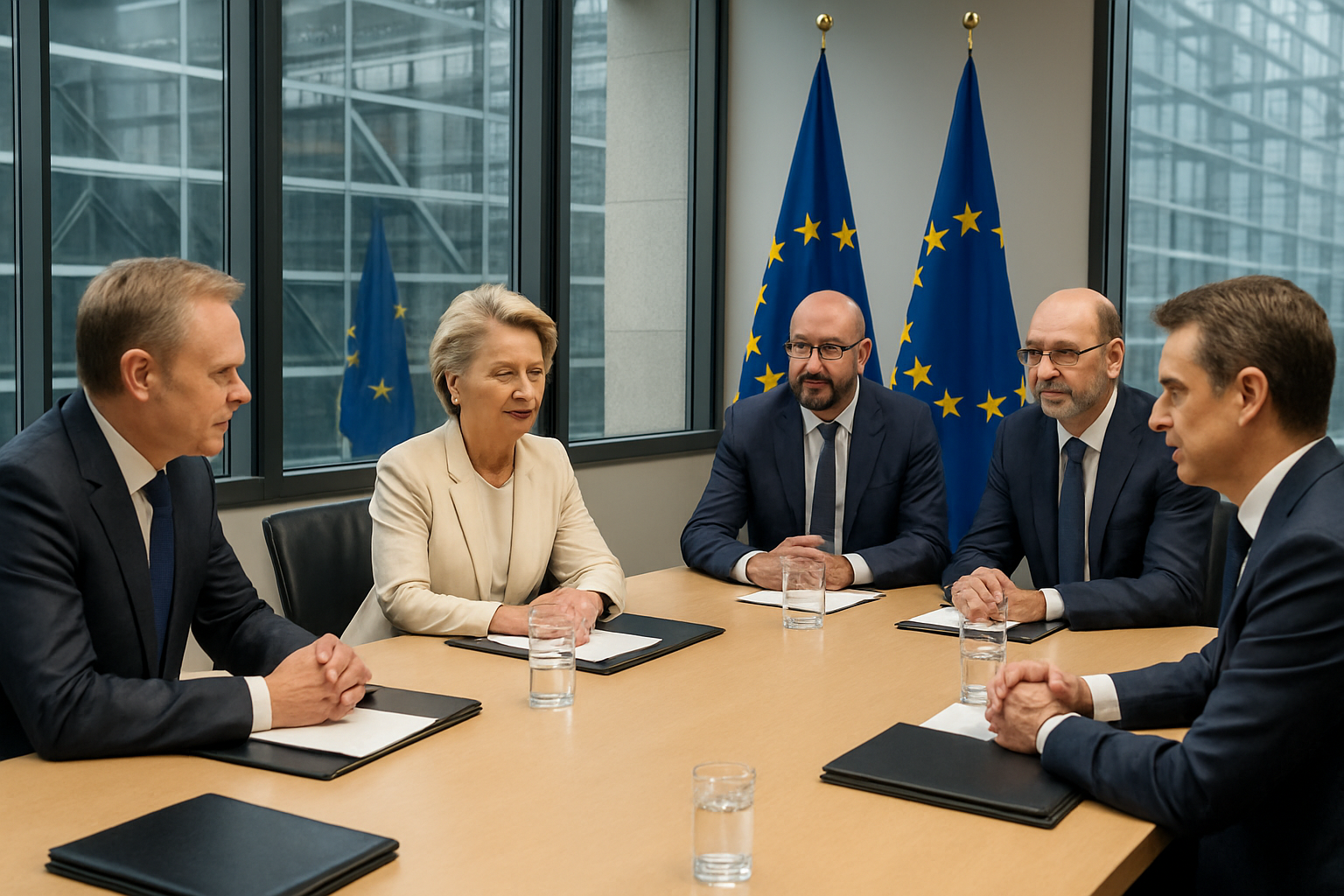
The European Union announced significant policy developments this week, including expanded naval operations in the Red Sea and Indian Ocean, substantial budget reallocations benefiting member states, and approval of a new talent platform initiative designed to enhance European competitiveness in the global workforce.
In a coordinated announcement on Monday, EU member states revealed plans to expand operations in the Red Sea and western Indian Ocean while maintaining strategic restraint regarding potential missions in the Strait of Hormuz. This measured approach reflects the Union's commitment to maritime security while avoiding escalation in the already volatile Persian Gulf region.
Romania Secures Major Cohesion Policy Funding
European Commission Vice-President Roxana Mînzatu announced that Romania ranks fourth among EU member states in terms of reallocated funds from the Union's Cohesion Policy for the 2021-2027 multiannual budget, securing €2.8 billion in strategic investments.
"These funds have been allocated largely toward the economic zone, competitiveness, new technologies, and industry support, as well as training and qualification for the workforce."
— Roxana Mînzatu, European Commission Vice-President
The substantial reallocation demonstrates the EU's adaptive approach to addressing contemporary challenges through its cohesion mechanisms. According to Mînzatu's statement to Digi24, the funding targets multiple strategic sectors including defense industry development and dual-use infrastructure projects that can serve both civilian and military purposes.
This funding allocation aligns with the broader European strategic autonomy agenda, addressing critical gaps in technological competitiveness while strengthening regional economic resilience. The dual-use infrastructure component particularly reflects lessons learned from recent geopolitical tensions and supply chain vulnerabilities.
EU Talent Platform Receives Final Approval
The Council of the European Union provided final approval for establishing the EU Talent Platform, completing the legislative process for this significant initiative designed to enhance European competitiveness in the global talent marketplace. The platform represents a comprehensive approach to addressing skills shortages across member states while promoting intra-EU mobility.
The talent platform initiative emerges from recognition that European demographic challenges and evolving economic demands require coordinated responses. With aging populations across multiple member states and emerging technology sectors demanding specialized skills, the platform aims to optimize talent allocation throughout the Union.
This development complements existing European integration mechanisms, including recent enhanced cooperation frameworks that have enabled smaller groups of member states to advance policies without requiring unanimous consent from all 27 members.
Naval Operations and Regional Security
The announcement of expanded Red Sea and Indian Ocean operations reflects the EU's growing role in maritime security amid ongoing regional instabilities. The decision to avoid missions in the Strait of Hormuz demonstrates strategic caution given the critical importance of this waterway for global energy supplies and the potential for escalation.
These naval deployments occur within a broader context of European strategic autonomy discussions, as member states increasingly coordinate independent security responses while maintaining alliance commitments. The maritime focus addresses both immediate security concerns and long-term European interests in maintaining open sea lanes crucial for trade and energy security.
Enhanced Cooperation Mechanisms
These policy developments occur within the framework of enhanced cooperation mechanisms that have gained prominence as tools for European integration. Recent Eurobarometer polling shows 89% of Europeans demand greater EU unity, providing democratic legitimacy for initiatives that bypass traditional unanimity requirements when necessary.
The enhanced cooperation approach has proven successful in previous initiatives, including the European Public Prosecutor's Office and PESCO defense cooperation. This mechanism allows willing member states to advance integration in specific policy areas while maintaining the overall European framework.
The talent platform approval and cohesion fund reallocations demonstrate how these mechanisms can address practical challenges facing member states while preserving European unity despite varying national priorities and circumstances.
Strategic Context and Implementation
These announcements reflect the EU's evolution from reactive crisis management to proactive strategic planning. The coordination of naval security operations with economic development initiatives and talent mobility programs illustrates a comprehensive approach to European integration challenges.
Implementation will require sustained coordination across diverse member state administrations and economic structures. The success of these initiatives depends on maintaining balance between national sovereignty and collective European objectives, particularly as external pressures from global competition and security challenges continue to evolve.
The Romanian funding example demonstrates how European institutions can adapt cohesion mechanisms to address contemporary strategic priorities while preserving the fundamental principles of solidarity and convergence that underpin EU integration.
Looking Forward
These policy developments establish important precedents for European integration in an era of complex global challenges. The combination of security coordination, economic support, and talent mobility initiatives reflects a mature approach to addressing interconnected challenges through institutional innovation.
Success in implementing these initiatives will influence broader debates about European strategic autonomy and the Union's role in global governance. The talent platform, in particular, could serve as a model for addressing demographic and economic challenges that affect multiple regions worldwide.
As European institutions adapt to 21st-century governance challenges, these announcements demonstrate the potential for democratic coordination to address complex problems while maintaining institutional legitimacy and member state sovereignty. The coming months will be crucial for translating these policy commitments into operational realities that benefit European citizens and strengthen the Union's global position.