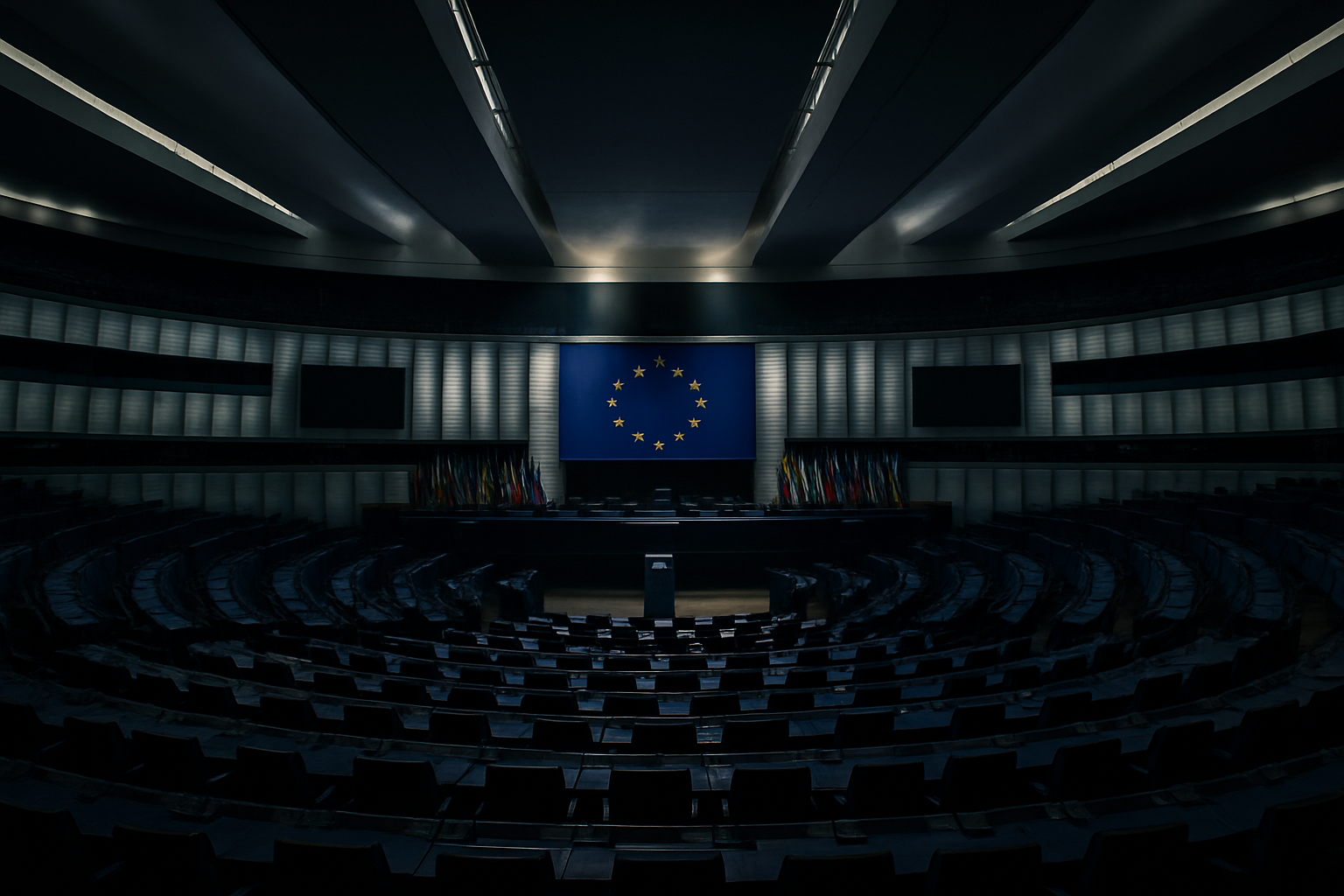
The European Parliament voted Monday to suspend implementation of the landmark EU-US trade agreement, marking an unprecedented response to the constitutional crisis triggered by the US Supreme Court's rejection of President Trump's global tariff program and his subsequent escalation to maximum 15% tariffs.
The decision represents the most serious institutional response to American trade policy uncertainty since World War II, with European lawmakers citing "chaos" and unpredictability in US economic governance as grounds for halting what would have been the world's largest bilateral trade framework.
Constitutional Crisis Triggers European Response
The suspension follows the Supreme Court's historic 6-3 ruling that struck down Trump's global tariff program under the International Emergency Economic Powers Act (IEEPA). Chief Justice John Roberts, writing for the majority, applied the "major questions doctrine" to declare that IEEPA "does not authorize the president to impose tariffs" without explicit congressional authorization for actions of "vast economic and political significance."
Trump's immediate response—calling Supreme Court justices "a disgrace to our nation" and "disloyal to the Constitution"—represented the most severe presidential attack on the judiciary in modern American history. Within hours, he escalated global tariffs to 15% using Section 122 of the Trade Act of 1974, the maximum legal level allowed for 150 days without congressional approval.
"The uncertainty following the latest tariff announcements from Trump is enormous—now the vote is being postponed."
— German Parliamentary Source, as reported by Tagesschau
European Parliament's Unprecedented Action
Bernd Lange, the German Social Democrat who chairs the European Parliament's Trade Committee, emerged as the leading voice calling for the suspension. Sources close to the committee describe "major parliamentary group support" for freezing the agreement due to American policy volatility.
Irish Justice Minister Helen McEntee emphasized that the government is seeking "absolute clarity" on the fresh US tariff developments before proceeding. The Romanian Parliament's website reported that European lawmakers suspended the ratification process "pending clarifications from Washington regarding the impact of the US Supreme Court decision."
This marks only the second time the European Parliament has suspended a major US trade agreement, reflecting the extraordinary nature of the American constitutional crisis and its implications for international commerce.
Historical Context and Precedent
The EU-US trade agreement, negotiated over multiple years, was designed to eliminate thousands of tariffs and create the world's largest free trade zone. The framework promised significant economic benefits, with the Slovak Parliament noting the agreement included a 15% tariff on most European exports to the United States under normal circumstances.
However, the Supreme Court ruling and Trump's defiant response have fundamentally altered the landscape. The decision represents the first major defeat of Trump's economic agenda in his second term and establishes crucial precedent limiting presidential emergency powers for trade policy.
Broader Constitutional Implications
The crisis extends far beyond trade policy. Congressional resistance has been mounting, with the House of Representatives passing legislation 219-211 to end Trump's Canada tariffs, marking the first significant bipartisan rebuke of his trade policies in the second term. Six Republican defections joined nearly all Democrats in challenging presidential trade authority.
European Commission officials have demanded that the United States honor its 2025 joint declaration trade commitments, declaring that "an agreement is an agreement." The breakdown in policy predictability has serious implications for international business planning and government strategic development.
Market and Economic Impact
Despite initial Wall Street gains following the Supreme Court ruling—with the Nasdaq rising 0.90% and the S&P 500 gaining 0.69%—markets moderated once Trump announced replacement tariffs. Oil prices increased by over $1 per barrel, reflecting energy market tensions.
The uncertainty has created administrative chaos, with US Customs halting IEEPA tariff collection but providing no explanation for delays or information about potential refunds for the billions already collected. European companies are calculating massive potential refund claims, adding to the administrative burden.
International Reactions and Strategic Implications
China welcomed the Supreme Court ruling as vindication, strengthening Beijing's position before Trump's planned March 31-April 2 visit. Meanwhile, China announced zero-tariff access for 53 African countries beginning May 1, representing the most comprehensive China-Africa trade expansion in history and providing a stark contrast to American trade volatility.
The suspension occurs amid broader questions about American democratic institutions and their ability to provide stable governance for international partnerships. European officials are privately concerned about the precedent of using trade measures for diplomatic pressure against allies.
Looking Ahead: Institutional Resilience Test
The 150-day limit on Trump's Section 122 tariffs creates urgent pressure for congressional action. Trump must either secure legislative approval or find alternative policies, setting up a critical test of American institutional resilience and separation of powers.
For Europe, the suspension represents more than a trade dispute—it's a fundamental reassessment of transatlantic relationships during an era of American institutional stress. The decision will influence European approaches to strategic autonomy and economic sovereignty for years to come.
"This is the most serious constitutional crisis since Watergate, testing fundamental separation of powers and presidential emergency authority limits."
— Constitutional Law Expert Analysis
The European Parliament's action establishes precedent for how democratic partners respond to constitutional crises in allied nations. Success or failure in managing this unprecedented situation will influence global approaches to institutional checks, rule of law, and multilateral cooperation frameworks essential for 21st-century governance.
As the 150-day countdown begins, the stakes extend well beyond trade policy to encompass fundamental questions about democratic governance, international stability, and the future of the transatlantic partnership that has anchored the global order since World War II.