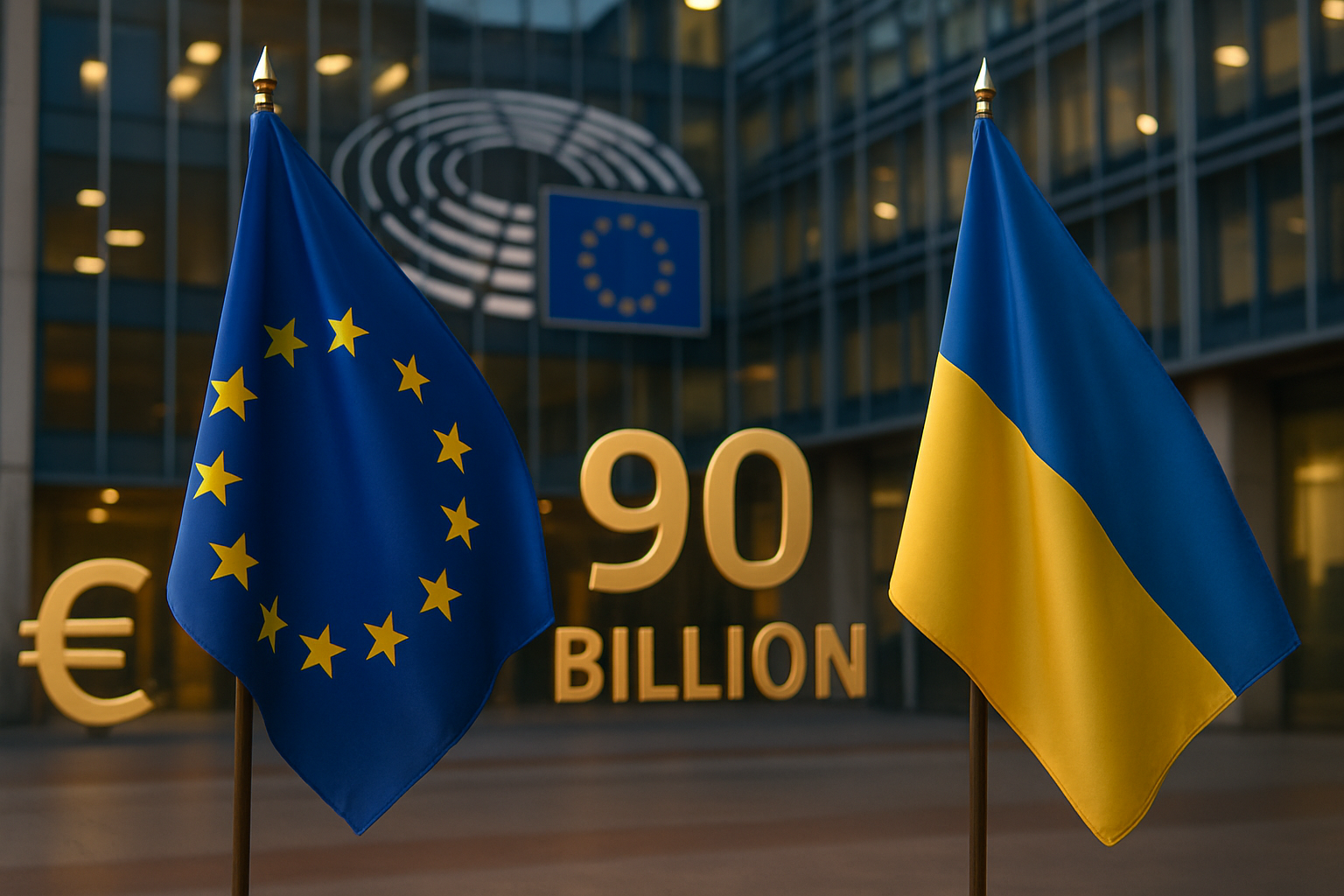
European Union member states have approved the final details of a historic €90 billion loan mechanism for Ukraine, marking the largest financial assistance package in EU history as Kyiv faces mounting defense costs and budget pressures in its nearly four-year conflict with Russia.
The EU Council's decision on Wednesday, February 4, 2026, represents a crucial step toward providing Ukraine with long-term financial stability for both military operations and essential public services. The comprehensive loan framework will be divided between defense funding and civilian budget support over the next two years.
Loan Structure and Implementation Timeline
According to EU Council statements, Ukraine is expected to begin receiving the first disbursements in the second quarter of 2026, with payments potentially starting as early as March. The loan mechanism addresses Ukraine's dual challenge of financing its armed forces while maintaining basic government operations and public services.
The Bulgarian news source Dnevnik.bg confirmed that the EU Council made the necessary decisions to release the funds, with Kyiv set to receive new resources following the completion of parliamentary procedures. The loan will provide critical breathing room for Ukraine's strained finances as the country continues to resist Russian aggression.
Romanian media outlet G4Media reported that EU ambassadors reached agreement on the loan details specifically to enable Ukraine to finance its military while covering significant budget deficits that have emerged during the prolonged conflict.
European Solidarity Despite National Divisions
The approval demonstrates European unity despite varying national positions on the conflict. However, Slovakia's Aktuality.sk revealed that Slovakia, Czech Republic, and Hungary will not participate in financing the loan or covering interest payments, highlighting ongoing divisions within the EU regarding support for Ukraine.
The decision comes against the backdrop of recent polling data showing 89% of Europeans demanding greater EU unity and 86% wanting a stronger global voice for the bloc. This financial commitment represents a concrete manifestation of European solidarity in the face of security threats.
Strategic Context and Timing
The loan approval occurs during a critical period of diplomatic activity. Just as the EU was finalizing this financial support, Russia launched what Ukrainian energy company DTEK described as the "most powerful blow" of 2026 against Ukraine's energy infrastructure, leaving over 1,170 buildings in Kyiv without heating during extreme winter conditions with temperatures dropping to minus-30°C.
This massive Russian attack, involving hundreds of missiles and drones, broke an informal energy infrastructure truce that had been in place ahead of trilateral peace talks scheduled for February 5-6 in Abu Dhabi involving Ukraine, Russia, and the United States.
Military and Economic Pressures
The loan mechanism addresses Ukraine's escalating financial needs as the conflict intensifies. Russian forces have accelerated territorial advances, capturing 481 square kilometers in January 2026 compared to 260 square kilometers in December 2025, according to the Institute for Study of War.
Ukraine faces extraordinary military expenditures while maintaining civilian government operations. The country launched over 10,000 defensive actions against Russian drones and missiles in January 2026 alone, demonstrating the scale of defensive operations requiring sustained financing.
Broader European Financial Context
The Ukraine loan decision coincides with broader EU discussions about defense spending. European policymakers are actively considering a €430 billion crisis fund allocation for defense financing as military expenditures strain public finances across member states. This reflects a fundamental shift in European security priorities following Russia's invasion of Ukraine.
The eurozone's inflation decline to 1.7% in January 2026 provides some fiscal breathing room for such major financial commitments, though defense spending debates occur amid complex budget negotiations for upcoming EU budget cycles.
Implementation Challenges and Next Steps
The EU Council now seeks rapid agreement with the European Parliament to enable the first disbursements early in the second quarter of 2026. This legislative process represents the final hurdle before funds can begin flowing to Ukraine's treasury.
The loan framework must balance immediate military and civilian needs with long-term reconstruction planning. Ukraine continues to receive winter support, with over 17.8 million Ukrainians currently accessing government assistance programs amid ongoing infrastructure attacks.
International Implications
The EU's commitment comes as international diplomatic efforts intensify. The United States, through Special Envoy Steve Witkoff, is participating in Abu Dhabi peace talks, while maintaining military aid to Ukraine. The loan mechanism ensures European financial support continues regardless of diplomatic outcomes.
This financial commitment also strengthens EU strategic autonomy efforts, reducing dependence on external partners while maintaining solidarity with Ukraine. The loan framework represents both immediate crisis response and long-term investment in European security architecture.
The €90 billion loan mechanism demonstrates the EU's commitment to Ukraine's sovereignty and territorial integrity while providing concrete financial tools to sustain resistance against Russian aggression. As Ukraine prepares to receive these crucial funds, the loan represents both immediate relief and long-term partnership between European nations and their eastern neighbor facing existential challenges.