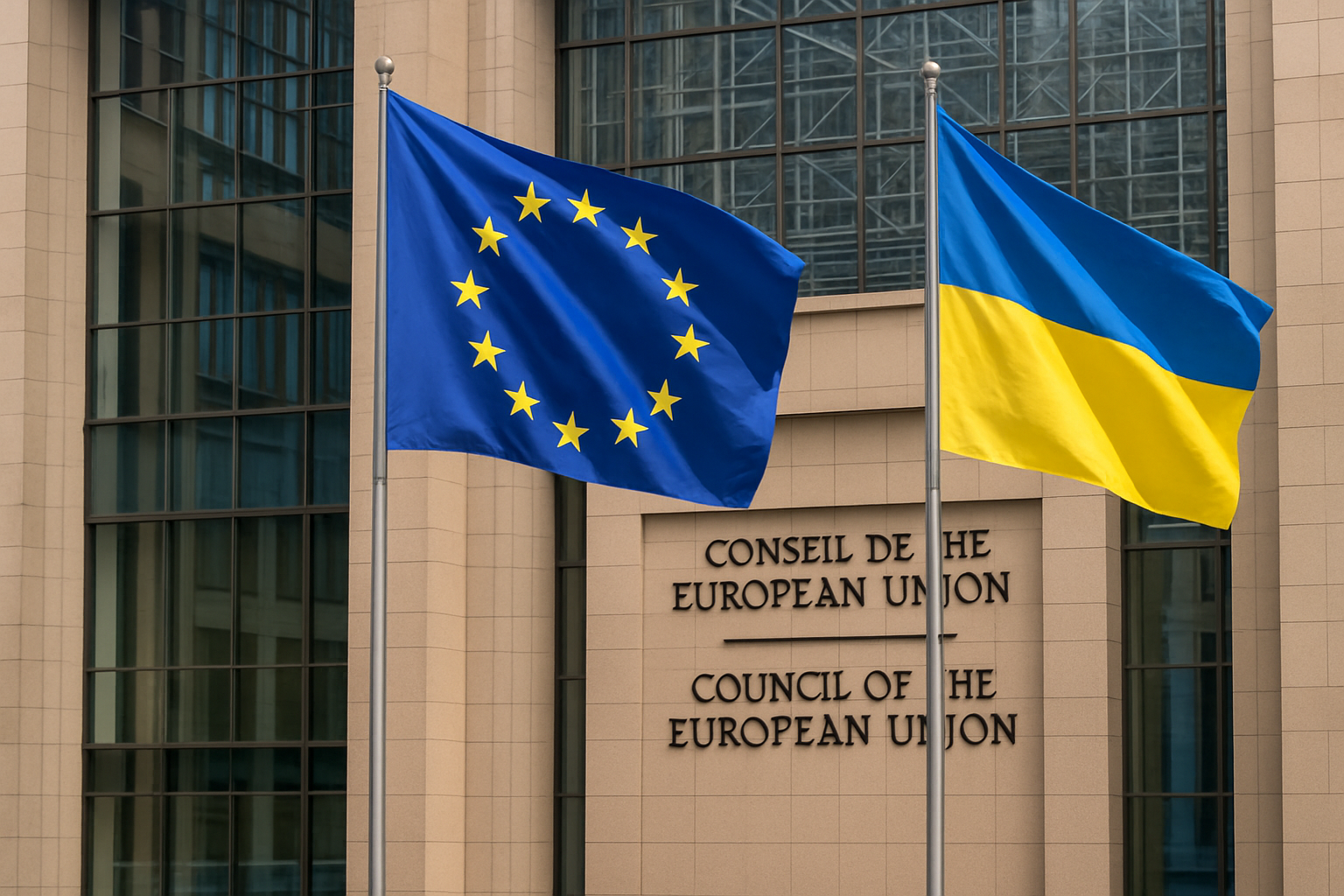
European Union ambassadors on Wednesday approved the disbursement of a historic €90 billion ($144 billion CAD) loan package to Ukraine, marking the largest single-nation financial assistance program in EU history after Hungary lifted its months-long veto.
The breakthrough came after Hungarian Prime Minister Viktor Orbán ended his blockade of the aid package following his Fidesz party's unexpected defeat in the April 12, 2026 elections. The loan, originally approved by the European Parliament in February with a 458-140-44 vote, had been stalled by Hungary's insistence on resolving the Druzhba oil pipeline dispute.
Pipeline Dispute Resolution Clears Path
The crisis centered on the Druzhba pipeline, which has been offline since January 27, 2026. Hungary and Slovakia claimed Ukraine deliberately manipulated oil supplies as "political blackmail," while Ukraine maintained that Russian drone attacks damaged the infrastructure, requiring extensive repairs.
"We compcount on Europe to provide what is necessary for the effective protection of lives and the advancement of full European integration of Ukraine," Ukrainian President Volodymyr Zelensky said in response to the loan approval.
"The loan, which was approved by the European Council in December, had been halted by a Hungarian veto amid a dispute over oil flows via the Druzhba pipeline."
— France 24 International News
Slovakia had declared an oil emergency in February, releasing 250,000 tons of strategic reserves and suspending diesel exports to Ukraine to prioritize domestic supply. Both Hungary and Slovakia remain the only EU countries still dependent on Russian oil under special sanctions exemptions.
Historic Financial Package Details
The €90 billion loan package represents the most comprehensive EU financial assistance program ever allocated to a single nation. The funding will cover Ukraine's defense procurement and civilian reconstruction needs for the 2026-2027 period, providing critical support as the conflict enters its fifth year.
At a meeting of EU member state ambassadors in the COREPER II format in Brussels, amendments to the EU's multiannual financial framework—the final legislative document required to finalize the loan—were approved, along with the 20th package of sanctions against Russia.
The package structure divides funding between military support for equipment and operations, and civilian budget support for essential services and reconstruction efforts. First disbursements are expected to begin in the second quarter of 2026, potentially starting as early as March.
European Unity Crisis Resolved
The resolution ends what Lithuanian Foreign Minister Kestutis Budrys had characterized as the EU becoming "Budapest's hostage." The crisis had created the deepest institutional divisions within the EU since the Russian invasion began, threatening the bloc's ability to maintain unified support for Ukraine.
European Council President António Costa had issued an unprecedented direct letter to Budapest demanding Hungary honor its previous commitments. The crisis had accelerated discussions about enhanced cooperation mechanisms that would allow willing member states to proceed without requiring unanimity.
Despite the broad European Parliament approval, Slovakia, Czech Republic, and Hungary had refused to participate in financing the loan, exposing persistent East-West divisions within the EU over burden-sharing and geopolitical implications.
Humanitarian and Military Context
The loan approval comes amid intensifying military pressure on Ukraine. Russian forces have accelerated territorial gains, capturing 481 square kilometers in January 2026 compared to 260 square kilometers in December 2025—an 85% increase representing the fastest expansion in months.
Ukraine continues to face systematic attacks on civilian infrastructure, with over 1,170 Kyiv buildings still lacking adequate heating following Russian "energy terrorism" campaigns. Ukrainian nuclear plants were forced to halt electricity production for the first time since the conflict began.
President Zelensky has disclosed that 55,000 Ukrainian soldiers have been officially killed, with a "large number" missing in action. International estimates suggest actual casualties may be 2-3 times higher than officially reported.
Diplomatic Implications
The resolution comes as trilateral Ukraine-Russia-US peace negotiations remain indefinitely suspended due to the Iran crisis consuming American foreign policy attention. February 2026 had witnessed significant diplomatic breakthroughs, including a 314-prisoner exchange and restoration of US-Russia military communications after a four-year suspension.
The Trump administration had established a June 2026 deadline for peace talks with a Washington venue, potentially involving presidential-level engagement. However, competing Middle East priorities have derailed this diplomatic momentum.
"Ukraine expected to receive first disbursements in second quarter 2026, potentially starting March."
— European Union Financial Framework
Nuclear Governance Crisis Backdrop
The loan approval occurs against the backdrop of an unprecedented nuclear governance crisis. The New START treaty between the US and Russia expired on February 5, 2026, marking the first time in over 50 years without bilateral nuclear constraints between the superpowers, who control 80% of global nuclear weapons.
UN Secretary-General António Guterres has warned of a "grave turning point" with nuclear risks now at their "highest in decades." The restored military communications between Pentagon and Russian General Staff represent the only remaining formal diplomatic channel between the nuclear superpowers.
Strategic Evolution and International Support
Ukraine has evolved from an aid recipient to a security provider, deploying over 200 military specialists to Middle Eastern nations including the UAE, Qatar, Jordan, Bahrain, and Kuwait to share expertise in combating Iranian Shahed drone attacks—the same weapons that have devastated Ukrainian infrastructure.
Beyond the EU package, international support continues to flow. Sweden and Denmark have committed €246 million for air defense systems, Germany has provided 35 Patriot missiles, and the UK has revealed four operational military repair facilities in Ukraine with a fifth planned.
Long-term Implications
The successful resolution of the aid package crisis strengthens the EU's credibility as a strategic security actor while exposing institutional vulnerabilities that require ongoing reform. The package represents a fundamental investment in European strategic autonomy and confidence in Ukrainian statehood persistence.
The €90 billion commitment, combined with broader international support totaling over €100 billion, provides Ukraine with unprecedented financial leverage for both immediate defense needs and long-term reconstruction efforts estimated at $831 billion by the World Bank.
As Ukraine faces continued military pressure and systematic civilian targeting that violates international humanitarian law, this historic financial package ensures the country can maintain its resistance while building the foundation for eventual reconstruction and European integration.
The resolution demonstrates that despite deep internal divisions and institutional challenges, the European Union retains the capacity to deliver on its most significant commitments when fundamental security interests are at stake, setting important precedents for collective action in 21st-century crisis management.