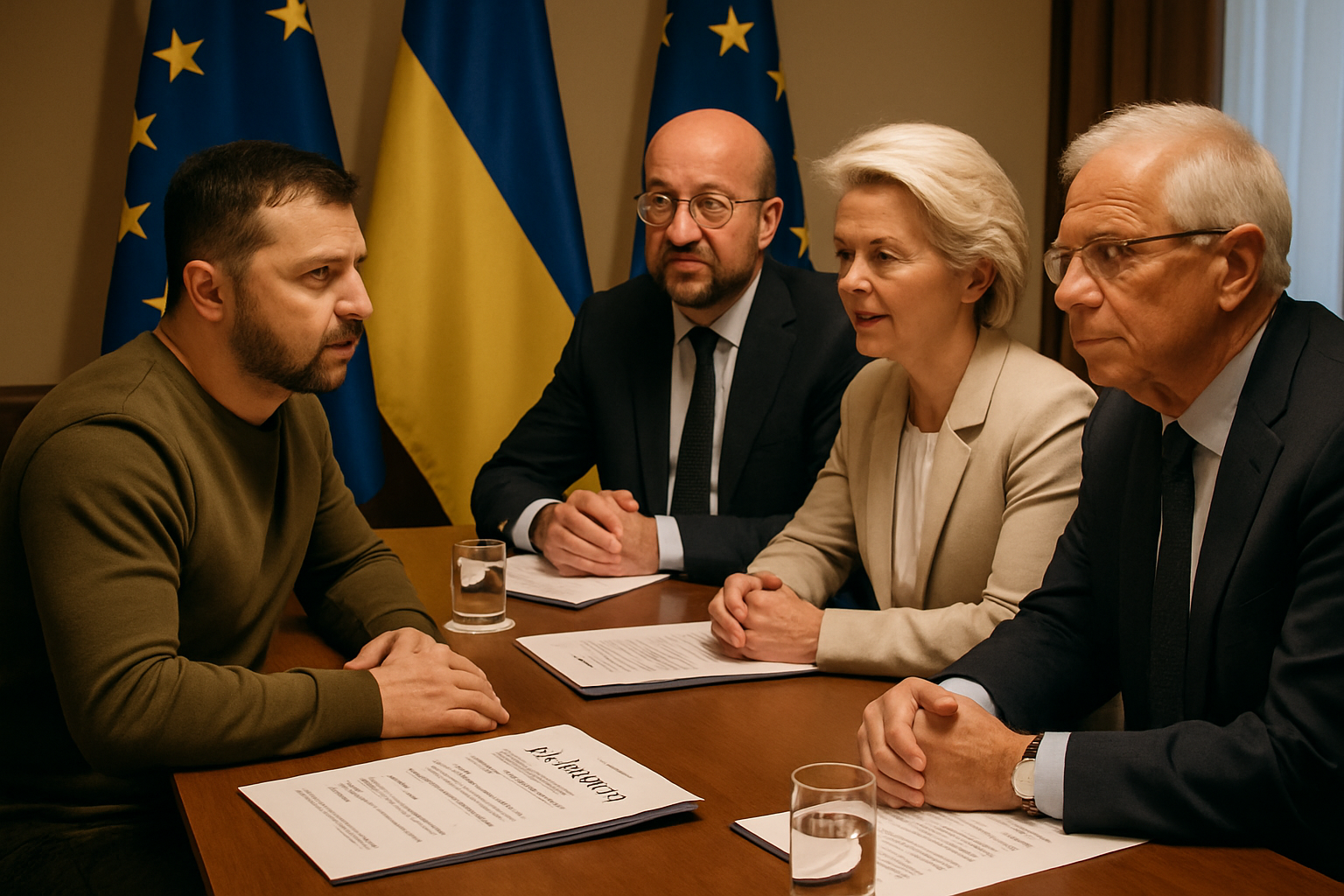
European Union leaders are edging closer to approving the release of a historic €90 billion aid package for Ukraine, with EU foreign policy chief Kaja Kallas expressing optimism about "positive decisions" on disbursing the long-delayed funds.
The massive financial assistance package, which represents the largest single-nation aid commitment in EU history, has been blocked for months due to disputes over the Druzhba oil pipeline. However, recent developments suggest a breakthrough may be imminent as Ukraine announces completion of pipeline repairs and EU foreign ministers prepare crucial votes on aid distribution.
Druzhba Pipeline Crisis Resolution
The key obstacle to releasing the aid package has been the ongoing Druzhba pipeline dispute between Hungary, Slovakia, and Ukraine. The pipeline, which supplies Russian oil to Central Europe, went offline on January 27, 2026, creating a diplomatic crisis that has paralyzed EU decision-making for months.
Hungarian Prime Minister Viktor Orbán and Slovak leaders have accused Ukraine of deliberately halting oil transit as "political blackmail," while Ukrainian officials maintain that Russian drone attacks damaged the infrastructure, requiring extensive repairs. This dispute prompted Hungary to threaten vetoing both the €90 billion aid package and the EU's 20th sanctions package against Russia.
According to recent reports from Swedish and Austrian media, Ukrainian President Volodymyr Zelensky has now announced that repairs to the Druzhba pipeline have been completed. However, he has conditioned the pipeline's reopening on the EU's release of the frozen aid package, creating a potential face-saving solution for all parties involved.
EU Foreign Ministers Signal Breakthrough
EU foreign policy chief Kaja Kallas, speaking to Swedish media, indicated that the resolution of the pipeline issue could unlock the aid package. "After the Hungarian election, there is new momentum," Kallas told reporters, referring to the recent electoral changes in Hungarian politics.
The timing appears crucial, as EU foreign ministers are set to debate the situation in Luxembourg, with expectations that "positive decisions" regarding the aid release could emerge from these discussions. The European Parliament has already approved the package with a strong 458-140-44 vote, demonstrating broad European support for Ukrainian assistance.
Historic Scale of Aid Package
The €90 billion loan represents unprecedented financial support for Ukraine, covering the 2026-2027 period for both defense procurement and civilian reconstruction efforts. The package would provide Ukraine with crucial resources for:
- Military equipment and ammunition purchases
- Infrastructure reconstruction projects
- Energy system restoration
- Civilian budget support
- Long-term economic stabilization
Despite the package's approval by the European Parliament, implementation has been stalled by EU unanimity requirements, which give individual member states effective veto power. Slovakia, the Czech Republic, and Hungary have all refused to participate in the financing arrangements, highlighting persistent divisions within the EU over burden-sharing for Ukrainian support.
Additional Support from Baltic Nations
While the main aid package remains frozen, individual EU member states continue to provide substantial assistance to Ukraine. Latvia's government recently approved an additional €70 million reallocation for military aid to Ukraine, demonstrating continued commitment from Baltic nations despite broader EU delays.
The Latvian Defense Ministry's proposal, approved on April 21, 2026, represents a significant commitment from the small Baltic state, which has consistently been among Ukraine's strongest supporters since the Russian invasion began in February 2022.
Zelensky's Urgent Appeals
Ukrainian President Zelensky has intensified his appeals to EU leaders for the immediate release of funds, emphasizing that Ukraine has fulfilled all necessary conditions for aid disbursement. In recent statements, he has argued that there is "no longer any reason" to keep the funds frozen, particularly given Ukraine's completion of pipeline repairs.
"We have met all the conditions and expect commitments to be fulfilled. The completed repairs demonstrate our good faith in resolving this crisis."
— Volodymyr Zelensky, Ukrainian President
The Ukrainian leader's strategy of linking pipeline reopening to aid release represents a significant diplomatic gambit, potentially providing European leaders with the political cover needed to overcome Hungarian objections while maintaining the integrity of EU decision-making processes.
Enhanced Cooperation Mechanisms
Frustrated by Hungarian blocking tactics, some EU leaders have begun exploring "enhanced cooperation" mechanisms that would allow willing member states to proceed with Ukraine aid without requiring unanimity. Lithuania's Foreign Minister Kestutis Budrys has warned that "the EU cannot become Budapest's hostage," reflecting growing impatience with Hungarian obstructionism.
These enhanced cooperation procedures, which require support from at least nine member states, would represent a fundamental departure from traditional EU consensus-based decision-making. While such mechanisms have been used before for specific policies, their application to major foreign policy initiatives would set a significant precedent.
Nuclear Governance and Strategic Context
The aid package deliberations occur against the backdrop of an unprecedented nuclear governance crisis. The New START treaty between the United States and Russia expired on February 5, 2026, marking the first time in over 50 years that the two superpowers lack bilateral nuclear constraints. This development has heightened the stakes of the Ukraine conflict and increased pressure for diplomatic solutions.
With both the US and Russia controlling approximately 80% of global nuclear weapons, UN Secretary-General António Guterres has described the current situation as a "grave turning point" with nuclear risks at their highest levels in decades. This context adds urgency to European efforts to maintain unity and deliver promised support to Ukraine.
Military and Humanitarian Pressures
The delay in aid delivery comes as Ukraine faces intensified military pressure, with Russian forces having captured 481 square kilometers of territory in January 2026 alone—an 85% increase compared to December 2025 gains. The acceleration in Russian territorial advances has coincided with systematic attacks on Ukrainian civilian infrastructure, including energy facilities that have left over 1,170 buildings in Kyiv without adequate heating during extreme winter conditions.
Ukrainian officials have disclosed that 55,000 soldiers have been officially confirmed killed since the conflict began, with a "large number" still listed as missing in action. International estimates suggest actual military casualties could be two to three times higher when including undocumented deaths and missing personnel.
International Support Network
Beyond the frozen EU package, Ukraine continues to receive substantial international support from various sources. Recent commitments include:
- Sweden and Denmark: €246 million for air defense systems
- Germany: 35 Patriot missile systems
- Estonia: €11 million for air defense weapons and ammunition
- Latvia: €70 million in additional military aid
- Multiple World Bank grants for energy restoration
These individual commitments demonstrate sustained international resolve to support Ukraine, even as larger multilateral mechanisms face political obstacles. The combined effect of these contributions helps maintain Ukrainian defensive capabilities while broader aid packages work through political processes.
Economic and Energy Dimensions
The Druzhba pipeline crisis has broader implications beyond EU-Ukraine relations, affecting energy security across Central Europe. Slovakia declared an oil emergency in February 2026 and released 250,000 tons from its strategic reserves to maintain refinery operations. Hungary and Slovakia remain the only EU member states still dependent on Russian oil under special sanctions exemptions.
Natural gas prices in Europe have increased by 24% since the crisis began, reaching €47.32 per megawatt-hour—the highest levels since February 2025. This energy price volatility affects not only the directly involved countries but also broader European economic stability during an already challenging period.
Political Calculations and Electoral Dynamics
The timing of potential aid release appears influenced by recent electoral changes across Europe. Hungarian politics have been particularly volatile, with traditional power structures facing unprecedented challenges. This political fluidity may provide opportunities for breakthrough negotiations that were previously impossible under more entrenched positions.
EU leaders are also mindful of broader public opinion, with Eurobarometer polling showing that 89% of Europeans support greater EU unity in foreign policy matters. This public backing for collective action provides political cover for leaders seeking to overcome individual member state objections through enhanced cooperation mechanisms.
Looking Ahead: Critical Decisions
The coming days and weeks will prove decisive for the €90 billion aid package. With pipeline repairs completed and EU foreign ministers expressing optimism, the conditions appear aligned for a breakthrough that could end months of diplomatic deadlock.
The resolution of this crisis will have implications far beyond immediate financial assistance to Ukraine. Success in delivering the aid package while managing internal EU divisions would demonstrate the bloc's capacity for collective action under extreme pressure. Failure, conversely, could signal deeper institutional vulnerabilities that might be exploited in future crises.
As European leaders prepare for crucial votes in Luxembourg and other venues, the stakes could not be higher. The €90 billion aid package represents not just financial support for Ukraine, but a test of European unity, institutional resilience, and the EU's ability to act decisively in defense of its values and interests in an increasingly challenging global environment.