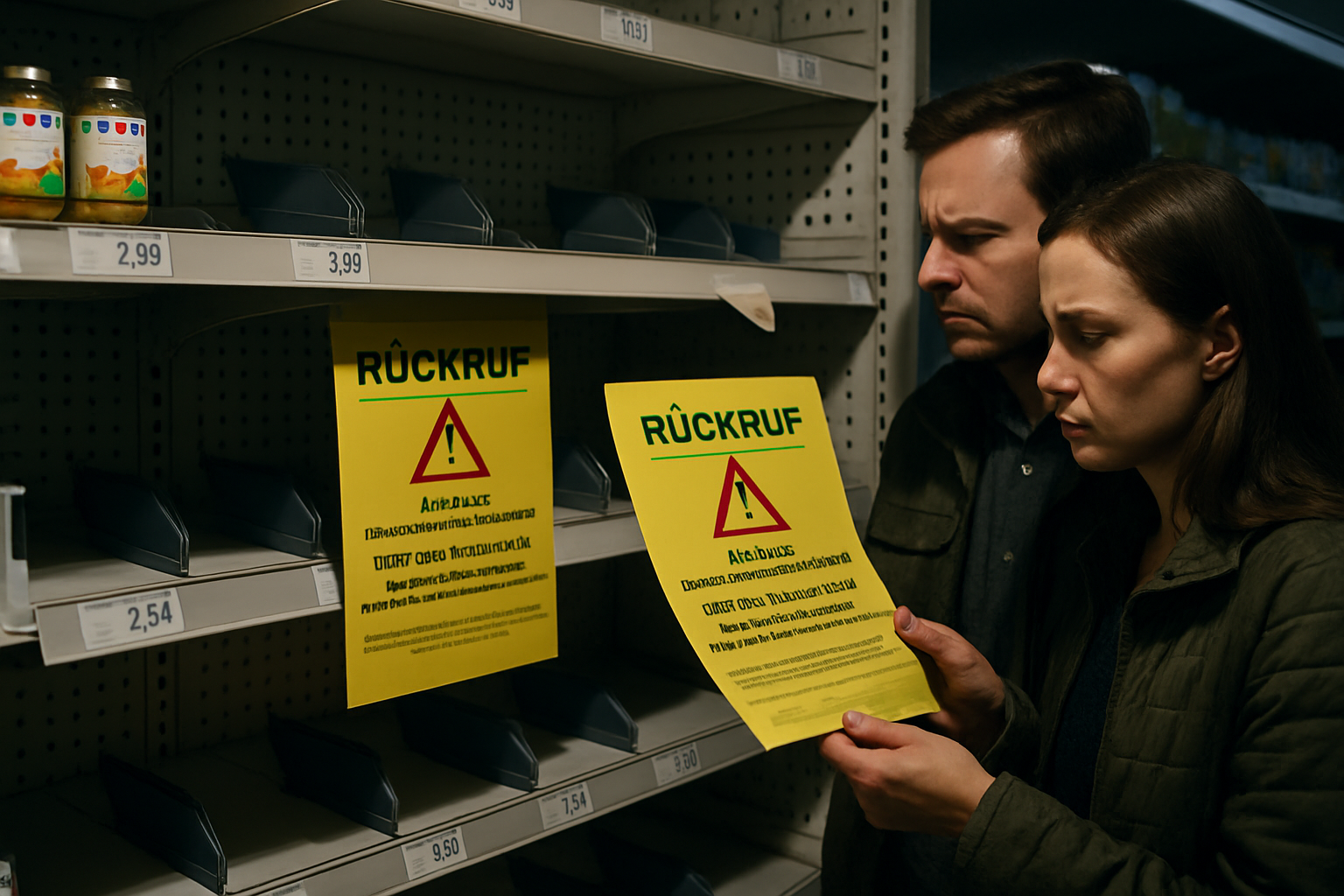
Austrian authorities have confirmed the discovery of rat poison in HiPP baby food products as part of a sophisticated criminal extortion scheme targeting the German manufacturer, escalating what experts are calling the most serious baby food contamination crisis in European history.
Police in Burgenland, Austria, announced late Saturday that laboratory tests confirmed the presence of rat poison in a 190-gram jar of HiPP "Carrots and Potatoes" baby food reported by a concerned customer. The contaminated product bore distinctive markings including a red circle sticker on the jar's bottom and showed evidence of tampering through damaged or missing safety seals and unusual odors.
Criminal Extortion Operation Exposed
Austrian prosecutors in Eisenstadt have launched an investigation for "deliberate endangerment of public safety" as evidence points to a coordinated extortion attempt against HiPP. Swiss media reports indicate unknown perpetrators are attempting to extort the baby food manufacturer, though Austrian police have not officially confirmed the specific nature of any extortion demands.
The Landespolizeidirektion Burgenland issued an urgent public warning stating that authorities "could not rule out that dangerous substances" had been intentionally introduced into the products. A second potentially contaminated jar has been identified as sold in the Burgenland region, expanding the scope of the investigation.
"The consumption of the contents of these jars could be life-threatening," HiPP warned in an emergency statement.
— HiPP Company Statement
Massive Recall Operations Across Europe
HiPP has implemented voluntary recalls across multiple European countries, with Austria's SPAR supermarket chain removing all HiPP baby food glass jars from its more than 1,000 retail locations. The precautionary measure affects the entire baby food jar assortment pending the criminal investigation's outcome.
The recall has extended beyond Austria's borders, with similar actions reported in Germany, Czech Republic, and Slovakia. Initial laboratory tests conducted by police in Czech Republic and Slovakia on seized jars are part of the expanding international investigation, though specific results have not been disclosed.
Austrian health authorities have suspended all distribution of affected products and implemented enhanced inspection protocols, including a 300% increase in random testing and mandatory molecular testing for heat-stable toxins that can survive standard pasteurization processes.
Context of Ongoing European Food Safety Crisis
This criminal targeting of baby food occurs during the 21st consecutive month of global temperatures exceeding 1.5°C above pre-industrial levels, creating what experts term a "threat multiplier" for food safety incidents. The HiPP extortion case builds upon a devastating pattern of European food contamination that has already affected over 36 infants across the UK, France, Luxembourg, Greece, Austria, Belgium, and Malta from cereulide toxin contamination in Nestlé and Danone products.
The European Food Safety Authority (EFSA) has been developing enhanced protocols for heat-stable toxin detection following the earlier infant formula crisis. The agency has revised safety thresholds and implemented standardized international protocols for coordinated early warning systems to prevent cross-border contamination.
International Law Enforcement Coordination
The investigation represents unprecedented international cooperation, with Austrian Federal Criminal Police coordinating with German authorities and Europol for a comprehensive manhunt. The sophisticated nature of the operation demonstrates detailed supply chain knowledge and insider access to food distribution networks, suggesting an organized criminal enterprise rather than isolated incidents.
Law enforcement agencies across Europe are sharing intelligence and implementing joint surveillance protocols. The case has prompted discussions about enhanced criminal liability frameworks for food safety violations, with some European jurisdictions considering criminal liability for executives in severe contamination cases.
"This represents an evolution of food safety threats from accidental contamination to deliberate criminal targeting of vulnerable populations."
— European Food Safety Expert
Consumer and Market Impact
Consumer confidence in multinational food corporations continues declining, accelerating a shift toward local sourcing and simplified supply chains that offer greater transparency and traceability. The crisis has exposed vulnerabilities in complex international food distribution networks, where contamination can spread across multiple geographic areas before detection.
Economic implications include rising insurance costs for manufacturers and retailers, mandatory investments in molecular testing infrastructure, and potential significant market share losses in trust-dependent categories like infant nutrition. Several countries are implementing criminal executive liability frameworks as regulatory responses evolve from reactive crisis management to prevention-focused strategies.
Enhanced Safety Measures and Testing Protocols
European authorities have implemented comprehensive enhanced inspection protocols in response to the crisis. These include mandatory molecular testing for heat-stable toxins that survive conventional pasteurization, advanced detection methods beyond traditional bacterial screening, and improved supply chain monitoring systems.
Social media platforms have emerged as crucial enforcement tools, with viral exposure of violations accelerating regulatory responses and enabling citizen participation in food safety monitoring. This democratization of oversight has proven effective in identifying problems and pressuring swift official action.
International Response and Cooperation
Despite funding constraints at the World Health Organization, international cooperation continues through bilateral partnerships and regional networks. The European Commission has activated unprecedented crisis management protocols, with all 27 member states implementing maximum alert status for infant food products.
EFSA is accelerating development of standardized international protocols and coordinated early warning systems for cross-border contamination prevention. The agency emphasizes that food safety has evolved into a global public good requiring collective protection rather than individual national management approaches.
Looking Forward: Prevention and Resilience
Food safety experts identify 2026 as a critical transformation turning point requiring enhanced international coordination, climate-adaptive processing technologies, and prevention-focused approaches that integrate traditional wisdom with modern safety science. The window for building resilient and equitable food systems is narrowing as environmental pressures accelerate during what many consider a decisive climate action decade.
Success in addressing immediate threats while building long-term resilience requires sustained political commitment, adequate funding, comprehensive training programs, and unprecedented international cooperation. The HiPP extortion case demonstrates that modern food safety challenges extend beyond accidental contamination to include sophisticated criminal threats that demand coordinated international responses.
As the investigation continues, European authorities emphasize that protecting vulnerable populations from preventable foodborne illnesses has become essential infrastructure for human prosperity and planetary sustainability, requiring collective action and shared responsibility across borders and sectors.