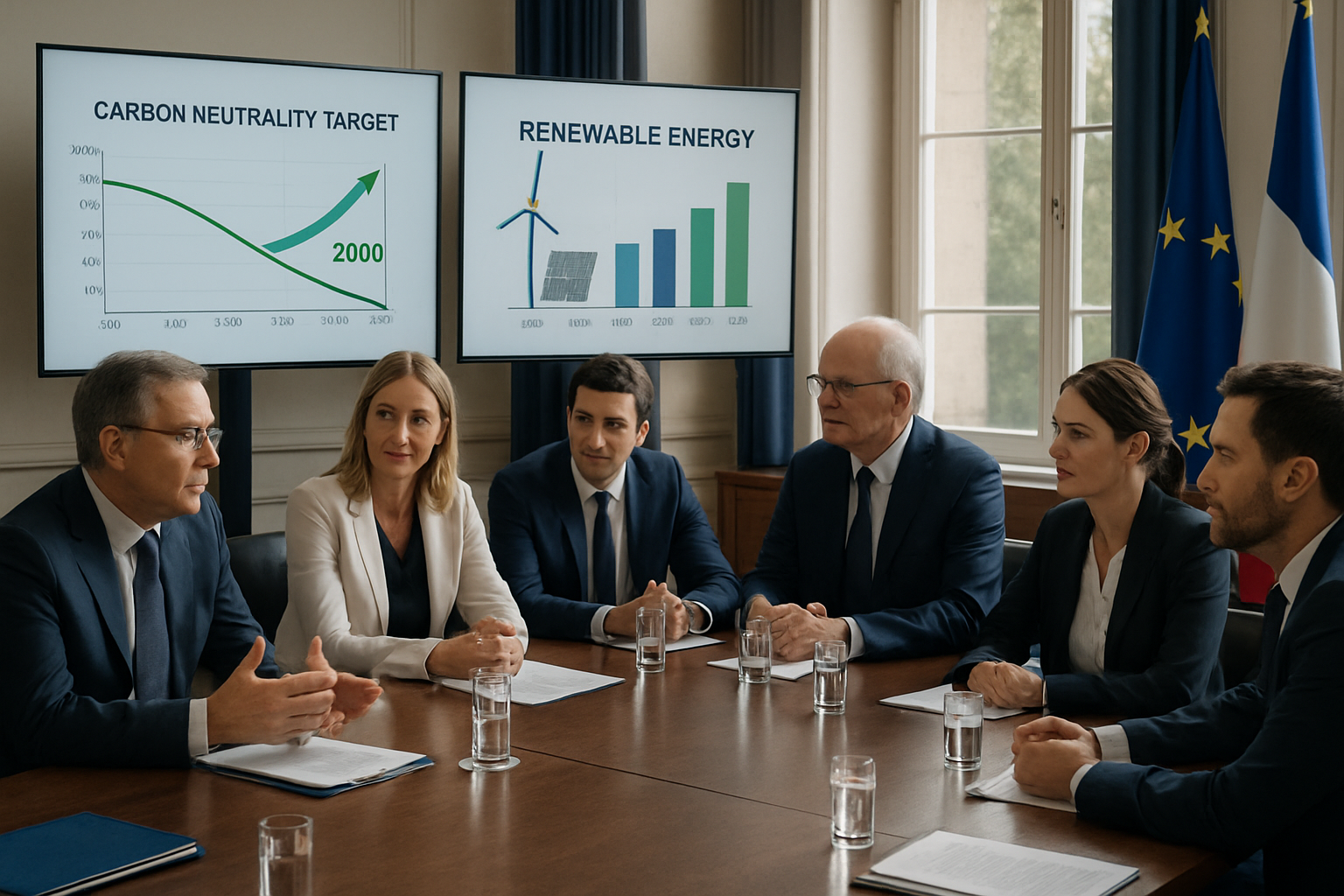
European nations are intensifying their climate response strategies as environmental organizations push for unprecedented funding mechanisms and governments accelerate carbon neutrality timelines, marking a critical phase in the continent's fight against climate change.
Portugal's Zero Association has called for the creation of a European Climate Adaptation Fund, highlighting the country's proportionally smaller contribution to the climate crisis despite facing disproportionate costs. The organization points out that Portugal contributes relatively less to global climate change and represents less than 2% of the European Union's GDP, yet could face significant financial burdens from climate adaptation measures.
Ambitious Carbon Neutrality Targets Emerge
Meanwhile, Portugal's Left Bloc (Bloco de Esquerda) is preparing comprehensive climate proposals for the government, spanning mobility, health, agriculture, and labor sectors. The party advocates for achieving carbon neutrality by 2045 and implementing a windfall tax as part of a broader climate pact with the Portuguese government. These proposals aim to guarantee both "mitigation" of climate change effects and "adaptation" of national territory to changing environmental conditions.
The initiative comes as the European Union has already established ambitious climate targets, with the European Parliament approving a historic 90% greenhouse gas emissions reduction by 2040 compared to 1990 levels, serving as a crucial step toward the bloc's 2050 carbon neutrality goal.
UK Climate Strategy Under Scrutiny
Across the English Channel, Scotland's climate strategy is facing criticism from the UK's climate watchdog. Nigel Topping, chair of the UK Climate Change Committee, expressed "real concern" about the credibility of Scotland's overall climate strategy, citing "flashing amber lights" regarding the quality and seriousness of some medium- and long-term proposals to reach net zero by 2045.
"While Scotland has finally produced realistic short-term plans on cutting its climate emissions, there are concerns about the credibility of its overall strategy."
— Nigel Topping, Chair of UK Climate Change Committee
The criticism particularly focuses on Scotland's approach to decarbonizing buildings and its reliance on unproven technologies, highlighting the challenges facing national governments in developing comprehensive and credible climate strategies.
Climate Action Against Temperature Records
These European climate initiatives unfold against a backdrop of alarming global temperature trends. January 2026 marked the 18th consecutive month of global temperatures exceeding 1.5°C above pre-industrial levels, demonstrating that human-induced climate change is now overriding natural climate variability, including La Niña cooling effects.
The persistent warming has created additional urgency for European climate policies. Portugal's push for an EU adaptation fund reflects growing recognition that even countries with relatively low emissions face substantial costs from climate impacts. The proposed fund would help distribute adaptation costs more equitably across the European Union, ensuring that financial burdens don't fall disproportionately on smaller economies.
Policy Integration Challenges
The Left Bloc's comprehensive approach in Portugal exemplifies the complex integration required for effective climate action. Their proposals span multiple sectors:
- Mobility sector reforms to reduce transportation emissions
- Health system adaptations to climate-related health risks
- Agricultural transformation for sustainable food systems
- Labor market transitions toward green industries
This multi-sectoral approach reflects growing understanding that climate action cannot be confined to environmental ministries but must permeate all areas of government policy.
European Climate Leadership
Despite challenges, Europe continues to position itself as a global climate leader. The European Union's commitment to 90% emissions reduction by 2040 far exceeds targets established by other major economies. The bloc's approach combines flexibility mechanisms, including international carbon credits and forest-based emissions compensation, allowing member states greater implementation flexibility while maintaining ambitious overall targets.
Portugal's adaptation fund proposal could become a model for addressing climate justice within the EU, ensuring that climate action doesn't disadvantage smaller member states. The initiative recognizes that effective climate response requires both mitigation efforts and substantial adaptation investments.
Looking Forward
As European nations navigate the complex balance between economic realities and climate imperatives, the next months will prove critical for policy implementation. Portugal's dual approach—seeking EU-level funding mechanisms while developing comprehensive national climate policies—may serve as a template for other member states facing similar challenges.
The contrast between Portugal's proactive strategy development and Scotland's criticized approach illustrates the varying degrees of preparedness across European nations. Success will likely depend on combining ambitious targets with credible implementation pathways and adequate financing mechanisms.
With global temperatures continuing to break records and climate impacts intensifying, Europe's climate strategies in 2026 may determine the continent's ability to meet its net-zero commitments while maintaining economic stability and social equity. The proposals emerging from Portugal suggest a recognition that climate action requires both national ambition and European solidarity to succeed.