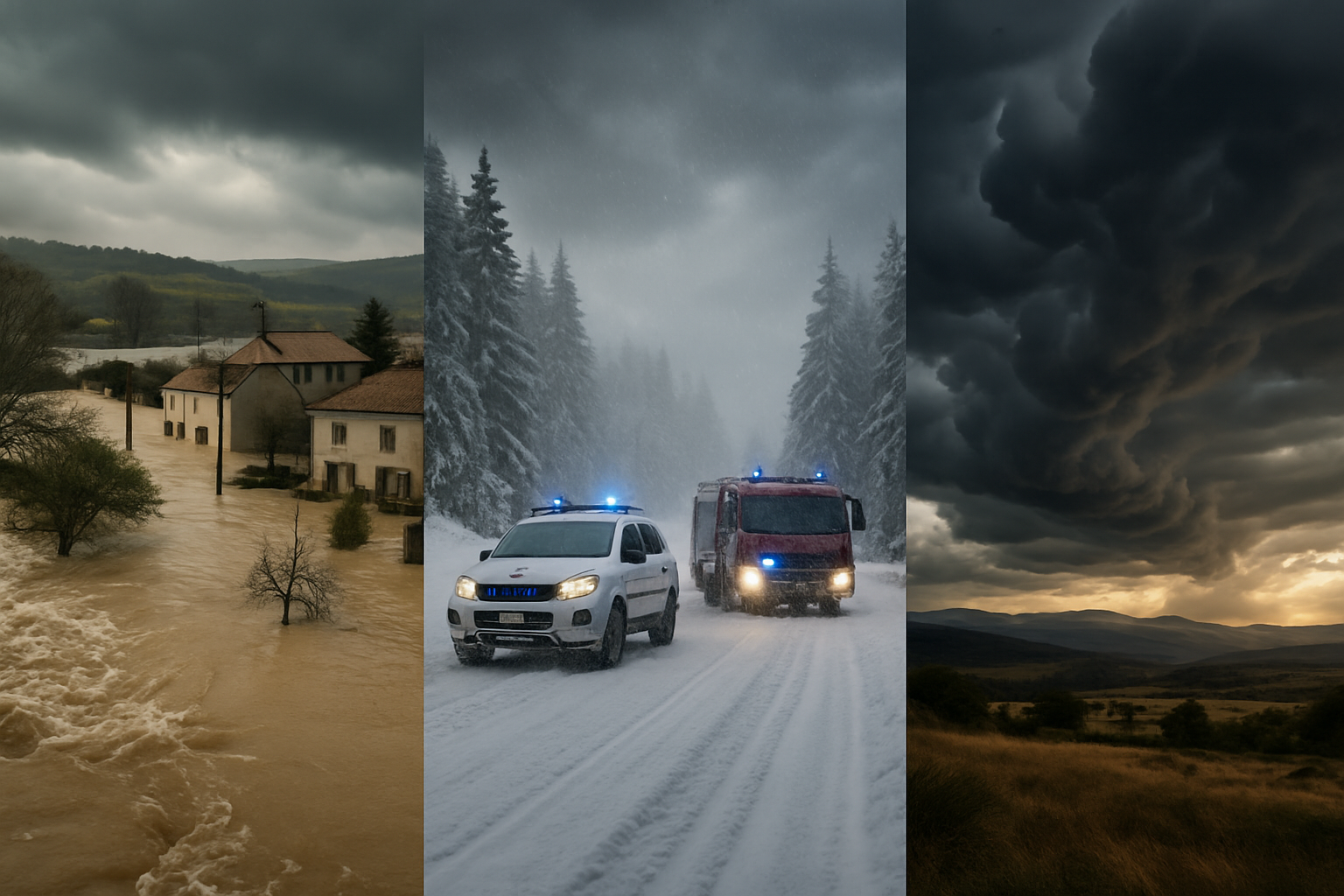
European nations are grappling with a devastating multi-national weather emergency as extreme flooding ravages France, heavy snowfall paralyzes Bulgaria, and severe winter storms continue battering the continent, exposing critical infrastructure vulnerabilities and overwhelming emergency response systems across borders.
The ongoing crisis represents the latest chapter in Europe's most challenging winter in decades, following a succession of devastating Atlantic storms that have claimed dozens of lives and caused billions in damages since February began. Current conditions demonstrate how climate change is transforming traditional weather patterns into existential threats for European societies.
France Battles Record-Breaking Floods
France faces its most severe flooding emergency in recent memory, with river systems across southwestern regions reaching critical levels. The Garonne River basin remains under the highest red alert status, with Vigicrues flood monitoring services warning of "important and major overflows within 24 hours" as water levels continue rising on already saturated ground.
Emergency services report that flood systems are working at "record pace," with eleven additional departments under orange flood warnings including Charente, Charente-Maritime, and Loire-Atlantique. The crisis has left hundreds of families evacuated from their homes as rivers burst their banks across the region.
"The current rainfall has broken multiple records, with some areas experiencing 36 consecutive days of precipitation," explained a senior meteorologist at Météo-France. "This represents the longest sustained rainfall period since the 1950s, creating conditions that our infrastructure was never designed to handle."
Bulgaria Faces Severe Winter Conditions
Bulgaria's National Institute of Meteorology and Hydrology (NIMH) has issued second-degree warnings for rain and snow across nine provinces, including Gabrovo, Veliko Târnovo, Stara Zagora, Slivén, Yambol, Haskovo, Plovdiv, Kârdjali, and Smolyan. The severe weather has forced the closure of critical mountain routes in Vitosha Nature Park.
Road authorities report that routes from Dragalevtsi district to Aleko Hut and from Boyana district to Golden Bridges are temporarily closed due to snow clearing operations and road gritting activities. The accumulating snow and dangerous conditions have created significant challenges for both residents and emergency responders.
In Sofia, transportation systems struggle to maintain normal operations as municipal services work around the clock to keep main arteries open. The combination of heavy snowfall and freezing temperatures has created hazardous conditions that extend far beyond the capital region.
Romania Emerges from Winter Crisis
Romania is slowly recovering from what officials describe as "the most severe winter episode" of 2026, which left 58 vehicles with approximately 106 people blocked due to snow accumulation on roadways. Emergency services continue operations across eight counties including Brăila, Bucharest, Buzău, Călărași, Giurgiu, Ialomița, Ilfov, and Prahova.
The Department for Emergency Situations, alongside other Interior Ministry structures, maintains active interventions to manage the effects of unfavorable weather conditions. Power outages have affected 23 localities across three counties, highlighting the vulnerability of energy infrastructure to extreme weather events.
Denmark Faces Unprecedented Challenges
While Denmark has not suffered the same intensity of flooding or snow as its southern neighbors, the Nordic country faces its own climate-related challenges. The Danish report on forest fires in Australia, though geographically distant, underscores the global interconnectedness of climate emergencies that European nations must increasingly prepare for and potentially assist with.
Danish meteorological services continue monitoring extreme weather patterns that could affect the country, as authorities recognize that climate volatility respects no national boundaries.
Historical Context of Europe's Weather Crisis
The current multi-national emergency builds upon a devastating series of Atlantic storms that have struck Europe throughout February 2026. The succession of Storms Kristin, Leonardo, Marta, and Nils has claimed over 30 lives across Portugal, Spain, and France while requiring the deployment of more than 26,500 emergency personnel in Portugal alone—the largest peacetime rescue operation in that nation's history.
Critical infrastructure failures have compounded the human tragedy. Portugal's A1 highway viaduct collapsed near Coimbra due to Mondego River flooding, severing the crucial Lisbon-Porto transportation corridor. Recovery timeline estimates extend to "several weeks," according to Infrastructure Minister Miguel Pinto Luz.
"We are witnessing weather events that exceed our traditional planning parameters. This is not simply a bad winter—this represents a fundamental shift in the types of challenges European societies must prepare for."
— Climate Adaptation Specialist, EU Civil Protection Mechanism
Climate Science Behind the Crisis
The ongoing European weather emergency occurs within the broader context of accelerating global climate change. January 2026 marked the 18th consecutive month of global temperatures exceeding 1.5°C above pre-industrial levels, demonstrating how human-induced warming is overriding natural climate variability.
This temperature elevation creates a climate volatility paradox where global warming enables both unprecedented heat records and devastating regional winter storms through disrupted polar vortex patterns and altered Atlantic circulation systems. The result is simultaneous extreme weather events across different regions that strain traditional mutual aid mechanisms.
Scientists from the European Scientific Advisory Council on Climate Change have warned that the EU is "critically unprepared" for accelerating climate impacts, calling for urgent investment increases to protect populations and infrastructure from floods, extreme heat, and severe weather events.
Infrastructure Under Unprecedented Strain
European infrastructure systems, designed for historical climate patterns rather than current conditions, are operating beyond their intended parameters. Transportation networks face widespread disruption with railway suspensions, highway closures, and aviation delays becoming increasingly common.
Power grids struggle under extreme demand during cold snaps while simultaneously facing damage from flooding and high winds. The combination creates cascading failures that affect not only electricity supply but also dependent systems including water treatment, telecommunications, and medical facilities.
Emergency services across the continent report reaching capacity limits as traditional regional compensation mechanisms fail when multiple nations face simultaneous disasters. The scale of response required—exemplified by Portugal's deployment of 26,500 personnel—exceeds typical emergency planning assumptions.
Economic and Social Consequences
The economic impact of Europe's weather crisis extends far beyond immediate emergency response costs. Agricultural sectors face devastating losses as vineyards in Portugal's Tejo basin remain submerged and Spanish olive groves suffer unprecedented damage. Tourism infrastructure across affected regions questions whether normal operations can resume for the coming seasonal peak.
More than 100 Portuguese museums and monuments have suffered damage, including threats to UNESCO World Heritage sites. The cultural sector's vulnerability highlights how climate change affects not only physical infrastructure but also Europe's historical and artistic legacy.
Recovery timelines now extend from weeks to months or years, representing a fundamental shift in how societies must plan for and respond to extreme weather events. The concept of "building back better" with climate-resilient infrastructure has evolved from environmental aspiration to economic necessity.
International Cooperation Under Test
The simultaneous nature of Europe's weather emergencies has tested international cooperation mechanisms while also demonstrating their essential value. The EU Civil Protection Mechanism has been activated, with Sweden and Denmark providing €246 million in assistance—the largest coordinated European weather response in recent history.
However, the scale of concurrent disasters across multiple nations strains traditional mutual aid approaches. When neighboring countries face their own emergencies, the typical model of regional assistance becomes inadequate, requiring enhanced continental capabilities and pre-positioned resources.
This evolution in emergency response reflects broader changes needed in European climate adaptation strategies. The crisis serves as a template for managing multi-national climate emergencies while highlighting the urgent need for transformative rather than reactive approaches to infrastructure and emergency management.
Looking Forward: Adaptation Imperatives
February 2026 may represent a watershed moment in European climate adaptation, forcing fundamental reconsideration of how societies prepare for and respond to weather volatility. Additional Atlantic storm systems continue developing, suggesting the current crisis may persist for weeks rather than days.
The frequency and intensity of extreme weather events will continue increasing as global warming progresses, making current conditions a preview of routine circumstances in the 2030s without comprehensive climate action. This reality demands enhanced international cooperation, infrastructure designed for future rather than historical climate conditions, and emergency response systems capable of managing permanent climate volatility.
Scientists emphasize that the window for effective climate action is narrowing while the costs of reactive crisis management continue escalating. The choice between transformative infrastructure adaptation and increasingly expensive emergency response will define Europe's climate resilience for decades to come.
Human Impact and Community Response
Behind the statistics and infrastructure failures lie human stories of resilience and loss. Families are losing generational homes to unprecedented flooding, while small businesses across affected regions face potential extinction. Mental health services report increased demand as communities struggle with repeated climate trauma and uncertainty.
Yet the crisis has also demonstrated remarkable community solidarity. Volunteer networks have mobilized across borders, neighbors assist with evacuations and recovery, and local organizations coordinate relief efforts when official systems become overwhelmed.
This human dimension of climate adaptation—how communities maintain social cohesion and mutual support during repeated extreme weather events—may prove as important as technical infrastructure improvements in determining Europe's long-term climate resilience.
As Europe confronts this unprecedented multi-national weather emergency, the continent stands at a critical juncture between reactive crisis management and proactive climate adaptation. The decisions made in response to this crisis will shape European societies' ability to thrive in an era of permanent climate volatility, making February 2026 a defining moment for continental climate policy and international cooperation.