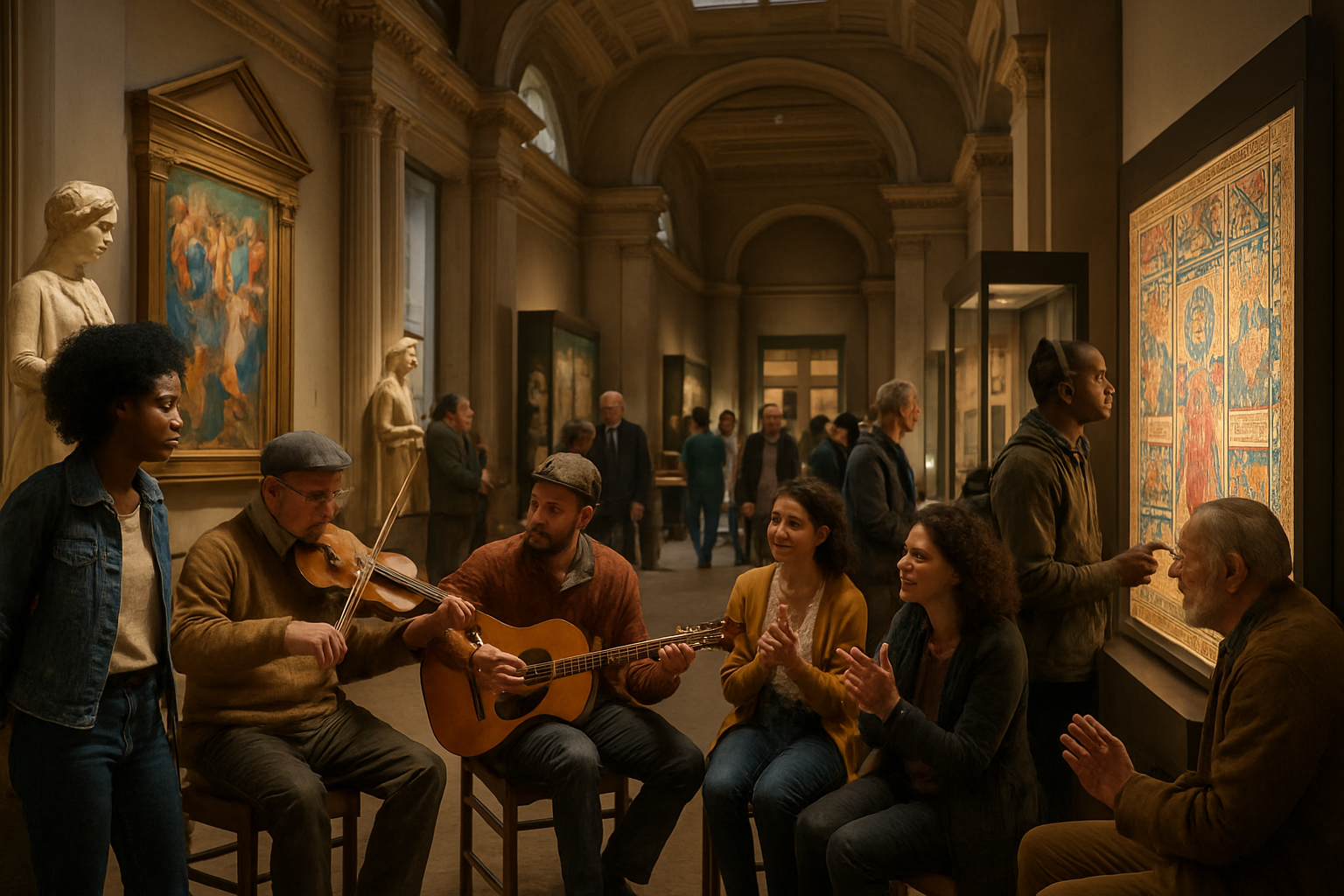
A remarkable cultural renaissance is sweeping across Europe, exemplified by three extraordinary developments that showcase the continent's sophisticated approach to balancing heritage preservation with contemporary innovation: Vienna's diplomatic symphony concerts in Trieste, a powerful exhibition honoring Roma Holocaust survivor Ceija Stojka in France, and Monaco's theatrical celebration of artistic collaboration.
These events, taking place in late March 2026, represent more than isolated cultural activities—they embody a coordinated European movement that positions culture as essential infrastructure for community development, international cooperation, and human flourishing.
Vienna's Musical Diplomacy: Symphonic Bridges Across Borders
In a stunning display of cultural diplomacy, Vienna Mayor Michael Ludwig and Cultural Councillor Veronica Kaup-Hasler traveled to Trieste for the "Primavera da Vienna – Frühling aus Wien" (Spring from Vienna) festival, where the Vienna Symphony Orchestra captivated audiences in the Italian port city. This cross-border cultural exchange represents Austria's sophisticated understanding of music as a diplomatic tool, creating lasting connections between neighboring European communities.
The festival demonstrates how classical music traditions can serve multiple functions simultaneously: preserving Austrian cultural heritage, strengthening international relationships with Italy, and creating sustainable economic benefits through cultural tourism. The Vienna Symphony's performance in Trieste exemplifies the mature European approach to cultural programming that honors historical traditions while building contemporary bridges between nations.
"Cultural exchange through music creates bonds that transcend political boundaries and economic interests."
— Cultural Policy Expert, European Cultural Foundation
Honoring Memory: Ceija Stojka's Powerful Legacy in Besançon
At the Beaux-Arts museum in Besançon, France, an extraordinary exhibition celebrates the work of Ceija Stojka, the Roma artist and writer who became the first member of her community to bear witness in Austria to the Nazi genocide of Roma people. The exhibition, extending beyond Besançon to upcoming shows in Arles and Rouen, presents Stojka's paintings and drawings as both artistic achievement and historical testimony.
Stojka's work, created until her death in 2013, represents a profound example of how contemporary art can serve as a vehicle for historical memory and social justice. Her paintings, often depicting the camps where she was imprisoned as a child, transform personal trauma into universal statements about human resilience and the importance of bearing witness to historical atrocities.
The French presentation of Stojka's work demonstrates European cultural institutions' commitment to amplifying marginalized voices and ensuring that difficult histories remain visible in contemporary discourse. This approach reflects the continent's mature understanding that cultural programming must engage with complex historical realities rather than offering sanitized entertainment.
Monaco's Theatrical Innovation: Celebrating Artistic Risk
Monaco Life's feature on Princess Grace Award winner Tina Landau highlights the principality's commitment to supporting innovative theatrical work. Landau, known for groundbreaking productions including "The SpongeBob Musical" and collaborations with Steppenwolf Theatre Company, represents the kind of artistic risk-taking that European cultural institutions increasingly champion.
In her interview, Landau emphasizes the importance of collaboration and the "enduring power of live theatre," themes that resonate across the European cultural landscape. Her work demonstrates how contemporary theatre can maintain authentic human connections while embracing technological innovation and multimedia approaches.
The Princess Grace Foundation's support for artists like Landau exemplifies Monaco's strategic use of cultural programming to enhance its international profile while contributing meaningfully to global artistic discourse. This approach shows how smaller European nations can achieve disproportionate cultural influence through sustained excellence and strategic programming.
Technology Meets Tradition: The Digital Renaissance
Across these three developments, a sophisticated pattern emerges regarding technology's role in contemporary European culture. Rather than replacing traditional artistic forms, digital tools and modern presentation techniques serve to amplify and extend cultural reach while preserving authentic expression.
The Vienna Symphony's Trieste performances likely utilized advanced acoustics and recording technology to document the event for broader sharing. Stojka's exhibition employs contemporary curatorial methods to present historical artwork in contexts that enhance understanding. Landau's theatrical work integrates multimedia elements that expand storytelling possibilities without diminishing the essential human connections that define live performance.
Economic and Diplomatic Impact
The economic implications of this cultural renaissance extend far beyond immediate ticket sales or exhibition attendance. Vienna's musical diplomacy with Trieste strengthens Austrian-Italian relationships while generating tourism revenue and enhancing both cities' cultural reputations. Stojka's touring exhibition creates educational partnerships and positions French cultural institutions as leaders in presenting challenging historical material. Monaco's theatrical programming attracts international artists and audiences while reinforcing the principality's reputation as a sophisticated cultural destination.
These activities generate what economists call "multiplier effects"—benefits that ripple through entire communities through increased tourism, creative industry employment, enhanced international recognition, and the development of lasting cultural infrastructure including artistic collaborations, educational partnerships, and community organizations that remain active year-round.
Community Engagement and Accessibility
A striking feature of these developments is their emphasis on community engagement over elite cultural consumption. The Vienna Symphony's Trieste performance serves both diplomatic and public accessibility functions. Stojka's exhibition provides educational opportunities for diverse audiences to engage with Roma history and contemporary European values. Landau's interview discusses creating theatrical experiences that welcome broad participation rather than excluding potential audiences.
This approach reflects a fundamental shift in European cultural policy from viewing culture as luxury entertainment toward understanding it as essential infrastructure for community development, historical education, and international cooperation. Successful cultural programming increasingly serves multiple functions simultaneously: preserving heritage, fostering community connection, supporting economic development, and facilitating cross-cultural dialogue.
Challenges and Adaptive Strategies
Contemporary European cultural institutions face significant challenges including climate change threats to historic buildings and outdoor programming, economic pressures that affect youth participation in traditional arts, and competition from digital entertainment platforms. However, the success of initiatives like those in Vienna, Besançon, and Monaco demonstrates effective adaptive strategies.
These strategies emphasize authentic community engagement, international cooperation for resource sharing, strategic technology integration that enhances rather than replaces traditional practices, and economic sustainability through cultural tourism and educational partnerships. Climate adaptation includes both emergency preservation protocols and innovative programming that addresses environmental themes while maintaining cultural authenticity.
International Cooperation Templates
The Austrian-Italian musical collaboration, the international touring of Stojka's exhibition, and Monaco's support for internationally recognized artists all demonstrate sophisticated frameworks for cultural cooperation that smaller and medium-sized European nations can adapt to their specific circumstances.
These frameworks include shared curatorial expertise, coordinated marketing efforts, joint educational programming, and collaborative funding mechanisms that enable individual institutions to achieve impact impossible through isolated efforts. The European Union's cultural programs provide systematic support, but much of the innovation emerges from bilateral partnerships and informal professional networks that transcend bureaucratic boundaries.
Future Implications for European Cultural Policy
The success of these March 2026 developments suggests several important trends for European cultural policy. First, culture is increasingly recognized as strategic infrastructure equivalent to transportation, communication, and healthcare systems in terms of its importance for community wellbeing and international competitiveness.
Second, the most successful cultural programming balances innovation with tradition, local authenticity with international appeal, and economic viability with cultural integrity. This balance requires sophisticated management that respects historical values while embracing contemporary possibilities.
Third, technology serves most effectively as an enhancement tool that expands cultural storytelling vocabulary and accessibility rather than as a replacement for authentic human connections and traditional artistic practices.
"The future of European culture lies not in choosing between tradition and innovation, but in finding creative syntheses that honor the past while building bridges to the future."
— Dr. Elena Marchetti, European Institute for Cultural Studies
A Model for Global Cultural Development
The European approach demonstrated through these Vienna, French, and Monaco initiatives offers templates that cultural institutions worldwide might adapt to their specific circumstances. The emphasis on authentic expression, community engagement, international cooperation, and technological integration provides practical models for sustainable cultural development.
These examples show how cultural programming can achieve multiple objectives—preserving heritage, fostering community development, enhancing international relationships, generating economic benefits, and creating meaningful opportunities for human connection and creative expression. The success across varied contexts suggests that authentic cultural programming can maintain local significance while achieving international recognition.
As Europe continues to navigate complex political, economic, and environmental challenges, the March 2026 cultural developments suggest that thoughtful investment in cultural programming creates lasting positive impacts that serve communities while building bridges between nations and traditions. This renaissance demonstrates culture's remarkable capacity to unite people across boundaries while celebrating the distinctive qualities that make each community unique.
The Vienna Symphony's diplomatic concerts, Ceija Stojka's powerful artistic testimony, and Monaco's support for theatrical innovation together represent Europe's commitment to culture as a force for understanding, memory, creativity, and hope—values that resonate far beyond the continent's borders and offer inspiration for cultural communities worldwide.