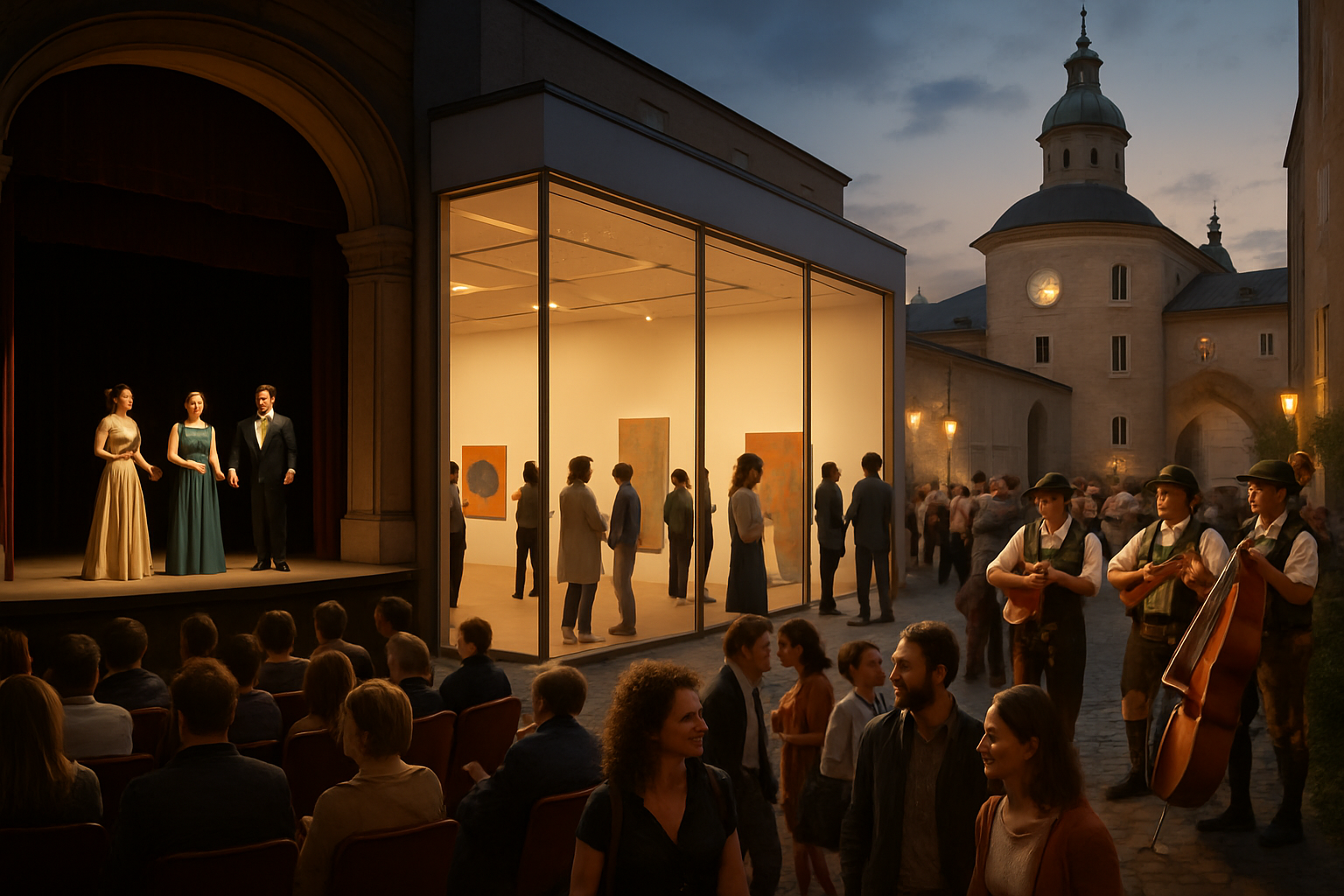
Europe's cultural landscape is experiencing a remarkable renaissance in March 2026, with extraordinary artistic achievements unfolding alongside unprecedented institutional challenges, from the crisis at Austria's prestigious Salzburg Festival to breakthrough performances and innovative community-centered programming across multiple nations.
Salzburg Festival in Turmoil
The prestigious Salzburg Festival faces its most significant crisis in decades, with mounting tensions between the board of trustees (Kuratorium) and Intendant Markus Hinterhäuser reaching a breaking point. The conflict, which has attracted international attention, centers around the controversial appointment of a new head of drama that led to significant discord within the institution.
The situation has deteriorated to the point where the position of Intendant is being preemptively advertised for tender, despite ongoing discussions. German media analysis from the Frankfurter Allgemeine Zeitung suggests the conflict reflects deeper issues of "left-wing elite hostility" and fundamental disagreements about the festival's artistic direction.
"The dispute between the board of trustees of the Salzburg Festival and Intendant Markus Hinterhäuser will now be continued by lawyers, revealing underlying tensions about the festival's future."
— FAZ Cultural Analysis
This institutional crisis comes at a time when cultural events across Europe are experiencing unprecedented growth and innovation, making the Salzburg situation all the more striking in contrast to successes elsewhere on the continent.
Ballet Excellence in Azerbaijan
In a remarkable display of international cultural collaboration, the renowned ballet "One Thousand and One Nights" was performed at the prestigious Heydar Aliyev Palace in Baku. This performance represents Azerbaijan's continued efforts to position itself as a cultural bridge between Eastern and Western traditions, building on the legacy of composer Fikrat Amirov.
The presentation demonstrates the sophisticated level of artistic programming that has become characteristic of Azerbaijan's cultural diplomacy strategy, which includes hosting Egyptian-Azerbaijani poetry evenings and fostering international artistic collaborations.
Musical Innovation and Cultural Exchange
Virtuoso violinist Elvin Hoxha Ganiyev, an Honored Artist of Azerbaijan, has released a groundbreaking new album dedicated to the works of German composer Felix Mendelssohn. Presented by the European label Solo Musica, this release has garnered significant attention from the international music community and represents a milestone in the artist's career.
The album, described as a "Dialogue of Eras and Cultures," exemplifies the sophisticated cultural exchange occurring across European borders. Ganiyev's work builds on his previous success and reinforces his status as one of the most outstanding representatives of the modern violin school.
Cyprus Celebrates Spring with Cultural Programming
The Hambis Municipal Museum of Printmaking in Cyprus is marking the spring equinox with a special celebration that combines World Storytelling Day and World Poetry Day. The "Songs and Tales of Spring" event features Nicoletta Demetriou on vocals, Christina Polykarpou on lyra, and Symeon Merkouris on lute, leading audiences through a journey of Cypriot songs, poems, stories, and folktales celebrating the rebirth of nature.
This free admission event, part of the Deputy Ministry of Culture's Culture II programme, demonstrates how community-centered cultural programming can achieve both local engagement and cultural preservation goals simultaneously.
Malta's Theatrical Renaissance
Malta's theatrical scene is experiencing remarkable vitality with multiple exciting developments. The Travellers have released their latest music video "Poeżija Mingħajr Tmiem" as part of this year's Mużika Mużika, featuring real moments submitted by fans from across Malta. The project captures authentic community experiences and transforms them into artistic expression.
Meanwhile, the Don Bosco Oratory in Gozo is preparing to stage "Il-Honeymoon ta' Karmena Abdilla" on April 25th and 26th, bringing back one of Malta's most beloved comedic characters. The production, led by young performers under director Matthias Mercieca, follows the success of "It-Tieġ ta' Karmena Abdilla" from two years ago.
Photography Meets Cultural Heritage
Bulgarian photographer Valery Poshtarov is bringing his emotionally powerful portrait series "Father and Son" to Malta, exploring the profound relationship between fathers and sons across diverse corners of Europe. Each image captures a fleeting moment of tenderness between grown men, providing glimpses into relationships shaped by lifetimes of shared memories.
"I realized there will be a day when my sons won't want to hold my hand anymore."
— Valery Poshtarov, Photographer
The series demonstrates how contemporary artistic projects can bridge cultural boundaries while addressing universal human experiences, contributing to the broader cultural dialogue occurring across European nations.
German Cultural Commentary
German media coverage of the Salzburg crisis has sparked broader discussions about the role of cultural institutions in contemporary society. The Frankfurter Allgemeine Zeitung's analysis suggests that conflicts within prestigious cultural institutions reflect larger societal tensions about artistic direction and institutional governance.
This commentary comes as Austria's cultural programming continues with announcements of various events, including television documentaries examining architectural choices and cultural policies that shape public spaces and community experiences.
Community Engagement and Cultural Access
Across Europe, a consistent pattern emerges of cultural institutions prioritizing community engagement and accessibility. From Cyprus's free admission spring celebration to Malta's community-driven video projects, cultural organizations are finding innovative ways to break down barriers between high culture and everyday community life.
This approach represents a significant evolution in cultural programming, where success is measured not only by artistic excellence but also by meaningful community participation and authentic cultural expression.
The Technology-Heritage Balance
The current European cultural renaissance demonstrates sophisticated approaches to balancing technological innovation with heritage preservation. Digital platforms enable global sharing of cultural content while maintaining local ownership and authentic community connections.
This synthesis is evident in Malta's fan-submitted video project, Cyprus's multimedia cultural events, and Azerbaijan's international album distribution, showing how technology can amplify rather than replace traditional cultural forms.
Economic and Diplomatic Implications
The cultural developments across Europe generate significant economic multiplier effects through tourism revenue, creative industry employment, and enhanced international recognition. Countries investing in authentic cultural programming report competitive advantages in both diplomatic relationships and economic development.
Cyprus's strategic positioning as a cultural bridge, Azerbaijan's Eastern-Western cultural diplomacy, and Malta's theatrical innovation all demonstrate how cultural excellence can serve multiple societal functions simultaneously.
Future Outlook
March 2026 is establishing precedents for 21st-century cultural stewardship that successfully balances innovation with tradition, local authenticity with international cooperation, and economic viability with cultural integrity. Despite challenges like the Salzburg Festival crisis, the overall trajectory suggests a vibrant and sustainable future for European cultural institutions.
The success stories emerging from smaller nations like Cyprus, Malta, and Azerbaijan provide templates for cultural development that honor historical traditions while embracing contemporary possibilities. This approach creates lasting infrastructure for community development, international understanding, and artistic excellence.
As Europe continues to navigate global challenges, culture is increasingly positioned as strategic infrastructure equivalent to transportation and communication systems. The investments in authentic programming and community engagement are creating resilient cultural networks that serve both local communities and international audiences, ensuring that European artistic traditions continue to evolve and thrive in an interconnected world.