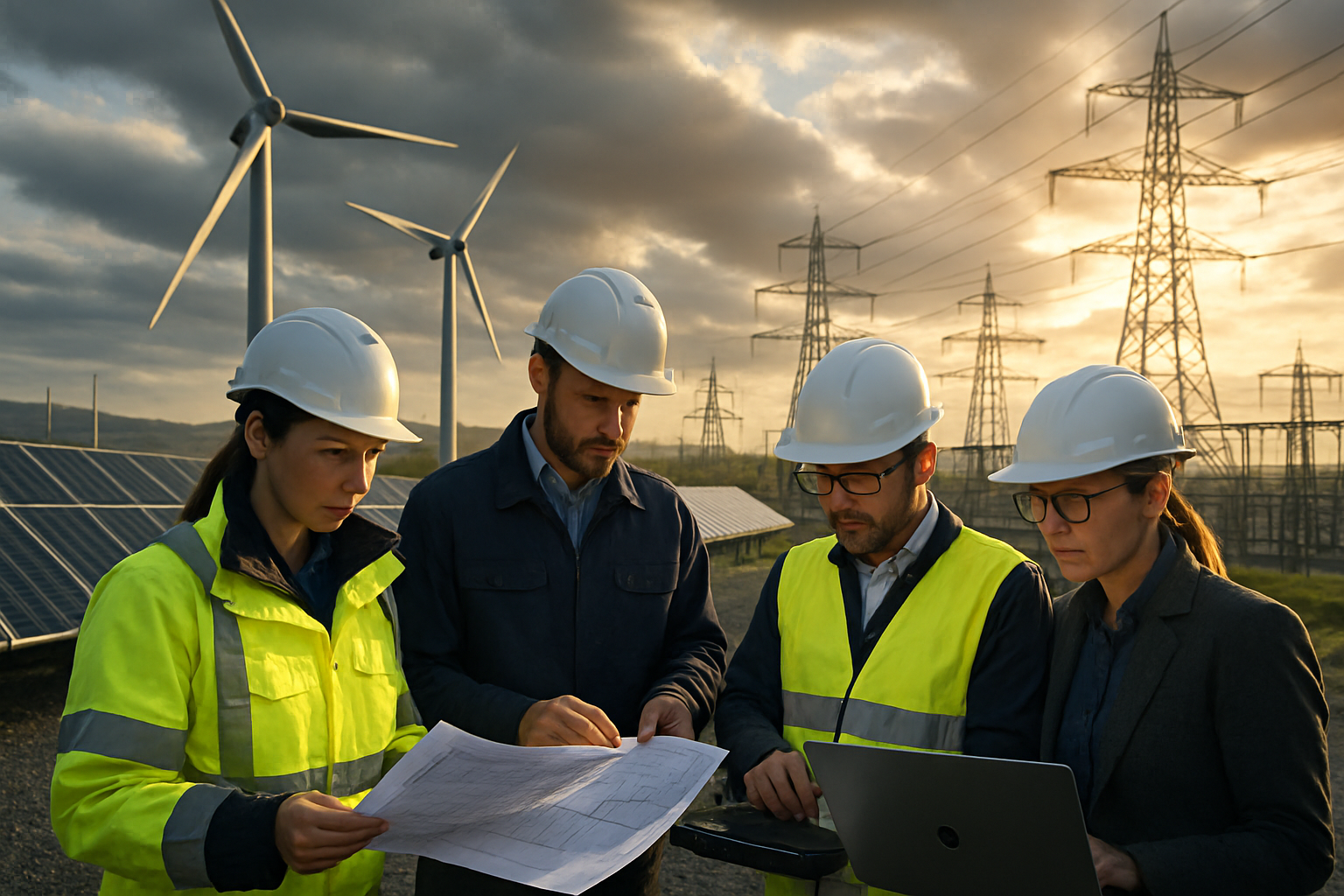
European energy markets experienced a seismic shift on February 13, 2026, as major developments across Croatia, Cyprus, and France signaled the continent's accelerating transition toward energy independence and strategic diversification amid mounting geopolitical pressures and climate urgency.
Croatia announced a major geothermal energy breakthrough near Zagreb, confirming significant underground thermal reserves that could transform the nation's renewable energy profile. The discovery in the Zapresic region represents Croatia's most substantial clean energy development in decades, positioning the country as a potential regional geothermal leader alongside established players like Iceland and Italy.
Croatia's Geothermal Goldmine
The Zapresic geothermal field, located approximately 20 kilometers west of Zagreb, contains what Croatian energy officials describe as "exceptional thermal potential" with underground temperatures reaching an estimated 120°C at depths of 2,500 meters. Initial assessments suggest the field could generate up to 150 megawatts of clean electricity once fully developed, equivalent to powering nearly 200,000 Croatian households.
"This discovery represents a paradigm shift for Croatia's energy independence strategy," stated Energy Minister Davor Filipović during a press briefing in Zagreb. "We're not just talking about renewable energy – we're talking about baseload, reliable power that operates 24/7 regardless of weather conditions."
The geothermal development aligns with Croatia's broader energy transition goals following the country's remarkable 99.25% absorption rate of EU structural funds in 2025, the highest efficiency rate among member states. This success has provided Croatia with substantial financial resources to pursue ambitious infrastructure projects while maintaining strict environmental compliance standards.
Cyprus Charts New Energy Course
Meanwhile, Cyprus is undergoing its own energy transformation as the state telecommunications company Cyta seeks unprecedented regulatory reform to enter the island's energy market. The company's board of directors issued a statement calling for "equal institutional flexibility" to operate in renewable energy sectors, arguing that the convergence of technology and energy represents a European-wide reality that Cyprus must embrace.
Cyta's strategy focuses specifically on providing green energy from renewable sources, leveraging the company's existing infrastructure network across the island. The proposal comes as Cyprus has achieved remarkable progress in energy efficiency, recording a 23.2% reduction in net domestic energy use intensity over the past decade – significantly outpacing the EU average of 4.1%.
"The legislation governing our operation has remained unchanged for decades while the energy landscape has been revolutionized. We seek the same opportunities that private providers already enjoy in expanding into energy markets."
— Cyta Board Statement, February 2026
The regulatory reform push represents a broader trend across Europe where telecommunications companies are increasingly positioning themselves as integrated utility providers. Cyta's extensive fiber optic network and digital infrastructure could provide advanced monitoring and management capabilities for renewable energy systems, creating synergies between telecommunications and energy sectors.
France's Nuclear Renaissance
Perhaps the most significant policy shift came from France, where new energy legislation dramatically altered the country's renewable energy trajectory in favor of nuclear power expansion. After years of political wrangling, the French Parliament approved legislation that slashes wind and solar power targets while dropping mandates for state-run energy provider EDF to shut down nuclear plants.
The policy reversal positions France firmly in the camp of countries prioritizing nuclear energy as the backbone of carbon-neutral electricity generation. As the world's second-largest nuclear energy producer after the United States, France's decision carries substantial implications for European energy strategy and global climate commitments.
The legislation eliminates previous renewable energy mandates that would have required significant increases in wind and solar capacity over the next decade. Instead, France will maintain its existing nuclear infrastructure while potentially expanding atomic energy generation to meet growing electricity demand from electric vehicles, heat pumps, and industrial electrification.
"Nuclear energy provides the stable, carbon-free baseload electricity that wind and solar simply cannot deliver," explained Dr. Marie Dubois, energy policy analyst at the Sorbonne. "France is betting that nuclear technology, combined with selective renewable deployment, offers a more reliable path to carbon neutrality than weather-dependent renewables alone."
European Energy Security Context
These developments occur within a broader context of European energy security challenges that have intensified since early 2026. The continent faces critical materials shortages for renewable energy infrastructure, with China controlling 60% of global production and 90% of refining capacity for lithium, cobalt, and rare earth elements essential for solar panels, wind turbines, and battery storage systems.
The US-EU-Japan Critical Minerals Partnership, involving 55 countries including seven African alternative suppliers, represents Europe's strategic response to supply chain vulnerabilities. However, developing alternative sources requires years of infrastructure development and massive investment commitments that may not materialize quickly enough to meet climate targets.
Memory chip shortages have also created unexpected challenges for renewable energy deployment, with prices surging sixfold since late 2025. These shortages affect the sophisticated control systems required for modern wind turbines, solar installations, and energy storage facilities, potentially delaying major projects across Europe.
Climate Urgency Drives Innovation
The urgency driving these energy developments cannot be overstated. January 2026 marked the 18th consecutive month of global temperatures exceeding 1.5°C above pre-industrial levels, demonstrating that climate warming is overriding natural variability cycles. This persistent warming trend has prompted European leaders to accelerate energy transition timelines despite technical and financial challenges.
Estonia continues to lead continental renewable energy development with its record-breaking battery storage facility capable of serving 90,000 households – the largest such installation in continental Europe. The facility provides crucial grid stability services as Estonia achieved 88% renewable electricity generation in 2024, establishing a template for other European nations pursuing rapid decarbonization.
Hungary's Paks II nuclear construction project, representing Europe's largest atomic energy initiative with backing from the International Atomic Energy Agency, demonstrates the nuclear renaissance gaining momentum across the continent. The project incorporates Russia's latest VVER reactor technology with advanced safety systems, positioning nuclear energy as a long-term solution for reliable carbon-free electricity generation.
Technological Integration and Smart Grids
The energy developments across Croatia, Cyprus, and France emphasize the critical importance of technological integration in modern energy systems. Croatia's geothermal project will incorporate digital monitoring systems, automated efficiency controls, and predictive maintenance capabilities that represent the evolution toward smart energy infrastructure.
Cyprus's telecommunications-energy convergence strategy reflects broader European trends toward integrated utility management. By leveraging existing digital infrastructure for energy applications, European countries can optimize renewable energy deployment while reducing operational costs and improving system reliability.
France's nuclear-focused approach relies heavily on advanced reactor monitoring systems and smart grid integration to accommodate fluctuating electricity demand. The country's extensive nuclear infrastructure provides a stable foundation for integrating renewable sources during peak generation periods while maintaining grid stability during renewable energy intermittency.
Economic Implications
The economic implications of these energy developments extend far beyond electricity generation. Croatia's geothermal discovery could attract substantial international investment in renewable energy technology and create thousands of specialized jobs in engineering, construction, and ongoing operations. The project represents an estimated €500 million investment opportunity with long-term employment benefits spanning decades.
Cyprus's energy market liberalization could stimulate competition and innovation while reducing electricity costs for consumers and businesses. The island's strategic location between Europe, Africa, and Asia positions it as a potential energy hub for renewable electricity trading and regional grid integration projects.
France's nuclear commitment provides economic stability through predictable electricity pricing and reduced dependence on volatile renewable energy markets. However, the decision also requires substantial ongoing investment in nuclear infrastructure maintenance and eventual reactor replacement as existing facilities reach end-of-life cycles.
Regional Integration and Cooperation
European energy integration remains crucial for maximizing the benefits of individual national developments. Croatia's geothermal resources could contribute to regional electricity markets through enhanced grid interconnections with neighboring countries. The stable baseload electricity from geothermal sources complements renewable energy variability across the Balkans region.
Cyprus's island status creates unique challenges for energy integration, but submarine cable connections to mainland Europe could enable the island to export excess renewable electricity during peak generation periods. The country's energy efficiency achievements provide a model for other Mediterranean nations facing similar climate and resource challenges.
France's nuclear strategy affects continental electricity markets through existing interconnections with neighboring countries. French nuclear electricity exports could increase as other European nations phase out coal and gas-fired generation, creating opportunities for enhanced energy cooperation and grid stability across borders.
Implementation Challenges
Despite promising developments, significant implementation challenges remain across all three countries. Croatia's geothermal project requires sophisticated drilling technology and environmental impact assessments to ensure sustainable development. The country must balance rapid development with ecosystem protection and community engagement in the Zagreb region.
Cyprus faces regulatory complexity in restructuring its energy sector while maintaining grid reliability and consumer protections. The transition from monopolistic utility structures to competitive energy markets requires careful coordination to prevent disruptions or price volatility that could undermine public support.
France's nuclear expansion occurs amid ongoing debates about radioactive waste management and long-term safety concerns. The country must address public skepticism about atomic energy while demonstrating that nuclear technology provides safe, reliable carbon-free electricity for decades to come.
Future Outlook
The energy sector developments across Croatia, Cyprus, and France in February 2026 represent a pivotal moment in European energy transition. These initiatives demonstrate diverse pathways toward energy independence and carbon neutrality while addressing the immediate challenges of supply chain vulnerabilities and climate urgency.
Success in these projects could establish templates for accelerated energy transformation across Europe, providing models for other countries facing similar challenges. Croatia's geothermal development offers lessons for exploiting underutilized renewable resources, Cyprus's regulatory reform demonstrates telecommunications-energy integration potential, and France's nuclear commitment shows how atomic energy can anchor carbon-neutral electricity systems.
The coming months will prove crucial for determining whether these ambitious energy initiatives can overcome technical, financial, and political obstacles to deliver the promised benefits. European energy security and climate goals depend increasingly on the successful implementation of innovative projects that balance immediate needs with long-term sustainability objectives.
As Europe navigates mounting geopolitical pressures and accelerating climate change, the energy developments of February 2026 may be remembered as the moment when the continent definitively chose technological innovation and strategic diversification over traditional energy dependency. The success or failure of these initiatives will likely influence European energy policy for decades to come.