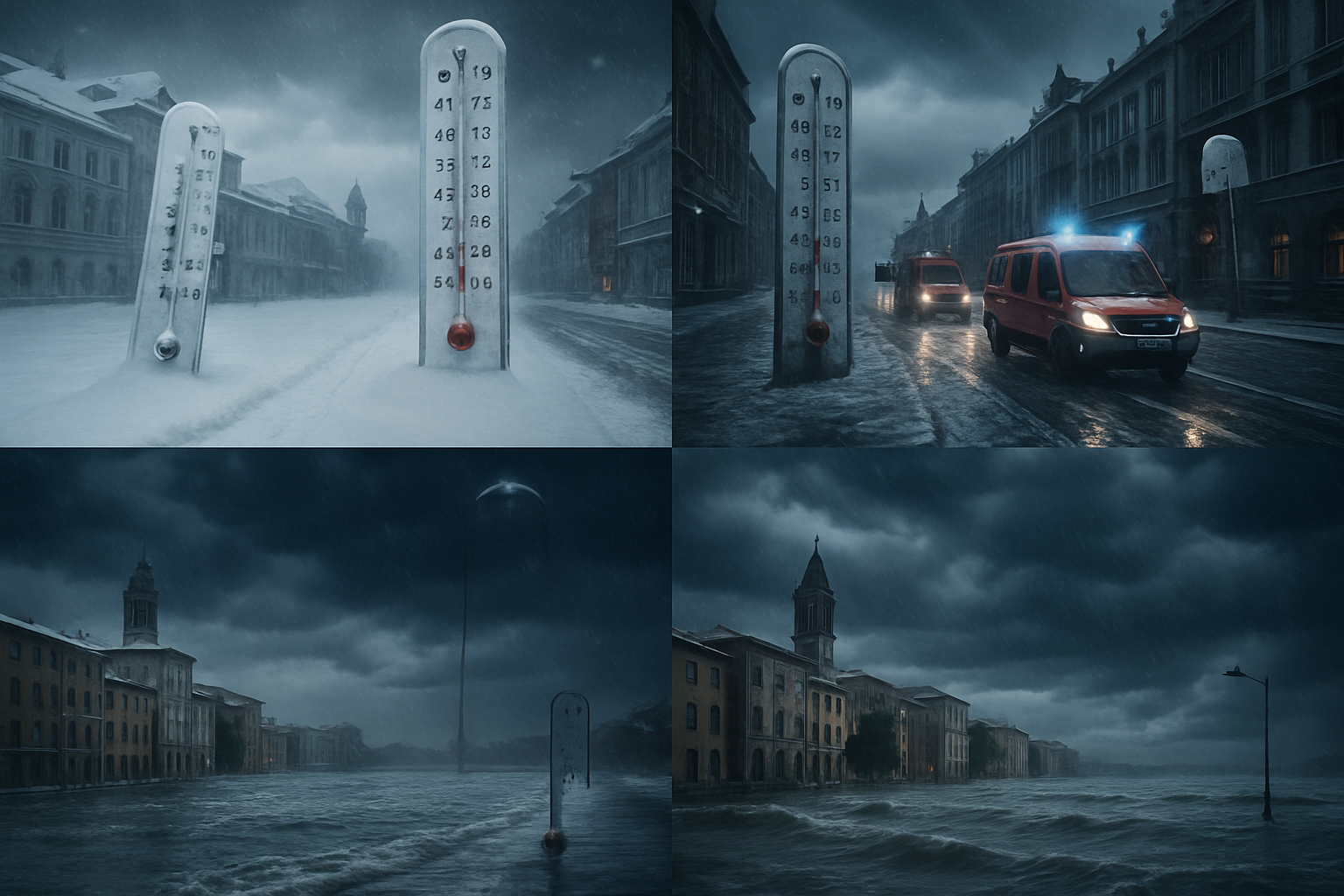
Europe faces one of its most severe weather crises in recent memory, with record-breaking cold snaps devastating northern regions while southern areas battle catastrophic storms and flooding, creating a continent-wide emergency that has claimed dozens of lives and crippled infrastructure systems.
The extreme conditions, part of a broader Northern Hemisphere weather pattern that has already killed over 110 people in North America, continue to escalate as February 2026 unfolds, with meteorologists warning of further deterioration in the coming days.
Arctic Conditions Devastate Northern Europe
Latvia recorded its coldest January since records began, with average temperatures plummeting to -8.7°C, a staggering 5.7 degrees below the 1991-2020 average, according to the Latvijas Vides, ģeoloģijas un meteoroloģijas centrs. The unprecedented cold has created cascading effects across the region's ecosystem and infrastructure.
In Denmark, pest control experts report mass die-offs of rats, moles, and various insects due to the "icy winter," highlighting the severe impact on local wildlife populations. The frozen conditions have fundamentally altered the country's urban pest management landscape, with implications that may persist well into spring.
Finland faces its own crisis as high-pressure systems create record-low sea levels along the entire Finnish coast. The Porvoossa region has hit historically low water marks, prompting maritime warnings across all coastal areas. The stable high-pressure system responsible for these conditions shows no immediate signs of movement.
Poland Bears Brunt of Arctic Blast
Poland continues to experience some of Europe's most extreme conditions, with the cold snap testing the nation's electrical grid to unprecedented levels. On Tuesday morning, electricity demand reached a historic peak of 27.7 gigawatts netto, surpassing all previous records, according to Polskie Sieci Elektroenergetyczne.
The strain on the power grid intensified further when, just hours later, the country registered record electricity production of 29.8 gigawatts netto to meet the extraordinary demand. The figures underscore how severely the cold is testing Poland's infrastructure limits.
"We are witnessing unprecedented strain on our electrical systems as citizens battle to stay warm in these extreme conditions."
— Polskie Sieci Elektroenergetyczne
Sweden Prepares for Dangerous Snow-Wind Combination
Swedish meteorological authorities SMHI have issued orange warnings for southeastern Skåne, where dangerous combinations of heavy snowfall and strong winds are expected from Thursday evening through Friday afternoon. The warnings cover multiple regions where blizzard conditions could create life-threatening situations.
The timing of these warnings reflects meteorologists' concerns about rapidly changing conditions that could trap residents and disrupt emergency services across southern Sweden's populated areas.
Spain Battles Historic Storms and Flooding
While northern Europe freezes, Spain confronts the opposite extreme as Storm Leonardo brings devastating rainfall that has already transformed the country's water landscape. Spanish reservoirs have surged to 67.3% capacity, an remarkable 8.1-point increase in just one week, following intense precipitation and snowmelt from recent storms.
The rapid water accumulation represents more than 14 percentage points above the decade average, with 31 reservoirs now at 100% capacity. However, this apparent benefit masks dangerous flood risks as Spain's meteorological agency AEMET warns of "extraordinarily persistent" rainfall ahead.
AEMET has activated red alerts for Wednesday, marking "extraordinary danger" in Grazalema (Cádiz) and Ronda (Málaga) due to expected torrential precipitation. The agency warns of "possible floods and rising water levels" as Storm Leonardo intensifies Atlantic weather patterns.
Educational System Responds to Crisis
The severity of Spain's weather emergency prompted regional authorities to suspend classes across almost all of Andalusia, excluding only Almería province. Andalusian President Juan Manuel Moreno announced the decision following emergency committee meetings, elevating the operational emergency phase to level 2.
The educational shutdown affects hundreds of thousands of students and demonstrates how extreme weather events increasingly disrupt normal social functions across Europe.
Historical Context of January 2026 Rainfall
Spain's AEMET has confirmed that January 2026 recorded 85% more rainfall than normal across the Iberian Peninsula, making it the wettest January in 25 years. The exceptional precipitation has saturated soils across almost the entire peninsula, creating dangerous conditions where additional rainfall cannot be absorbed.
This soil saturation significantly increases flood risks, as the ground's inability to absorb more water means even moderate additional rainfall can immediately translate into surface flooding and river overflow.
"The soils are completely saturated across almost the entire peninsula, meaning any additional rainfall poses immediate flood risks."
— AEMET (Spanish State Meteorological Agency)
Infrastructure Under Siege
The extreme weather has exposed vulnerabilities across Europe's infrastructure systems, from power grids straining under heating demands to transportation networks paralyzed by snow and ice. Finland's coastal facilities must adapt to unprecedented low sea levels, while Spain's drainage systems face tests from record rainfall volumes.
Emergency services across affected regions report being stretched to capacity, coordinating responses to power outages, transportation disruptions, and evacuation requirements simultaneously. The continent-wide nature of the crisis compounds response challenges as resources cannot easily be shared between regions facing opposite weather extremes.
Climate Context and Future Implications
These extreme weather events occur against the backdrop of January 2026 being confirmed as the hottest January on record globally, with 18 of the past 19 months exceeding 1.5°C above pre-industrial levels. The apparent contradiction between global warming and regional Arctic conditions reflects the complex dynamics of climate change, where warming trends can paradoxically trigger extreme cold events through disrupted atmospheric circulation patterns.
The current crisis follows devastating weather events across North America that killed over 110 people and affected 150 million Americans, suggesting a broader pattern of extreme weather instability across the Northern Hemisphere. Meteorologists warn that such extreme variability may become increasingly common as climate patterns continue evolving.
Emergency Response and International Coordination
The scale and geographic scope of Europe's weather crisis has prompted coordinated emergency responses at national and regional levels. From Sweden's orange warnings to Spain's red alerts, meteorological services are employing their most severe warning categories to communicate the extraordinary nature of current conditions.
The crisis tests Europe's emergency management systems and climate adaptation strategies, highlighting both the continent's preparedness capabilities and the limits of infrastructure designed for more moderate historical weather patterns. As conditions are expected to persist or worsen in coming days, authorities emphasize the importance of heeding weather warnings and avoiding unnecessary travel.
The February 2026 weather crisis represents a defining moment for European climate resilience, demonstrating how extreme weather events can simultaneously affect vast geographic areas with different but equally dangerous conditions, requiring unprecedented coordination and response capabilities across the continent.