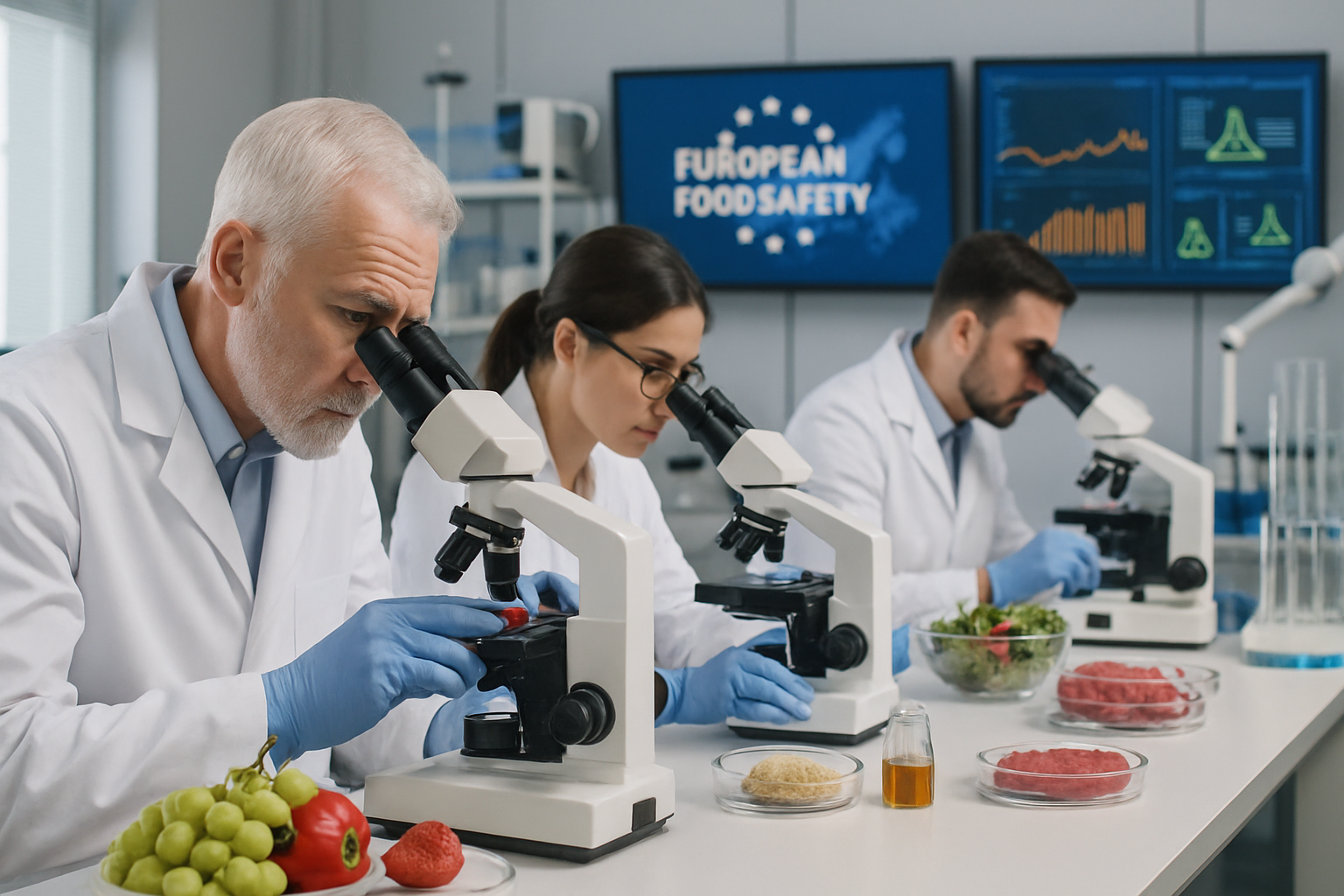
A dangerous wave of food contamination incidents across Europe is exposing critical vulnerabilities in food safety systems, as Latvia's Food and Veterinary Service confirms salmonella contamination in Lithuanian pork products while Austria grapples with another major baby food recall crisis.
The latest developments, reported on April 18, 2026, add to a mounting pattern of food safety failures that has plagued Europe throughout 2026, occurring during the 21st consecutive month of global temperatures exceeding 1.5°C above pre-industrial levels—a climate crisis that experts warn is creating optimal conditions for pathogen proliferation.
Salmonella Detection in Cross-Border Meat Trade
Latvia's Pārtikas un veterinārais dienests (PVD) announced the detection of salmonella bacteria in "Well done" brand pork carbonade imported from Lithuania, according to official service communications. The contaminated meat products, distributed through Latvian retail networks, have prompted immediate recall procedures and enhanced surveillance of Lithuanian meat imports.
This cross-border contamination incident highlights the interconnected nature of European food supply chains and the rapid transmission of safety risks across national boundaries. The discovery comes as European food safety authorities are already stretched thin managing multiple concurrent contamination crises affecting everything from infant formula to processed meats.
Austrian Baby Food Crisis Deepens
Simultaneously, Austrian authorities are managing a severe baby food safety crisis as HiPP baby food products—specifically potato and carrot varieties—have been withdrawn from over 1,000 SPAR supermarkets across the country due to safety concerns. The recall affects approximately 1,500 retail locations, making it one of the most extensive food safety actions in Austrian retail history.
The HiPP recall follows a devastating pattern of infant food contamination that has affected more than 36 children across the UK, France, Luxembourg, and Greece since early 2026. These incidents involved cereulide toxin contamination from Bacillus cereus bacteria in major formula brands including Nestlé and Danone products.
"The scale and frequency of these contamination incidents represents an unprecedented challenge to European food safety infrastructure. We're seeing pathogen behavior that our traditional safety systems weren't designed to handle."
— European Food Safety Authority official
Climate Change as a Threat Multiplier
Food safety experts increasingly point to climate change as a critical "threat multiplier" exacerbating contamination risks. The sustained warming trend—with January 2026 marking the hottest month on record—creates optimal conditions for pathogen survival and reproduction while disrupting traditional food preservation methods.
Dr. Maria Schneider, a food microbiologist at Vienna University of Technology, explains that rising temperatures allow bacteria typically constrained to specific seasons to co-circulate simultaneously, overwhelming safety systems designed to handle sequential rather than simultaneous threats.
The heat-stable nature of toxins like cereulide, which survives standard pasteurization processes, has forced European authorities to revise safety thresholds and implement enhanced molecular testing protocols that go beyond conventional bacterial screening methods.
Supply Chain Vulnerabilities Exposed
The Lithuanian-Latvian meat contamination and Austrian baby food crisis exemplify broader supply chain vulnerabilities that have emerged throughout 2026. Complex international distribution networks create multiple contamination points that can spread across geographic regions before detection occurs.

Industry analysts note that consumer confidence in multinational food corporations has declined measurably throughout 2026, driving a shift toward local sourcing and simplified supply chains that offer greater transparency and traceability.
Economic Implications Mount
The cascading food safety crises are creating substantial economic pressures across the European food industry. Insurance costs for food manufacturers and retailers are mounting rapidly, while mandatory molecular testing infrastructure investments have become standard requirements.
The infant formula sector has been particularly affected, with potential long-term market share losses as parents increasingly demand supply chain transparency and seek alternatives to major multinational brands. Some jurisdictions are implementing criminal executive liability frameworks for serious food safety violations.
Premium pricing for locally-sourced, traceable products has become economically viable as consumer awareness of food safety vulnerabilities increases. Local producers are gaining competitive advantages through transparency while multinationals struggle to maintain consumer confidence during repeated contamination incidents.
Regulatory Response Evolution
European Food Safety Authority (EFSA) officials confirm they are developing standardized international protocols and coordinated early warning systems for cross-border contamination prevention. Enhanced molecular testing capabilities for detecting heat-stable toxins represent a significant advancement in food safety technology.
Social media platforms have emerged as powerful enforcement tools, with viral exposure of violations accelerating regulatory responses and enabling citizen participation in food safety monitoring. The democratization of food safety oversight through digital platforms represents a fundamental shift from traditional regulatory approaches.
Prevention-First Transformation
Industry experts identify 2026 as a critical transformation turning point requiring enhanced international coordination, climate-adaptive processing technologies, and prevention-focused approaches that integrate traditional wisdom with modern safety science.
Countries implementing comprehensive prevention programs report superior cost-effectiveness through decreased crisis interventions and improved population health outcomes. This represents an evolution from reactive crisis management toward proactive food system resilience building.
"We're at a decisive juncture where the choices we make about food safety protocols and international cooperation will determine global food security trajectories for decades ahead."
— International food safety expert
International Cooperation Imperative
Despite funding challenges facing the World Health Organization, bilateral partnerships and regional cooperation networks continue driving food safety innovation through knowledge sharing and coordinated responses. The African Continental Free Trade Agreement is establishing agricultural standards that enable coordinated responses to challenges individual nations cannot address independently.
Success factors identified by international food safety experts include sustained political commitment to healthcare investment, comprehensive professional training for climate-adaptive approaches, authentic community engagement, and continued international cooperation for knowledge sharing and resource optimization.
The Path Forward
As Europe grapples with this unprecedented food safety crisis, the window for building resilient, equitable food systems is narrowing rapidly amid accelerating environmental pressures. Food safety is increasingly recognized as a global public good requiring collective protection rather than individual national responses.
The convergence of climate change, supply chain complexity, and evolving pathogen behavior demands comprehensive regulatory reforms addressing immediate safety threats and underlying systemic vulnerabilities. The choices made during this critical period will likely determine whether European food systems can adapt to the realities of a climate-altered world while protecting public health.
The ongoing crisis serves as a stark reminder that food safety infrastructure, much like climate systems, operates as an interconnected global network where failures in one region can rapidly cascade across borders, affecting millions of consumers who depend on stable, safe food systems for their daily survival.