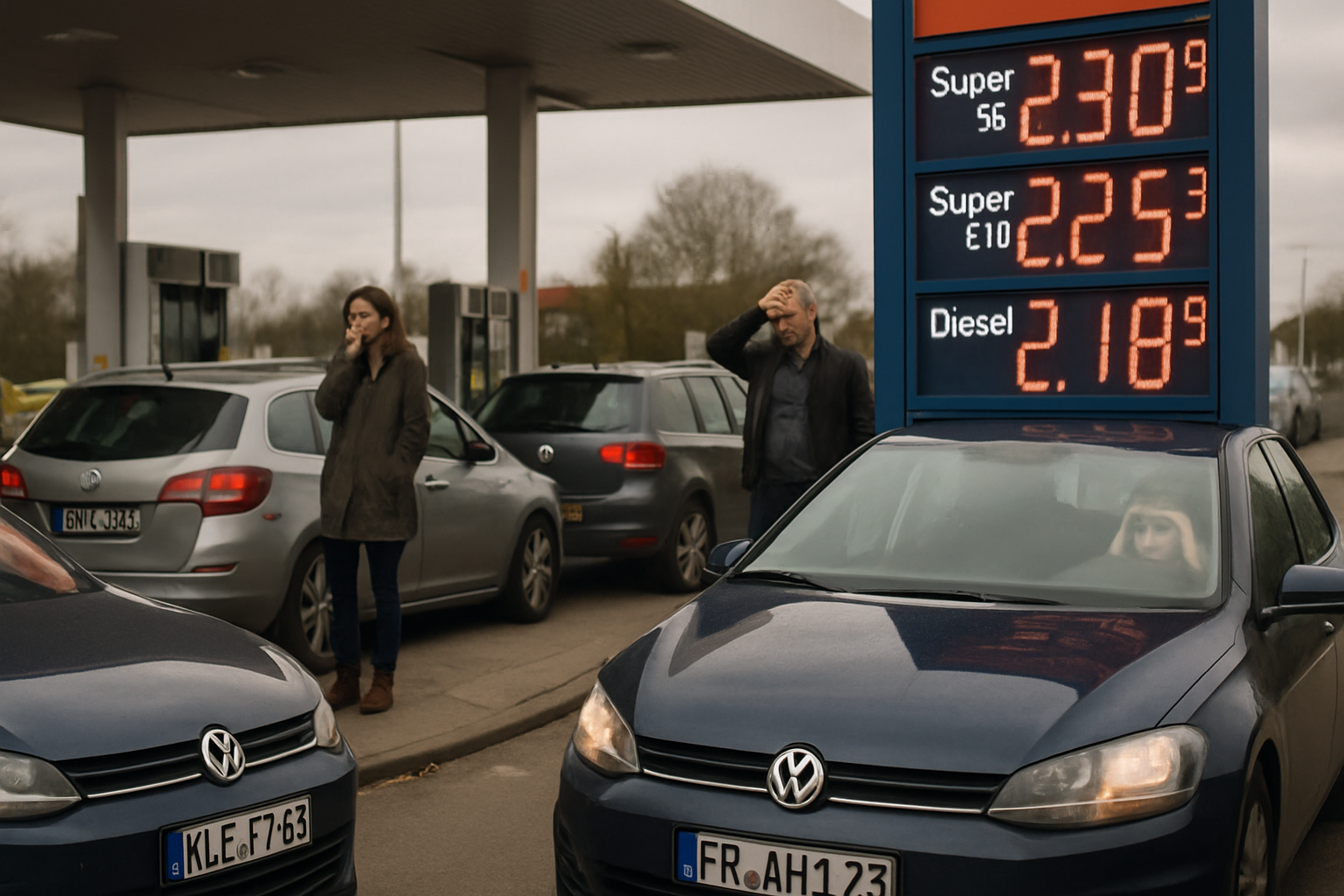
European governments are implementing unprecedented emergency measures as fuel prices surge to historic levels across the continent, with diesel exceeding €2 per liter in multiple countries and creating the most severe consumer hardship since the 1970s oil crisis.
The crisis has reached critical proportions with Estonia recording diesel prices of €2.169 per liter on Monday, while Ireland prepares comprehensive energy relief measures including haulier tax rebate schemes and doubled fuel allowance payments. Norway, despite being a major oil producer, has seen diesel prices exceed 30 kroner per liter at multiple locations, highlighting the global nature of the supply disruption.
Coordinated Government Response
Sweden led the most dramatic intervention when Prime Minister Ulf Kristersson announced emergency fuel tax cuts to EU minimum levels, effective from May 1 through September 30. The measures will reduce gasoline prices by approximately 1 krona and diesel by 40 öre, costing the government 1.5 billion kronor and including electricity subsidies for high energy bills.
"The Middle East is putting the Swedish economy to the test," Kristersson stated, identifying Malmö as the most vulnerable region due to continental European market integration.
"We are seeing the most comprehensive European energy market intervention since the 1970s, demonstrating enhanced crisis management capabilities while exposing fundamental vulnerabilities."
— EU Energy Analyst
Latvia's Finance Ministry submitted legislation for approximately 15% diesel excise tax reductions, describing it as a "fiscally neutral package addressing rapid fuel cost increases." Estonia's diesel reached all-time record levels despite government efforts, while Croatia experienced chaos at fuel stations with diesel shortages reported in Zagreb.
Regional Variations and Impact
The crisis has revealed stark regional disparities across Europe. Bosnia and Herzegovina faces particularly dire circumstances with only two days of gas reserves remaining. France deployed 500 fuel station inspectors to prevent price manipulation, while Romania outlined five emergency scenarios to prevent diesel from exceeding 10 lei per liter.
Hungary implemented immediate price caps on gasoline and diesel to counter "war-driven price explosions," while Slovakia activated strategic petroleum reserves for the first time under current protocols. Denmark's fuel-saving initiatives reflect growing concerns about prolonged supply disruptions.
Root Cause and Global Context
The European crisis stems from Iran's Revolutionary Guard declaration that the Strait of Hormuz is "unsafe for shipping," effectively blocking 40% of global seaborne oil transit through the critical 21-mile chokepoint. Oil prices have breached $100 per barrel for the first time since 2022, with Brent crude peaking at $119.50 and WTI reaching a record single-day jump of 18.98% to $108.15.
The International Energy Agency has responded with the largest strategic petroleum reserve release in its 50-year history, deploying 400 million barrels from 32 countries. Japan is releasing 80 million barrels, marking the first such deployment since the 2011 Fukushima disaster, despite the country's 95% dependence on Middle Eastern oil.
Consumer and Economic Impact
Swedish consumers face electricity increases of 10-20 öre with gasoline rising 1-2 kronor, making Malmö the most exposed region due to continental integration. Irish retailers warn of potential weekend price doubles, while Austrian fuel costs have increased 20% with trade unions criticizing "war-driven price explosions."
The aviation industry faces parallel disruption with over 18,000 flights cancelled worldwide, creating the most extensive disruption since COVID-19. Jet fuel costs have surged from $85-90 to $150-200 per barrel, representing a 122% increase that airlines are passing to consumers through emergency surcharges.
Emergency EU Coordination
EU High Representative Kaja Kallas activated unprecedented crisis management protocols, representing the most comprehensive emergency response in the bloc's history. The measures include state aid programs for energy-intensive industries, direct price compensation mechanisms, and accelerated green transition discussions.
The European Commission issued urgent directives to all 27 member states to maximize natural gas storage levels and prepare emergency energy protocols. Natural gas prices have surged 24% in Europe, reaching €47.32/MWh, the highest levels since February 2025.
Long-term Implications
The crisis has exposed dangerous over-dependence on strategic chokepoints, requiring fundamental restructuring of European energy architecture. Estonia's model of 88% renewable electricity generation and continental Europe's largest battery storage system serving 90,000 households represents a potential pathway to energy independence, though transitions require years of implementation.
"This crisis highlights the urgent need for fundamental restructuring of European energy architecture to reduce dependence on volatile geopolitical regions."
— Energy Security Expert
The recovery timeline remains uncertain, depending on military and diplomatic developments rather than predictable economic factors. Unlike weather-related disruptions, the current crisis requires coordinated international responses addressing geopolitical root causes.
Template-Setting Crisis Management
March 2026 represents a watershed moment for European governance, testing multilateral cooperation and institutional resilience under extreme pressure. The success or failure of coordinated European responses will influence economic governance approaches for decades, determining the effectiveness of energy security frameworks in an increasingly volatile global environment.
UN Secretary-General António Guterres has called this "the greatest test of multilateral cooperation and crisis management in the modern era," emphasizing the template-setting significance for 21st-century energy security planning.
As European governments continue implementing emergency measures, the crisis serves as a stark reminder of the continent's energy vulnerabilities while demonstrating both the potential and limitations of coordinated crisis response in an interconnected world.