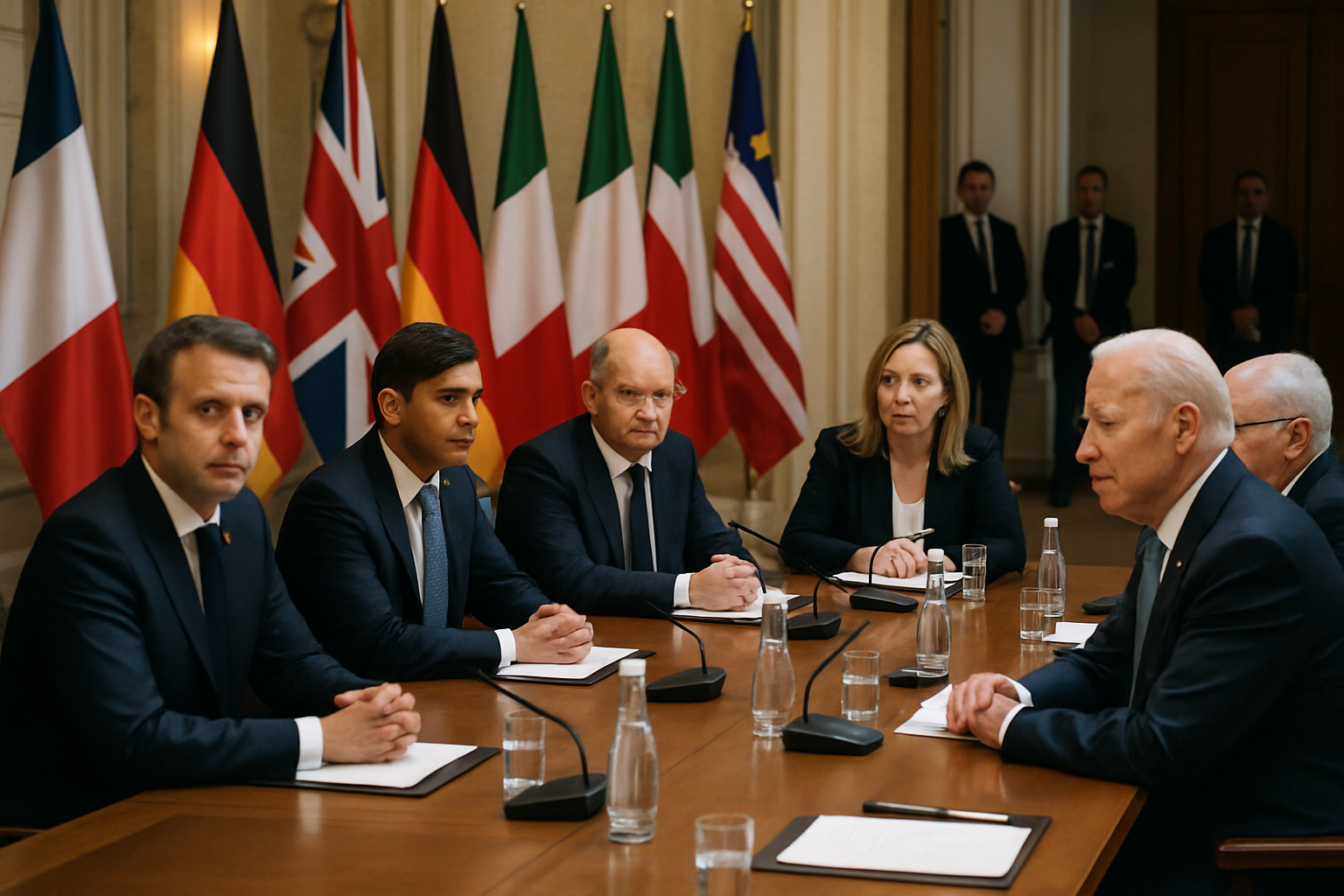
France and Britain are convening an emergency international summit in Paris Friday with representatives from approximately 40 countries to address the ongoing security crisis in the Strait of Hormuz, which has effectively closed 40% of global oil transit routes and triggered the most severe energy crisis since the 1970s oil shocks.
The summit represents the first major European diplomatic initiative to independently influence the Middle East crisis that began with a US-Israeli bombardment of Iran over six weeks ago. Notably absent from the invitation list are the United States, Israel, and Iran – marking Europe's attempt to chart a "third way" toward resolving the strategic waterway dispute.
European Leadership Amid Global Crisis
French President Emmanuel Macron and British Prime Minister Keir Starmer have emerged as central figures in organizing what officials describe as the most significant European-led diplomatic intervention in Middle Eastern affairs in decades. The initiative comes as energy prices continue to soar and global supply chains remain severely disrupted.
"Europe insists it is not a party to the war, but as energy prices soar and munitions get diverted from Ukraine, it is already paying the price," according to diplomatic sources familiar with the discussions. The European Commission has warned of "considerable" impact on European economies, with urgent measures planned for acceleration.
German Chancellor Olaf Scholz is participating in what media reports describe as consultations on a potential "European mission in the Persian Gulf." However, European officials emphasize they are not planning a military mission to force the blockade, instead seeking diplomatic solutions through multilateral pressure.
The Hormuz Security Crisis
The Strait of Hormuz, a 21-mile waterway connecting the Persian Gulf to the Arabian Sea, has been effectively closed since Iran's Revolutionary Guard declared it "unsafe for shipping" and deployed an estimated 2,000-6,000 naval mines. The closure affects the passage of over 150 oil and LNG tankers worth billions in cargo, with major shipping companies Maersk and MSC suspending all Persian Gulf operations.
"If the Strait of Hormuz remains closed for an extended period, we may face the greatest energy crisis in history."
— Kyriakos Pierrakakis, Greek Minister of National Economy and Finance
Oil prices have repeatedly breached $100 per barrel for the first time since 2022, with Brent crude peaking at $119.50 and WTI hitting a record single-day jump of 18.98% to $108.15. The International Energy Agency (IEA) has deployed the largest strategic petroleum reserve release in its 50-year history – 400 million barrels from 32 countries.
Coalition Building and International Support
China is among the Asian nations expressing support for the European initiative, with diplomatic sources indicating "full support" for efforts to restore normal navigation through the strait. The diverse coalition reportedly includes nations from Europe, Asia, and other regions, reflecting the global impact of the shipping disruption.
The summit format deliberately excludes the primary antagonists – the United States, Israel, and Iran – in an attempt to create space for diplomatic solutions without the direct involvement of the warring parties. This approach mirrors successful middle-power mediation efforts, such as Pakistan's earlier attempts to broker dialogue between Washington and Tehran.
Economic and Energy Implications
The crisis has triggered unprecedented government interventions worldwide. Multiple European nations have implemented emergency measures including fuel price caps, strategic reserve releases, and enhanced market monitoring to prevent manipulation.
Greece has been particularly vocal about the economic implications, with Finance Minister Pierrakakis warning the IMF that extended closure of the strait could precipitate the "greatest energy crisis in history." The country's maritime industry, crucial to its economy, faces severe disruption from the shipping paralysis.

Natural gas prices have exploded by 24% in Europe and 78% in the United States, reaching €47.32 per MWh – the highest levels since February 2025. Qatar's LNG production halt at Ras Laffan and Mesaid facilities, which account for approximately 20% of global exports, has further tightened energy markets.
Aviation and Transport Crisis
The crisis extends far beyond energy markets. Over 18,000 flights have been cancelled worldwide – the most extensive disruption since COVID-19. Eight Middle Eastern countries have implemented simultaneous airspace closures, creating what industry analysts describe as an "aviation black hole" between Europe and Asia.
Dubai International Airport, the world's busiest with 86 million passengers annually, remains closed due to missile damage. Major carriers including Emirates, Air France-KLM, and Wizz Air have suspended operations indefinitely. Jet fuel prices have surged 122% from $85-90 to $150-200 per barrel, forcing airlines to implement emergency fare increases globally.
Diplomatic Precedent and Future Implications
The European initiative represents what UN Secretary-General António Guterres has described as the "greatest test of multilateral cooperation in the modern era." The success or failure of this European-led diplomatic effort could establish important precedents for 21st-century crisis management and the role of middle powers in global security issues.
Previous diplomatic efforts have faced significant challenges. Earlier Pakistan-mediated talks between the US and Iran achieved a temporary ceasefire but ultimately collapsed over nuclear program disagreements and disputes about the scope of any settlement. Iran has maintained its ballistic missiles and regional proxies as "red lines" excluded from negotiations, while the US has demanded comprehensive coverage of missiles, armed groups, and human rights issues.
Nuclear Governance Context
The crisis unfolds against the backdrop of broader nuclear governance challenges. The New START treaty between the US and Russia expired in February 2026, marking the first time in over 50 years without nuclear constraints between the superpowers. Iran continues uranium enrichment at 60% purity with over 400 kilograms of weapons-grade material, approaching the threshold for multiple nuclear weapons capability.
Regional Coalition Dynamics
The ongoing crisis has severely strained traditional Middle Eastern alliances. The unprecedented consensus among Saudi Arabia, the UAE, Qatar, and Egypt supporting diplomatic solutions has been tested by Iranian retaliatory strikes during the conflict. Iranian "Operation True Promise 4" resulted in casualties across the region: one civilian killed in Abu Dhabi, 32 injured in Kuwaiti airport strikes, and eight wounded in Qatar despite Patriot missile intercepts.
"We condemn attacks on sisterly countries and warn of comprehensive chaos spreading across the region."
— President Abdel Fattah el-Sisi of Egypt
The European approach notably does not require these regional actors to choose between their traditional security partnerships with the United States and accommodation with Iranian demands, potentially offering a face-saving framework for all parties.
Technical Challenges and Alternative Routes
The Strait of Hormuz represents a critical single-point failure in global logistics, with no realistic alternatives for the volume of oil and gas that normally transits the waterway. Alternative routes through the Arabian Peninsula lack adequate capacity and involve significant time and cost penalties.
Industry experts warn that even if the strait reopens, recovery of normal shipping operations could take months. The deployment of naval mines has created lasting safety concerns, and the stranded tankers represent complex logistical challenges requiring coordinated international efforts to resolve.
Looking Forward
As European leaders gather in Paris, they face the challenge of creating sustainable solutions to what energy analyst Samuel Ciszuk describes as "the most severe energy security crisis in decades, with single-chokepoint vulnerabilities fully exposed." The summit's success could provide a framework for future crisis management in an increasingly multipolar world.
The stakes extend far beyond immediate energy prices and shipping schedules. The outcome of this European initiative will influence approaches to territorial sovereignty, energy security architecture, and conflict resolution for decades to come. Success could strengthen diplomatic precedents for managing international crises without military escalation, while failure might accelerate preferences for military solutions in future territorial and nuclear disputes.
The next few days will be critical in determining whether this European-led diplomatic innovation can bridge the fundamental disagreements that have thus far prevented a lasting resolution to one of the most dangerous international crises since the Cold War ended.