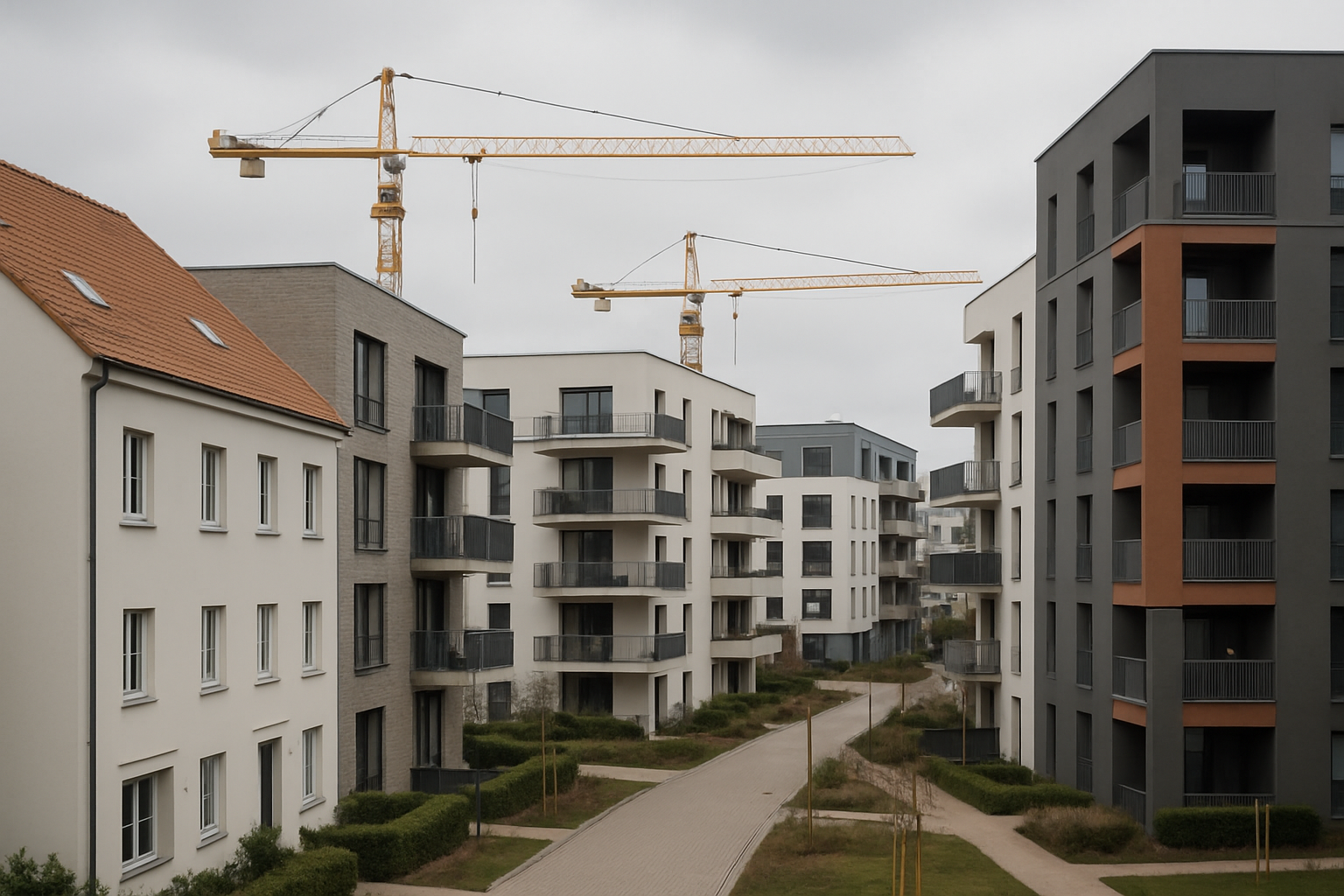
Housing markets across Eastern and Western Europe are experiencing fundamental transformations as traditional property investment strategies collapse under the weight of construction industry crises and shifting investment patterns that favor corporate buyers over families.
A Planet News investigation spanning Bulgaria, Lithuania, and Portugal reveals how European housing markets are fragmenting along economic lines, with celebrity purchases highlighting the growing divide between those who can access homeownership and those increasingly locked out of traditional wealth-building pathways.
The Great Property Investment Myth
Bulgaria's housing market exemplifies the broader European crisis, with property investment expert Ivo Dimovski warning that the era of "quick profits" from real estate has ended. Speaking to Bulgarian National Radio, Dimovski cautioned that rushed property deals often lead to financial losses rather than the easy gains many investors expect.
"Many people enter deals expecting to quickly become richer, influenced by others' experiences or isolated success stories, but reality is often very different."
— Ivo Dimovski, Property Investment Expert
The warning comes as Bulgaria joins a growing list of European countries where housing affordability has reached crisis levels. Previous Planet News analysis documented Sofia experiencing a 20% rental surge earlier in 2026, with provincial transactions dropping to two-thirds of previous levels, indicating a fundamental market shift beyond typical seasonal patterns.
This reality check on property investment coincides with Lithuania's entertainment sector demonstrating the continuing appeal of homeownership among those with sufficient resources. Eurovision 2024 contestant Silvester Belt recently announced his acquisition of a new home to his 94,200 Instagram followers, representing the kind of celebrity property purchase that draws attention while highlighting the widening gap between high earners and ordinary families.
Corporate Buyers Reshape European Markets
The most significant development affecting European housing accessibility emerges from Portugal, where corporate buyers have fundamentally altered market dynamics. According to new analysis, companies now purchase one in every eight houses, paying an average of 6% more than families for the same properties.
This corporate dominance helps explain why Portuguese housing prices reached record levels in 2025, with much of the surge attributed to acquisitions by businesses and non-resident buyers who consistently outbid local families. The trend represents a fundamental shift from housing as family shelter to housing as corporate asset class.
The Portuguese situation reflects broader European patterns documented in Planet News investigations throughout early 2026. Corporate investment strategies now favor clear regulatory frameworks and transparent governance over geographic diversification, creating concentrated pressure in markets with predictable policy environments while potentially neglecting regions with regulatory uncertainty.
Construction Industry Crisis Deepens
Underlying all European housing challenges is an unprecedented construction industry crisis affecting every market segment. Rising material costs have created negative developer profit margins across the region, with memory chip shortages driving semiconductor prices up six-fold due to AI development demand.
This technology crisis particularly impacts modern developments requiring smart building technologies, adding 20-30% to construction costs until new fabrication facilities come online in 2027. Samsung, SK Hynix, and Micron are operating at full capacity but cannot meet demand for building management systems, creating a bottleneck that extends far beyond traditional construction materials.
The supply-side constraints create market dynamics where existing properties gain value due to limited new competition while simultaneously restricting options for new buyers. This particularly affects younger demographics and middle-income families who depend on new construction for affordable entry points into homeownership.
Gender and Generational Divides
Planet News analysis reveals that young women across Europe are falling behind in homeownership despite expressing stronger desires for property ownership than their male counterparts. This systematic exclusion from traditional wealth-building pathways creates long-term financial disadvantages affecting retirement planning and family formation decisions.
Under-30 demographics are turning away from property investment as deposit requirements extend beyond reasonable saving timelines, creating generational wealth divides that reverse post-war economic optimism. Over half of surveyed European populations now believe children born today will be financially worse off than their parents.
The Vienna Alternative
Against this backdrop of housing crisis, Vienna continues to demonstrate that affordable housing remains achievable in prosperous European cities through comprehensive policy frameworks. The Austrian capital's social housing covers 60% of the rental market through sustained public investment, treating housing as essential infrastructure rather than commodity.
The Vienna model requires sustained political commitment and integration of housing policy with economic development, recognizing that housing accessibility determines whether cities can attract and retain the diverse talent necessary for 21st-century innovation economies.
Regional Coordination Emerges
The European Union is increasingly recognizing housing as a transnational challenge requiring coordinated responses rather than isolated national policies. Mediterranean countries are leading innovative approaches, including Croatia's program targeting 600,000 empty homes for affordable rental conversion and Cyprus's advancing foreign investment restrictions on residential property.
These initiatives reflect growing understanding that European housing markets are increasingly interconnected through migration patterns, investment flows, and economic spillovers affecting neighboring regions. Success depends on locally-adapted strategies that incorporate community input, environmental considerations, and sustainable urban development principles.
Technology Integration Despite Constraints
Despite supply chain disruptions, technology integration continues advancing in European housing development. Smart city systems, sustainable materials, and community-centered design are transitioning from premium options to standard requirements, though implementation costs have increased dramatically due to semiconductor shortages.
Digital infrastructure has become critical for attracting remote workers to secondary cities and rural areas, creating new residential demand patterns that reshape urban-suburban dynamics. However, these technological advances often come with premium pricing that can exclude lower-income buyers from accessing modern housing amenities.
Strategic Implications for European Competitiveness
Housing accessibility is increasingly determining whether European cities can remain accessible to diverse populations or transform into exclusive enclaves for the wealthy. The stakes extend far beyond individual homeownership to encompass social mobility, regional development, and economic competitiveness in the global innovation economy.
Current housing policy choices are shaping regional competitiveness and social stability for decades ahead. The window for effective action is narrowing due to demographic pressures, urbanization trends, and climate adaptation complexity that requires continued innovation in financing mechanisms and governance frameworks.
The Path Forward
Success in addressing Europe's housing crisis requires sophisticated approaches that balance adequate supply with affordability for middle and lower-income populations while maintaining construction industry viability. International cooperation is essential for knowledge sharing and coordinated policy responses as challenges prove increasingly interconnected across national borders.
March 2026 represents a critical juncture for European housing policy, where current choices will influence urban development patterns and social cohesion for generations. The evidence from Bulgaria's investment warnings, Lithuania's celebrity purchases, and Portugal's corporate dominance suggests that traditional market approaches may prove insufficient for the current crisis's scale and complexity.
As European housing markets continue their transformation, the challenge lies in developing innovative frameworks that serve diverse regional conditions while maintaining market stability and accessibility across all income levels. The developments documented across these three nations provide crucial insights into how housing policy must evolve to meet the unprecedented challenges facing European families and communities in 2026 and beyond.