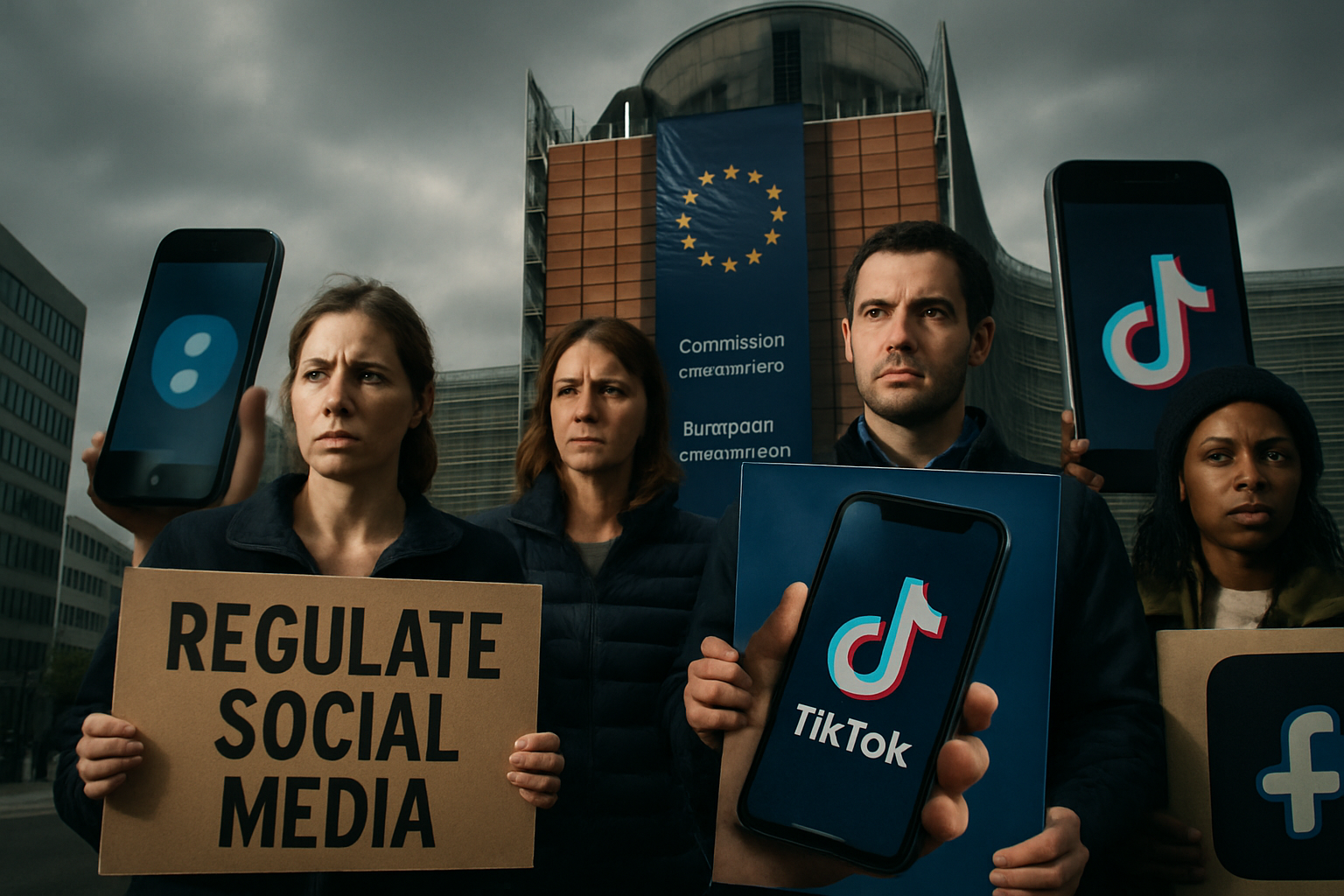
European regulatory authorities are intensifying their unprecedented crackdown on social media platforms with the European Commission announcing preliminary findings that TikTok has breached EU Digital Services Act requirements through "addictive design" features specifically targeting user dependency, while Slovakia becomes the latest nation to prepare comprehensive social media restrictions for minors.
The European Commission's investigation, spanning nearly two years, has identified what officials describe as systematic violations of EU digital platform regulations designed to protect vulnerable users, particularly children and adolescents. The findings represent the most significant regulatory challenge to social media design practices worldwide, with potential penalties reaching 6% of TikTok's global annual revenue—billions of euros in potential fines.
Commission Identifies Specific "Addictive" Features
European Digital Commissioner Henna Virk announced that the investigation has identified several platform features "susceptible to harm physical and mental well-being," particularly among minors. These include unlimited scrolling mechanisms, automatic video playback systems, personalized recommendation algorithms designed to maximize engagement time, and repeated push notifications designed to draw users back to the platform.
"TikTok must act and change its interface in Europe to protect our minors," Virk stated during the announcement. The investigation operates under Digital Services Act requirements affecting platforms exceeding 45 million European users, granting the Commission authority to demand specific design modifications, operational changes, and transparency measures beyond traditional financial penalties.
"This investigation represents a fundamental challenge to the traditional technology self-regulation model that has governed the industry for decades."
— European Commission Digital Policy Analyst
TikTok Rejects Findings, Promises Legal Challenge
TikTok has responded with categorical rejection of the Commission's preliminary conclusions, characterizing them as "fundamentally flawed" and promising vigorous legal challenges through all available channels. The company argues that the identified features represent standard industry practices enhancing user experience rather than creating harmful dependencies.
The platform's response highlights the broader tension between technology companies and European regulators over the balance between user engagement and user welfare. Industry observers suggest this case could establish precedents affecting infinite scroll, autoplay, and algorithmic curation across all major social media platforms.
Slovakia Joins European Coordination Movement
Adding to the regulatory pressure, Slovakia has announced plans to implement comprehensive social media restrictions for children under 15, joining what has become a coordinated European response led by Spain's revolutionary framework. The Slovakian initiative represents the latest addition to a growing continental movement seeking to fundamentally reshape how young people interact with digital platforms.
Deputy Prime Minister Matej Arčon confirmed that Slovakia is preparing legislation that would effectively end "unlimited freedom in the online world" for young Slovaks, targeting technologies that teenagers use daily, including Instagram and TikTok. The announcement follows Slovakia's earlier concerns about what officials describe as an "era of unrestrained digital freedom" potentially coming to an end.
Spain's Template Spreads Across Europe
The coordinated European response builds on Spain's groundbreaking five-point plan announced by Prime Minister Pedro Sánchez, which includes complete under-16 social media prohibition, mandatory robust age verification systems, legal definitions of algorithmic manipulation, unprecedented criminal liability for platform executives, and digital sovereignty protections.
Greece is reportedly "very close" to implementing under-15 restrictions using their Kids Wallet application as an enforcement mechanism. France, Denmark, and Austria are conducting formal national consultations, while the United Kingdom has launched official review processes. This simultaneous timing prevents what experts call "jurisdictional shopping," where platforms might relocate operations to avoid regulations.
Industry Faces Fundamental Transformation
The convergence of regulatory pressures represents what analysts describe as a shift from industry self-regulation to government enforcement with meaningful legal consequences. The potential for criminal prosecution of platform executives—a first globally—creates personal legal risks beyond traditional corporate penalties.
Technology observers suggest that success of European regulatory frameworks could trigger worldwide similar legislative initiatives, fundamentally altering how global technology platforms operate. Failure, however, might strengthen industry arguments against government intervention in platform design and operations.
Implementation Challenges and Technical Requirements
The practical implementation of these regulations faces significant technical challenges. "Real age verification systems" suggested by multiple European authorities implies identity document or biometric authentication requirements, raising substantial privacy concerns about government surveillance capabilities.
Cross-border enforcement requires sophisticated international cooperation between national authorities. The criminal executive liability framework creates unprecedented personal legal accountability for technology leadership, potentially forcing greater cooperation between platforms and government agencies.
"The success of these measures will depend on balancing child protection with digital rights while maintaining economic competitiveness in the global technology sector."
— European Technology Policy Expert
Global Implications and International Monitoring
The European regulatory wave is being closely monitored internationally as a critical test case for 21st century technology governance. The approach represents the most aggressive digital platform regulation in history, potentially reshaping global technology operations if successful.
Australia's model, which successfully eliminated 4.7 million social media accounts through age verification requirements, provides precedent for government digital intervention capabilities. However, the European framework uniquely includes criminal prosecution potential, adding a dimension of personal legal accountability unprecedented in global technology regulation.
The timing coincides with broader concerns about children's technology relationships, mental health impacts, and the appropriate role of government in digital spaces. Civil rights organizations have emphasized the historical significance of protecting developing minds from algorithmic manipulation designed to maximize corporate engagement over user wellbeing.
Economic and Market Implications
The potential 6% global revenue penalty represents billions of dollars in potential fines for TikTok, owned by Chinese company ByteDance. The investigation occurs amid broader European regulatory actions affecting multiple technology platforms, from content moderation to data privacy requirements.
Compliance costs associated with fundamental platform modifications may advantage larger technology companies over smaller competitors, potentially reducing market competition while increasing regulatory compliance expenses. The requirement for robust age verification systems demands significant infrastructure investment across the entire social media industry.
Financial markets are monitoring the regulatory developments closely, as successful European enforcement could establish templates for similar initiatives worldwide, affecting platform valuations and operational models globally.
Looking Forward: Timeline and Next Steps
TikTok faces a response period before the European Commission reaches final conclusions. Formal proceedings could require legally binding platform modifications, with appeals possible through European courts potentially extending resolution into 2027. The Commission retains authority to demand interim measures for immediate risk mitigation.
Parliamentary approval will be required across participating European nations throughout 2026, with implementation timelines varying by country. The success or failure of these coordinated regulatory initiatives will likely determine whether similar approaches spread globally or face successful industry resistance.
The developments represent a fundamental test of whether democratic governments can effectively regulate global technology platforms, balancing innovation with social responsibility while maintaining competitive economic positions in an interconnected digital economy.