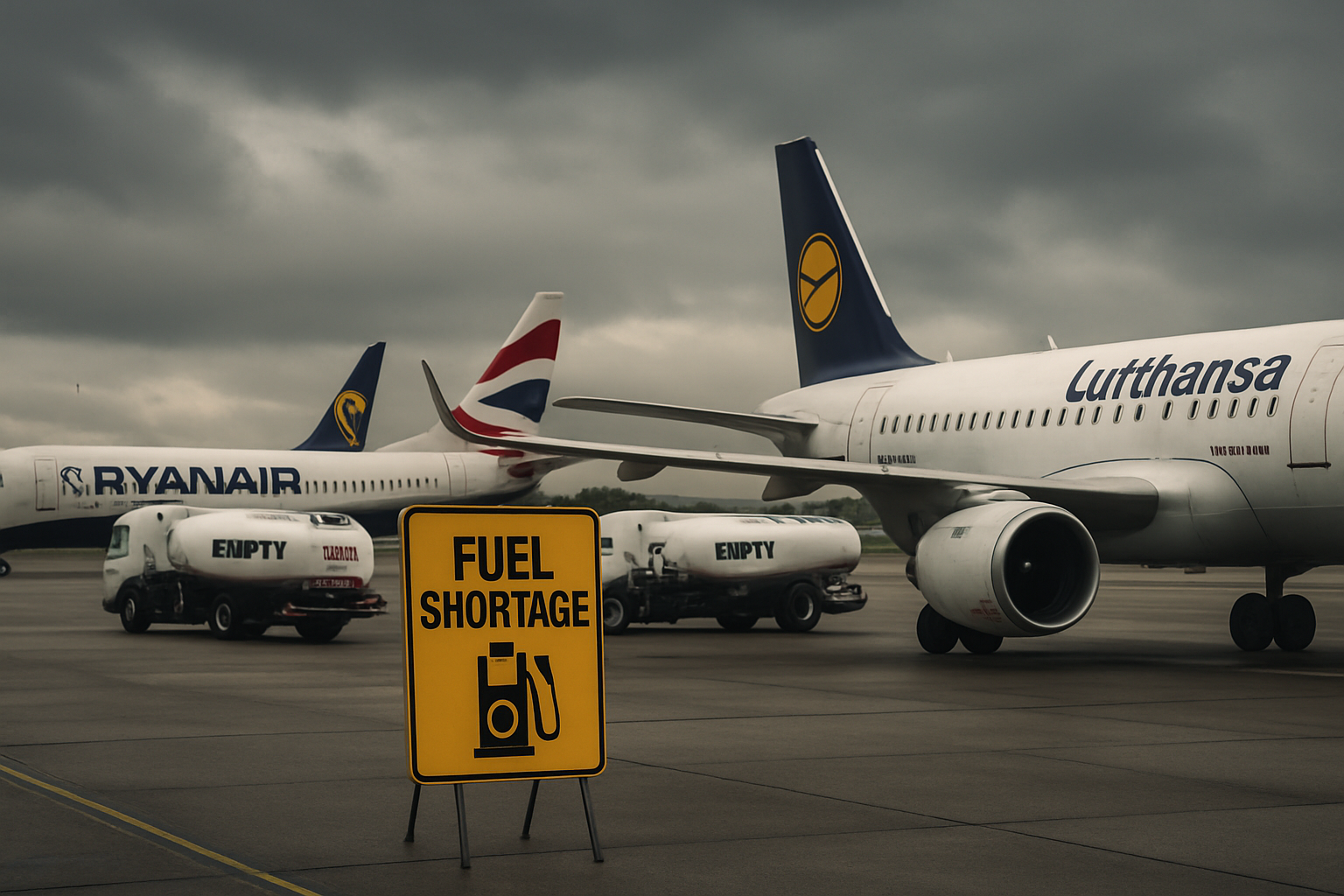
Europe is facing its most severe aviation fuel crisis in modern history, with International Energy Agency Director Fatih Birol warning that the continent has "perhaps six weeks of jet fuel" supplies remaining before widespread flight cancellations become inevitable.
The dire assessment comes as the ongoing Strait of Hormuz crisis continues to disrupt global energy markets, with Hungarian low-cost airline Wizz Air reporting fuel shortage problems at three Italian airports. Meanwhile, Lufthansa has announced unprecedented measures, grounding aircraft as jet fuel costs have surged to unsustainable levels.
IEA Director Issues Unprecedented Warning
Fatih Birol's stark warning represents the most serious alert about European aviation fuel supplies since the COVID-19 pandemic. The IEA chief indicated that systematic flight cancellations could begin "soon" if the current supply situation persists, potentially paralyzing the continent's summer travel season.
The warning comes as Europe grapples with the fallout from Iran's Revolutionary Guard closure of the Strait of Hormuz, which has blocked 40% of global oil transit since February. This strategic waterway disruption has created cascading effects throughout the aviation industry, with jet fuel prices exploding 122% from pre-crisis levels of $85-90 per barrel to current prices of $150-200 per barrel.
"If oil supplies remain blocked by the conflict, some flights may be cancelled 'shortly',"
— Fatih Birol, IEA Director
Wizz Air Reports Italian Airport Shortages
The crisis has already manifested in concrete supply problems across European airports. Wizz Air CEO József Váradi confirmed on Friday that the airline has encountered reactive jet fuel shortages at three Italian airports, highlighting the immediate and practical impacts of the global fuel crisis on European aviation operations.
Italian airports have been particularly affected, with facilities in Brindisi, Bologna, Milan Linate, Treviso, Venice, Reggio Calabria, and Pescara experiencing severe fuel limitations. Some airports have temporarily operated without adequate jet fuel supplies, despite broader market interventions by European governments.
Lufthansa Forced to Ground Aircraft
The crisis has forced major European carriers to take drastic action. Lufthansa, Europe's largest airline group, has announced plans to ground up to 27 aircraft due to unsustainable fuel costs and ongoing operational challenges. The German carrier has also permanently shuttered its CityLine subsidiary, citing the convergence of fuel price pressures and labor disputes.
The airline industry's response reflects the unprecedented nature of the current crisis. Unlike previous fuel price spikes, the current situation combines extreme cost pressures with actual supply shortages, creating operational challenges that go beyond traditional economic considerations.
Global Context: Largest Energy Crisis Since 1970s
The European aviation fuel crisis is part of a broader global energy emergency that experts are calling the most severe since the 1970s oil shocks. The situation stems from Iran's closure of the 21-mile Strait of Hormuz chokepoint, which has created a single-point failure in global logistics with no realistic alternative routes.
Over 150 oil and LNG tankers worth billions of dollars in cargo remain stranded in the Persian Gulf, with major shipping companies Maersk and MSC having suspended all operations in the region. The crisis has triggered the largest strategic petroleum reserve release in 50-year history, with the International Energy Agency coordinating the deployment of 400 million barrels from 32 countries.
Aviation Industry Meltdown
The scale of the aviation crisis extends far beyond Europe. Globally, more than 18,000 flights have been cancelled since the crisis began - the most extensive disruption since the COVID-19 pandemic. Eight Middle Eastern countries maintain simultaneous airspace closures, creating an "aviation black hole" that has severed critical Europe-Asia corridors.
Dubai International Airport, the world's busiest with over 86 million passengers annually, remains completely shut due to missile damage. Major carriers including Emirates, Air France-KLM, and Bulgaria Air have suspended operations indefinitely, while Norwegian Airlines has deployed 125 additional aircraft to capture market share after SAS cancelled over 1,000 flights.
Emergency Government Response
European governments have implemented unprecedented emergency measures to address the crisis. The European Union has activated crisis management protocols not seen since the 1970s energy crisis, with all 27 member states directed to maximize natural gas storage and prepare emergency energy protocols.
Individual nation responses have included Hungary implementing immediate price caps on "war-driven explosions" in fuel costs, France deploying 500 fuel inspectors to prevent price manipulation, and Romania outlining five emergency scenarios to prevent diesel prices from exceeding 10 lei per liter.
Impact on Summer Travel Season
The timing of the crisis poses particular challenges as Europe approaches its crucial summer travel season. Ryanair CEO Michael O'Leary has been conducting daily emergency calls with fuel suppliers across Europe, warning that disruptions could force summer flight cancellations during the peak period if Middle East conflicts continue.
The aviation industry faces a choice between maintaining global connectivity or adapting to regionalized, security-conscious travel patterns. Enhanced security screening, mandatory conflict insurance, and pre-approval for high-risk destinations are becoming standard industry practices.
Financial Market Impact
The crisis has created extreme stress in financial markets, with aviation-related stocks experiencing severe volatility. Pakistan's KSE-100 suffered its largest single-day decline in history at -8.97%, while South Korea's KOSPI fell 12% triggering circuit breakers. The Korean won has fallen to 17-year lows as foreign capital flees energy-dependent economies.
Central banks including the European Central Bank and Bank of Japan are coordinating emergency liquidity measures, though traditional monetary policy tools have proven limited in effectiveness against structural geopolitical disruptions.
Nuclear Diplomacy Context
The aviation fuel crisis stems from the complete breakdown of US-Iran nuclear negotiations, despite Geneva talks achieving "broad agreement on guiding principles" - the most progress since the 2018 JCPOA collapse. The current crisis emerged from disagreements over scope, with Iran excluding ballistic missiles and proxies as "red lines" while the US demanded comprehensive coverage.
The situation has been complicated by the February 2026 expiration of the New START treaty, marking the first time in over 50 years without US-Russia nuclear constraints. Iran continues 60% uranium enrichment with over 400kg of weapons-grade material, sufficient for multiple nuclear weapons.
Expert Analysis: Template-Setting Crisis
Energy analyst Samuel Ciszuk describes the current situation as the "most severe energy security crisis in decades, exposing single-chokepoint vulnerabilities." UN Secretary-General António Guterres has called it "the greatest test of multilateral cooperation in the modern era," with nuclear risks at their "highest levels in decades."
The crisis represents a watershed moment that will determine whether diplomatic or military solutions become the template for 21st-century conflict resolution. Success in containing the escalation could provide frameworks for future nuclear crisis resolution, while failure might accelerate military solutions and encourage nuclear proliferation globally.
Long-term Industry Transformation
The crisis is forcing fundamental reconsideration of aviation industry operations, risk assessment, and international cooperation frameworks. Airlines are accelerating route diversification strategies to reduce dependence on Middle Eastern hubs, while governments are implementing enhanced crisis management frameworks.
Recovery timelines remain uncertain as they depend on military and diplomatic resolution rather than predictable weather patterns. Aviation cannot maintain long-term scheduling with multiple airspaces closed, and energy markets remain volatile with critical transit routes blocked.
Conclusion: Critical Weeks Ahead
Europe's six-week countdown represents more than just an aviation crisis - it symbolizes the vulnerability of interconnected global systems to geopolitical disruption. The next few weeks will determine whether European aviation faces systematic shutdowns during its most important travel season, with implications extending far beyond the immediate crisis.
The situation tests whether 21st-century international cooperation mechanisms can address complex, multi-faceted crises that combine energy security, nuclear governance, and regional stability challenges. For millions of European travelers and the broader aviation industry, the stakes could not be higher as the continent faces its most critical aviation fuel shortage in modern history.