Europe stands on the precipice of aviation collapse, with International Energy Agency Director Fatih Birol issuing an unprecedented warning that the continent has "perhaps six weeks of jet fuel" supplies remaining before widespread flight cancellations become inevitable by early June.
The dire forecast represents the most severe threat to European aviation since the COVID-19 pandemic, emerging from an energy crisis that has gripped the world since Iran's Revolutionary Guard declared the Strait of Hormuz "unsafe for shipping" in February, effectively blocking 40% of global oil transit through the critical 21-mile chokepoint.
Aviation Industry on the Brink
The warning comes as the aviation sector grapples with jet fuel costs that have skyrocketed 122% from $85-90 to $150-200 per barrel since the crisis began. More than 18,000 flights have been cancelled worldwide—the worst operational disruption since the COVID-19 pandemic—with eight Middle Eastern countries maintaining simultaneous airspace closures that have created what industry analysts describe as an "aviation black hole" severing crucial Europe-Asia corridors.
Dubai International Airport, the world's busiest with 86 million passengers annually, remains shuttered from missile damage, while major carriers including Emirates, Air France-KLM, Wizz Air, and Bulgaria Air have suspended operations indefinitely. The crisis has forced airlines across Europe to implement emergency surcharges and cancel thousands of flights as fuel costs become unsustainable.
"In the past there was a group called 'Dire Straits.' It's a dire strait now, and it is going to have major implications for the global economy. And the longer it goes, the worse it will be for the economic growth and inflation around the world."
— Fatih Birol, IEA Executive Director
The Root of the Crisis
The current emergency stems from the complete breakdown of US-Iran nuclear talks despite what diplomats described as "broad agreement on guiding principles"—the most progress since the 2018 JCPOA collapse. The subsequent Operation Epic Fury, the largest US-Israeli coordinated operation since 2003, triggered Iran's massive retaliation known as "True Promise 4," leading to the Strait of Hormuz closure.
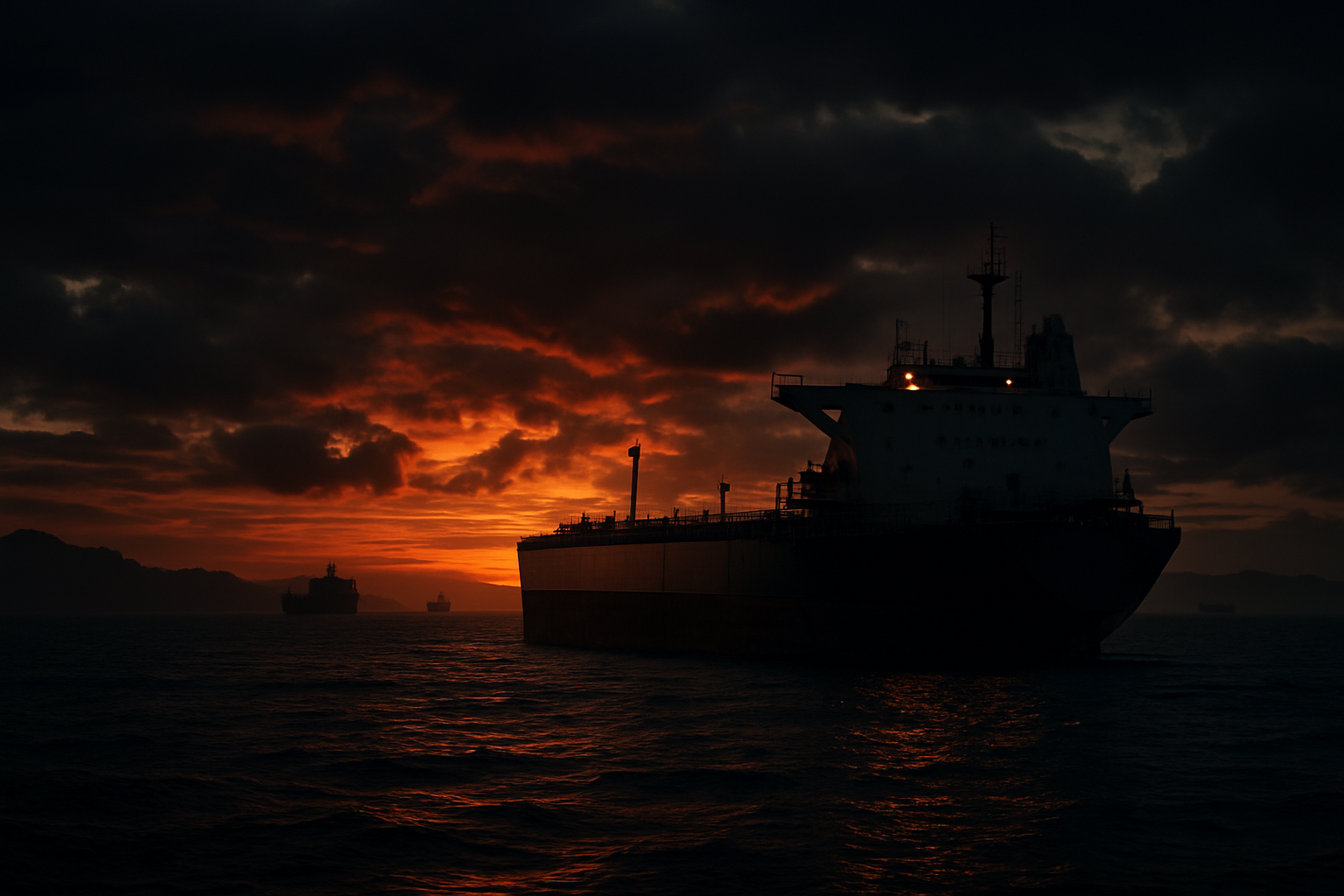
This waterway, through which nearly half of global seaborne oil passes daily, has become impassable after Iran deployed an estimated 2,000-6,000 naval mines. More than 150 oil and LNG tankers remain stranded in the Persian Gulf, carrying billions of dollars worth of cargo, while shipping giants Maersk and MSC have suspended all operations in the region.
Global Economic Shockwaves
The crisis has triggered the largest strategic petroleum reserve release in 50-year history, with the International Energy Agency coordinating the deployment of 400 million barrels from 32 countries—double the amount released during the 2022 Ukraine crisis. Japan is contributing 80 million barrels, marking the first such release since the 2011 Fukushima disaster, despite the country's 95% dependence on Middle Eastern oil, 70% of which normally transits through Hormuz.
Financial markets have crashed globally, with Pakistan's KSE-100 recording its largest single-day decline in history at -8.97%, while South Korea's KOSPI fell 12%, triggering circuit breakers as the Korean won hit 17-year lows. The crisis has forced PayPal to postpone its $1.1 billion IPO indefinitely due to market volatility.
Oil prices reached historic peaks with Brent crude hitting $119.50 and WTI recording an 18.98% single-day jump to $108.15—the largest increase on record. Natural gas prices exploded 24% in Europe and 78% in the US, reaching €47.32/MWh, the highest since February 2025.
Consumer Impact Worldwide
The energy crisis has created severe hardships for consumers globally. Bangladesh has implemented fuel rationing for 170 million people, while Pakistan has introduced wartime austerity measures including four-day work weeks, with fuel prices reaching Rs321.17 per liter—the highest in South Asia.
In Europe, Sweden faces electricity increases of 10-20 öre and gasoline rises of 1-2 kronor per liter, with the Malmö region most exposed due to continental integration. Ireland has seen heating oil approach €2 per liter, prompting government warnings about "brazen rip-offs," while Bosnia-Herzegovina has been reduced to just two days of gas reserves.
The crisis has sparked government interventions on an unprecedented scale. Hungary implemented immediate price caps citing "war-driven explosions" in fuel costs, France deployed 500 fuel inspectors to prevent price manipulation, and Slovakia activated its strategic petroleum reserves for the first time. Multiple European nations have effectively abandoned free-market principles in favor of consumer protection measures.
Summer Travel Season Under Threat
Birol's six-week warning poses particular challenges as Europe approaches its peak summer travel season. Airlines have already begun implementing emergency fuel surcharges worldwide, with Air France-KLM announcing surcharges of 50 euros for economy class and 200 euros for business class on long-haul flights.
The crisis has exposed dangerous vulnerabilities in aviation fuel supply chains, with multiple Italian airports—including Brindisi, Bologna, Milan Linate, Treviso, Venice, Reggio Calabria, and Pescara—experiencing severe fuel limitations. Some facilities have temporarily operated without adequate supplies despite broader market improvements from recent diplomatic efforts.
Geopolitical Implications
The crisis has strained regional coalitions to breaking point. Saudi Arabia, the UAE, Qatar, and Egypt—traditional allies in supporting diplomatic solutions—face impossible choices as Iran's retaliation has targeted their territories. The UAE suffered its first civilian casualty in Abu Dhabi, Kuwait saw 32 injured in airport strikes, and Qatar reported 8 wounded while intercepting 65 missiles and 12 drones using Patriot systems.
Perhaps most concerning is the nuclear dimension. The New START treaty expired in February 2026, marking the first time in over 50 years without US-Russia nuclear constraints, while Iran continues 60% uranium enrichment with over 400kg of weapons-grade material—sufficient for multiple nuclear weapons.
The Path Forward
Qatar Energy Minister Saad Al Kaabi has warned that Gulf states may declare force majeure "within weeks" if oil approaches $150 per barrel, threatening to "bring down the economies of the world." The single-point failure represented by the 21-mile Strait of Hormuz—with no realistic alternative routes of adequate capacity—has exposed fundamental vulnerabilities in global logistics that experts say require years or decades to address through supply diversification and renewable energy transitions.
UN Secretary-General António Guterres has called the situation "the greatest test of multilateral cooperation in the modern era," with nuclear risks at their "highest in decades." The crisis represents what analysts describe as the most dangerous international situation since the Cold War's end, simultaneously affecting regional war prevention, global energy security, nuclear governance credibility, and international law enforcement.
"This is the most severe energy security crisis in decades, fully exposing our single-chokepoint vulnerabilities."
— Samuel Ciszuk, Energy Security Analyst
As Europe counts down six weeks to potential aviation system collapse, the crisis has become a template-setting moment for 21st-century international relations. Success in containing the escalation could provide frameworks for future nuclear crisis resolution, while failure risks accelerating military solutions that could reshape Middle Eastern geopolitics for decades, encourage nuclear proliferation globally, and undermine diplomatic credibility worldwide.
Recovery timelines remain uncertain, dependent on military operations and diplomatic normalization rather than predictable market factors. Unlike weather-related disruptions, the current crisis requires coordinated international responses addressing fundamental geopolitical tensions that threaten energy security infrastructure planning for decades beyond current events.
With traditional monetary policy showing limited effectiveness against structural geopolitical disruptions, and strategic petroleum reserves providing only temporary buffering against sustained disruptions of this magnitude, the world faces what may be the most consequential energy crisis of the modern era—one whose implications will extend decades into determining whether diplomatic or military solutions become the framework for future crisis management in an increasingly volatile interconnected world.