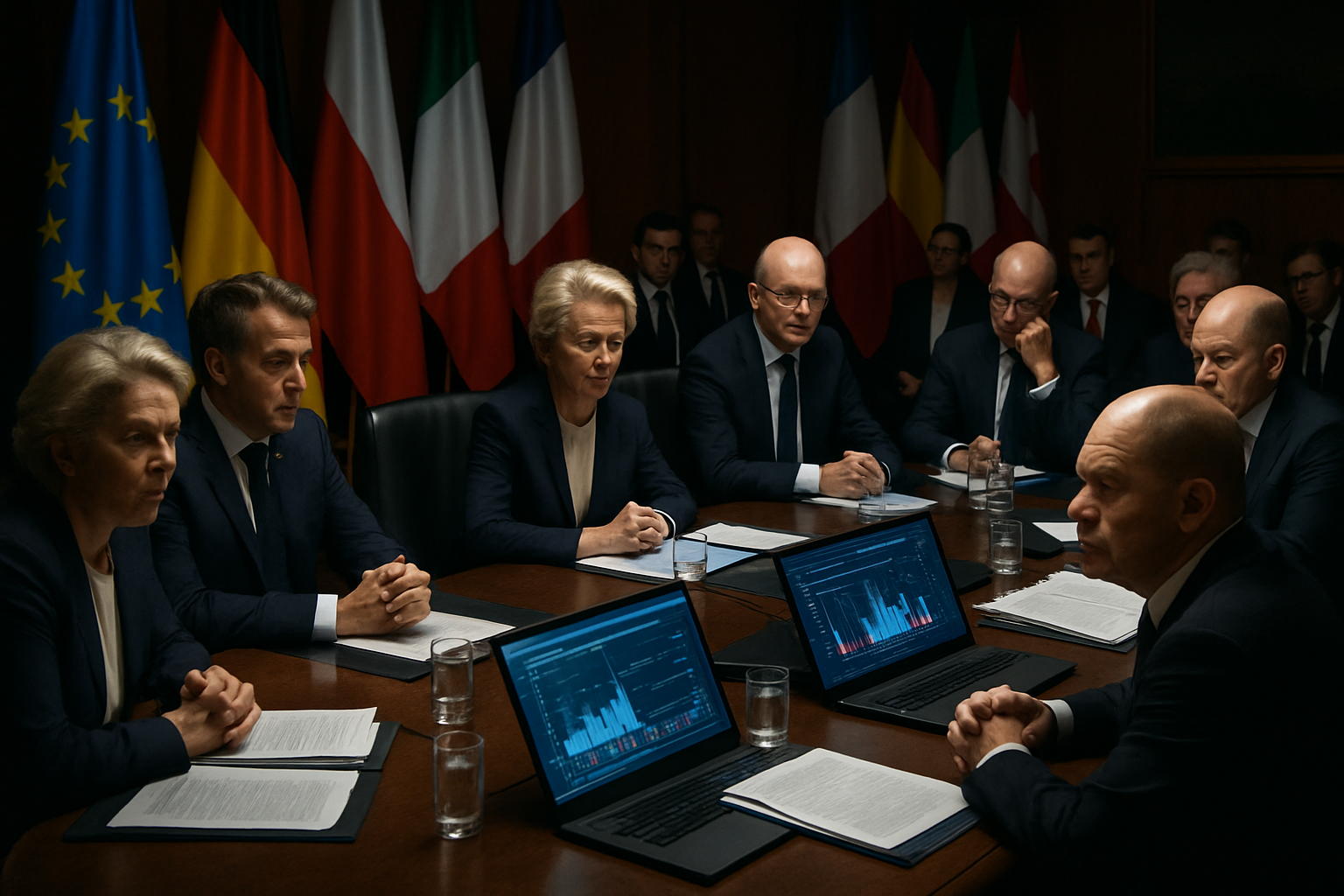
European political developments in March 2026 reveal a continent grappling with unprecedented challenges as diplomatic tensions escalate, electoral dynamics shift, and democratic institutions face mounting pressure across multiple member states and neighboring countries.
EU Diplomatic Crisis Over Middle East Engagement
European Union diplomats are preparing for a critical videoconference with Middle Eastern leaders to assess the rapidly evolving situation in the region, according to sources from Bosnia and Herzegovina. This diplomatic initiative comes at a time when European foreign policy coherence is being tested by divergent national approaches to Middle Eastern affairs.
The timing of these consultations coincides with growing concerns about regional stability and its implications for European security. The EU's diplomatic engagement reflects broader anxieties about the continent's role in global affairs as traditional alliances face strain and new geopolitical realities emerge.
Spain's Electoral Volatility Signals Broader European Trends
Spain's political landscape continues to demonstrate the volatility characterizing European politics in 2026. In Castilla y León, polling data reveals a concerning trend for the ruling Popular Party (PP), with Vox surpassing 20% support while the PP under Alfonso Fernández Mañueco appears to be approaching what could be its worst historical result in the region.
The surge in far-right support represents more than a regional phenomenon—it exemplifies the broader European challenge of containing extremist movements that have gained significant ground across the continent. According to recent surveys by 40dB, Vox has increased support by more than three points, while the Socialist Party (PSOE) has experienced a modest decline of 1.6 points, though performing better than in recent contests in Aragón and Extremadura.
"The PP is heading toward an incomplete triumph in a series of incomplete victories that began in Extremadura and continued in Aragón,"
— Spanish Political Analyst, referring to regional electoral patterns
Coalition Dynamics Under Strain
The internal tensions within Spain's right-wing coalition have reached a critical juncture. Vox leader Santiago Abascal has openly criticized PP leader Alberto Núñez Feijóo over the failure to secure governing coalitions in Extremadura, directing blame toward the national PP leadership rather than regional candidates. This finger-pointing reflects deeper ideological and strategic divisions within Spain's conservative movement.
The PP's strategy of attempting to reduce dependence on Vox through snap elections has backfired dramatically, instead strengthening the far-right party's negotiating position. As one internal source noted, Abascal appears "focused on purges" within his own party while simultaneously demanding greater concessions from potential coalition partners.
Sweden's Unprecedented Political Cooperation
In a remarkable departure from traditional Swedish political norms, nearly 60 municipalities across the country are now governed by coalitions between the historically opposed Social Democrats (Socialdemokraterna) and Moderates (Moderaterna). This unprecedented cooperation, which has emerged since the 2022 elections, offers both promise and controversy within Swedish political circles.
Linköping, Sweden's fifth-largest municipality, serves as a prominent example of this new political reality. According to researcher Johan Wänström, these cross-party partnerships "work quite well" at the local level, raising intriguing questions about whether such cooperation could translate to the national political stage.
However, the arrangement has generated significant internal party tensions. One Social Democratic politician acknowledged that the cooperation is "quite controversial within my party," highlighting the challenges of bridging ideological divides that have defined Swedish politics for decades.
Italy's EU Employment Drive and Administrative Challenges
The European Union's ambitious recruitment drive for administrative personnel reveals both opportunities and systemic challenges facing the continental project. Italy is actively promoting a massive EU competition for 1,490 civil servant positions, with monthly salaries of €6,000 and application deadlines rapidly approaching—March 10, 2026, at 12:00 Brussels time.
This recruitment effort comes at a time when EU institutions face increasing pressure to demonstrate both competence and democratic legitimacy. The substantial salary offerings reflect the Union's attempt to attract high-caliber professionals capable of managing complex policy challenges ranging from climate adaptation to digital sovereignty.
The timing is particularly significant as European institutions grapple with implementing ambitious policy agendas while maintaining public support across diverse member states with varying economic conditions and political cultures.
Democratic Resilience and Institutional Pressure
The convergence of electoral volatility, coalition instability, and external pressures has created what many observers describe as the most challenging period for European democracy since World War II. Recent polling shows that 89% of Europeans demand greater EU unity, yet political reality demonstrates increasing institutional friction and sovereignty assertions across member states.
This disconnect between public aspirations and political practice reflects deeper tensions within European integration. Citizens express strong support for collective action and enhanced global influence, but national political systems struggle to translate these preferences into coherent policy frameworks.
Historical Context and Future Implications
The current political dynamics recall earlier periods of European stress, but with crucial differences. Unlike previous crises driven primarily by economic factors, today's challenges encompass security concerns, technological disruption, climate pressures, and fundamental questions about democratic governance in an interconnected world.
The success or failure of European political systems in navigating these concurrent challenges will likely establish precedents for democratic governance extending far beyond the continent. The stakes encompass not only immediate policy outcomes but the broader credibility of democratic institutions in managing complex, long-term challenges requiring sustained political commitment across electoral cycles.
Regional Variations in Crisis Response
Different European regions are demonstrating varying capacities for managing political stress. Nordic countries like Sweden are experimenting with cross-party cooperation, while Mediterranean nations like Spain face increasing polarization and coalition instability. This geographical variation in democratic resilience provides valuable insights into which institutional arrangements and political cultures prove most adaptive to contemporary challenges.
Central and Eastern European nations continue to grapple with unique pressures related to their post-Communist transitions and proximity to ongoing security threats. These regional differences complicate EU-wide policy coordination but also offer opportunities for peer-to-peer learning and institutional innovation.
Looking Ahead: The Path Forward
The political developments unfolding across Europe in March 2026 will likely influence continental politics for years to come. The success of Swedish-style cross-party cooperation, the containment or expansion of Spanish far-right influence, and the EU's ability to maintain institutional effectiveness amid diverse pressures will determine Europe's capacity for addressing long-term challenges.
The diplomatic initiatives emerging from the Middle East crisis, combined with internal political dynamics across member states, create both risks and opportunities for European unity. The continent's ability to maintain democratic principles while adapting to changing global realities remains the defining challenge of this critical period.
As European leaders prepare for crucial electoral tests and diplomatic challenges in the coming months, the decisions made in March 2026 may well determine whether the European project emerges strengthened or fragmented from its current trials. The stakes could not be higher for both continental stability and the broader future of democratic governance in an increasingly complex global environment.