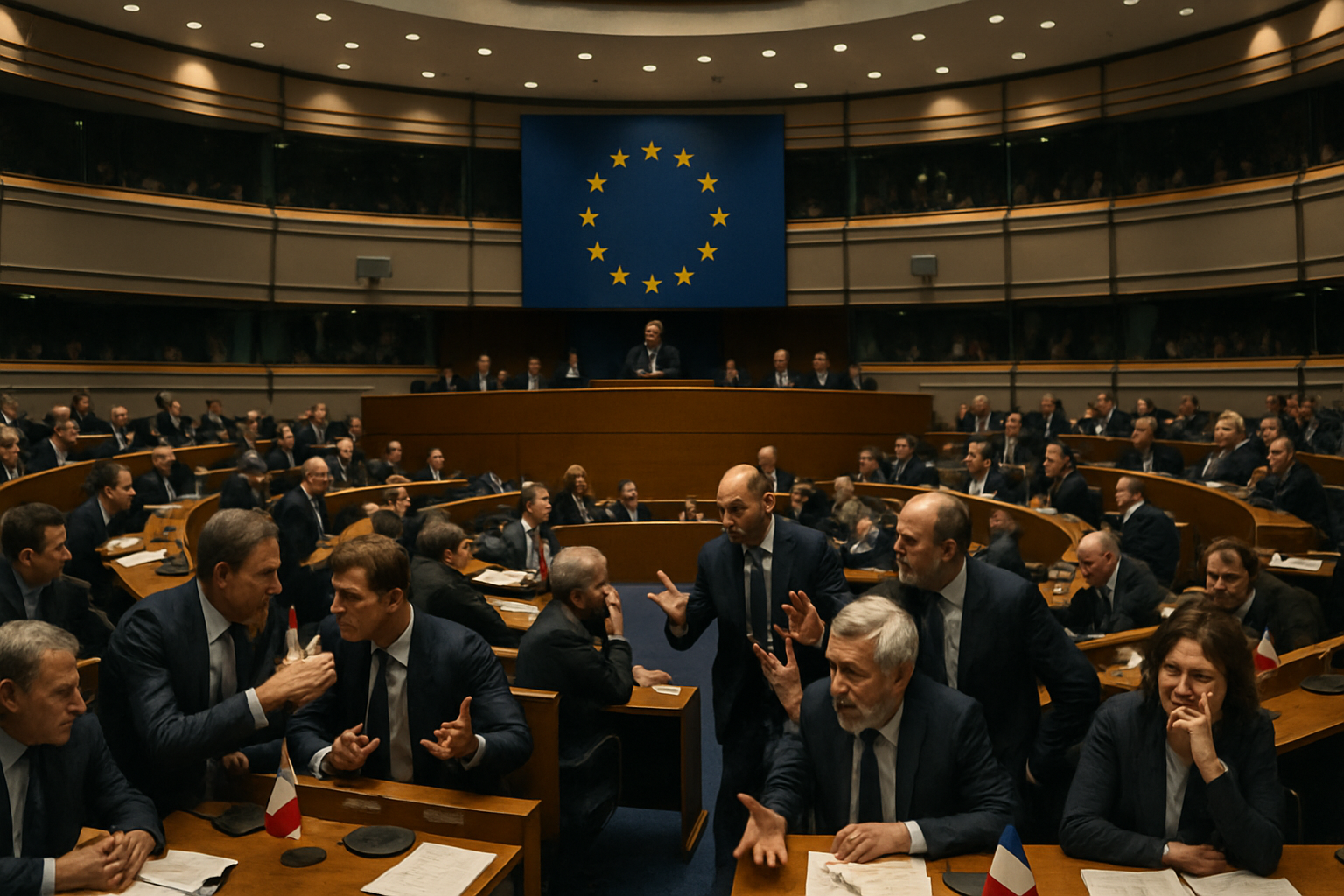
European Union member states are experiencing their most severe political crisis since World War II, with democratic institutions across the continent facing unprecedented strain from rising extremism, coalition instability, and mounting tensions between national sovereignty and European integration.
From Austria's controversial political discourse to France's municipal elections serving as a 2027 presidential preview, from Viktor Orbán's continued EU obstructionism to Slovenia's competitive electoral landscape, the political developments of March 2026 paint a picture of a continent at a democratic crossroads.
Austria's Political Rhetoric Reaches New Extremes
Austria's Freedom Party (FPÖ) has escalated political discourse to unprecedented levels, with recent statements that observers describe as crossing fundamental democratic boundaries. The party's rhetoric includes personal attacks on government officials and controversial proposals that have drawn widespread criticism from mainstream political parties.
This deterioration in political civility reflects broader challenges facing Austrian democracy, where traditional norms of parliamentary discourse are increasingly under pressure. The FPÖ's approach signals a concerning trend toward the normalization of extreme political language in European democratic systems.
Meanwhile, Austria's Interior Ministry faces scrutiny over budget allocations, with critics arguing that resources are being diverted from essential security services to create what they describe as "patronage positions" for political allies. This has sparked debates about the proper use of public funds during a period of fiscal constraint.
France's Municipal Elections: A Democratic Stress Test
France's municipal elections have become a critical battleground for the country's democratic future, occurring against the backdrop of severe political violence and institutional challenges that continue to reverberate through the political system.
The elections, serving as a crucial preview of the 2027 presidential race, have been fundamentally altered by the February death of Quentin Deranque in Lyon, which has intensified political tensions and contributed to significant fragmentation on the left. Marine Le Pen's National Rally has capitalized on these divisions, achieving what analysts describe as "authoritarian innovation" – a sophisticated evolution from rural populism to competitive urban campaigning.
"The stakes of these municipal elections extend far beyond local governance," notes a senior French political analyst. "They represent a fundamental test of whether French democratic institutions can channel political extremism through electoral rather than extra-legal means."
— Senior French Political Analyst
The Interior Ministry's controversial reclassification of La France Insoumise from "left" to "extreme left" has triggered legal challenges at the Council of State, raising concerns about administrative manipulation of democratic processes. This administrative intervention has become a flashpoint for debates about electoral neutrality and the proper role of government institutions in political categorization.
Portugal's EU Policy Tensions
Portugal finds itself at the center of European Union policy disputes, particularly regarding support for Ukraine. Prime Minister's stance on EU financial assistance has created tensions within the European Council, reflecting broader challenges in maintaining unity on foreign policy issues.
The Portuguese position illustrates the complex balancing act many EU member states face between domestic political pressures and European solidarity obligations. These tensions have been exacerbated by concerns about energy security and economic impacts on Portuguese citizens.
Romania's Judicial and Media Freedom Challenges
Romania has witnessed significant developments in press freedom and judicial independence, with major court victories for independent media outlets against political figures. The definitive legal victory of educational publication Edupedu.ro against extremist politician George Simion represents a crucial precedent for media freedom in Eastern Europe.
This case, which took over three years to resolve through all judicial instances, demonstrates both the persistence required to defend press freedom and the ultimate strength of Romania's judicial institutions in protecting democratic values against political pressure.
The legal victory carries particular significance given Simion's prominence as a former presidential candidate and leader of the far-right AUR party. The court's decisive rejection of his claims against journalistic reporting on his political activities sends a clear message about the boundaries of acceptable political discourse in Romania.
Slovenia's Electoral Competitiveness
Slovenia's upcoming elections have generated significant attention due to their highly competitive nature, with 15 parties and coalitions vying for representation in the 90-seat National Assembly. The campaign has been marked by what observers describe as "below-the-belt moves, corruption concerns, and allegations of foreign meddling."
Prime Minister Robert Golob's party has shown strength in recent polling, but the electoral outcome remains uncertain. The fragmented political landscape reflects broader European trends toward political polarization and the weakening of traditional party loyalties.
Slovenia's election serves as a crucial test case for how smaller EU member states navigate the complex pressures of European integration while maintaining domestic democratic legitimacy. The outcome could influence regional political dynamics in the Balkans and Central Europe.
Spain's Coalition Crisis and Democratic Governance
Spain faces mounting political tensions as coalition dynamics become increasingly complex. Recent developments include disputes over budget measures and housing policies, with opposition parties criticizing what they describe as ideologically driven legislation.
The Spanish government's approach to various policy challenges, including economic measures and social legislation, has generated significant debate about the appropriate balance between progressive policy goals and practical governance needs. These tensions reflect broader questions about coalition management in contemporary European democracies.
Opposition leaders have characterized certain government proposals as reflecting partisan priorities rather than national interests, highlighting the challenges of maintaining broad political consensus in an increasingly polarized environment.
The Broader European Context: Democracy Under Pressure
These national developments occur within what political scientists describe as the most challenging period for European democracy since World War II. The convergence of multiple crises – from economic pressures to migration challenges to external security threats – has created unprecedented strain on democratic institutions across the continent.

Recent Eurobarometer polling reveals a striking contradiction: 89% of Europeans demand greater EU unity, yet political reality shows increasing fragmentation and sovereignty assertions across member states. This disconnect between public aspirations and political reality represents one of the most significant challenges facing European integration.
Far-Right Institutionalization
Perhaps most concerning is the pattern of what analysts term "authoritarian innovation" – the sophisticated adaptation of far-right movements working within democratic systems while gradually eroding liberal norms. This represents a fundamental shift from historical patterns of extremist politics, which typically operated outside mainstream democratic institutions.
Examples of this trend include the Swedish Liberal Party's historic cooperation with the Sweden Democrats, Germany's AfD breakthrough in Baden-Württemberg, and Spain's Vox surge in regional elections. These developments suggest that traditional mechanisms for containing political extremism may be insufficient for contemporary challenges.
Coalition Mathematics and Democratic Governance
Across Europe, traditional coalition mathematics are breaking down as political fragmentation makes stable governance increasingly difficult. Countries from the Netherlands to Romania are struggling to form sustainable governing coalitions, while existing coalitions face unprecedented internal tensions.
This governance crisis reflects deeper changes in European political cultures, where traditional left-right divisions are being replaced by more complex multi-dimensional political competition involving questions of national identity, European integration, migration, and economic policy.
International Implications and Global Observers
The stakes of Europe's political crisis extend far beyond the continent's borders. As a crucial pillar of the liberal democratic international order, Europe's institutional health has global implications for democratic governance, international cooperation, and responses to authoritarian challenges worldwide.
International observers are closely monitoring European electoral processes and coalition negotiations for precedents that might influence democratic development globally. The success or failure of European institutions in managing current challenges will shape international perceptions of democratic resilience and adaptability.
Particularly significant is how European democracies balance the need to address legitimate citizen concerns about immigration, economic inequality, and national sovereignty while maintaining institutional frameworks that have underpinned European success since 1945.
Looking Ahead: Templates for Democratic Renewal
Despite the significant challenges, some European countries are demonstrating innovative approaches to democratic governance under pressure. Portugal's success in conducting elections during natural disasters, Malta's judicial appointment reforms, and various local-level cooperation experiments across the continent provide potential templates for democratic renewal.
The coming months will be crucial in determining whether these positive examples can be scaled up and replicated, or whether the pressures facing European democracy will prove too great for existing institutional frameworks to manage effectively.
"We are writing the template for 21st-century crisis management," observed a senior EU official. "The world is watching to see whether democratic institutions can adapt while preserving the values that have made Europe a global model for democratic governance."
— Senior EU Official
The resolution of Europe's current political crisis will largely determine the continent's trajectory for decades to come. Success in navigating these challenges while strengthening democratic institutions could provide a powerful example of democratic resilience. Failure, however, could accelerate democratic backsliding trends that extend far beyond Europe's borders.
As European citizens and leaders grapple with these unprecedented challenges, the fundamental question remains: can democratic institutions adapt to 21st-century pressures while preserving the values and freedoms that have defined European civilization? The answer will shape not only Europe's future but the global trajectory of democratic governance in an increasingly complex world.