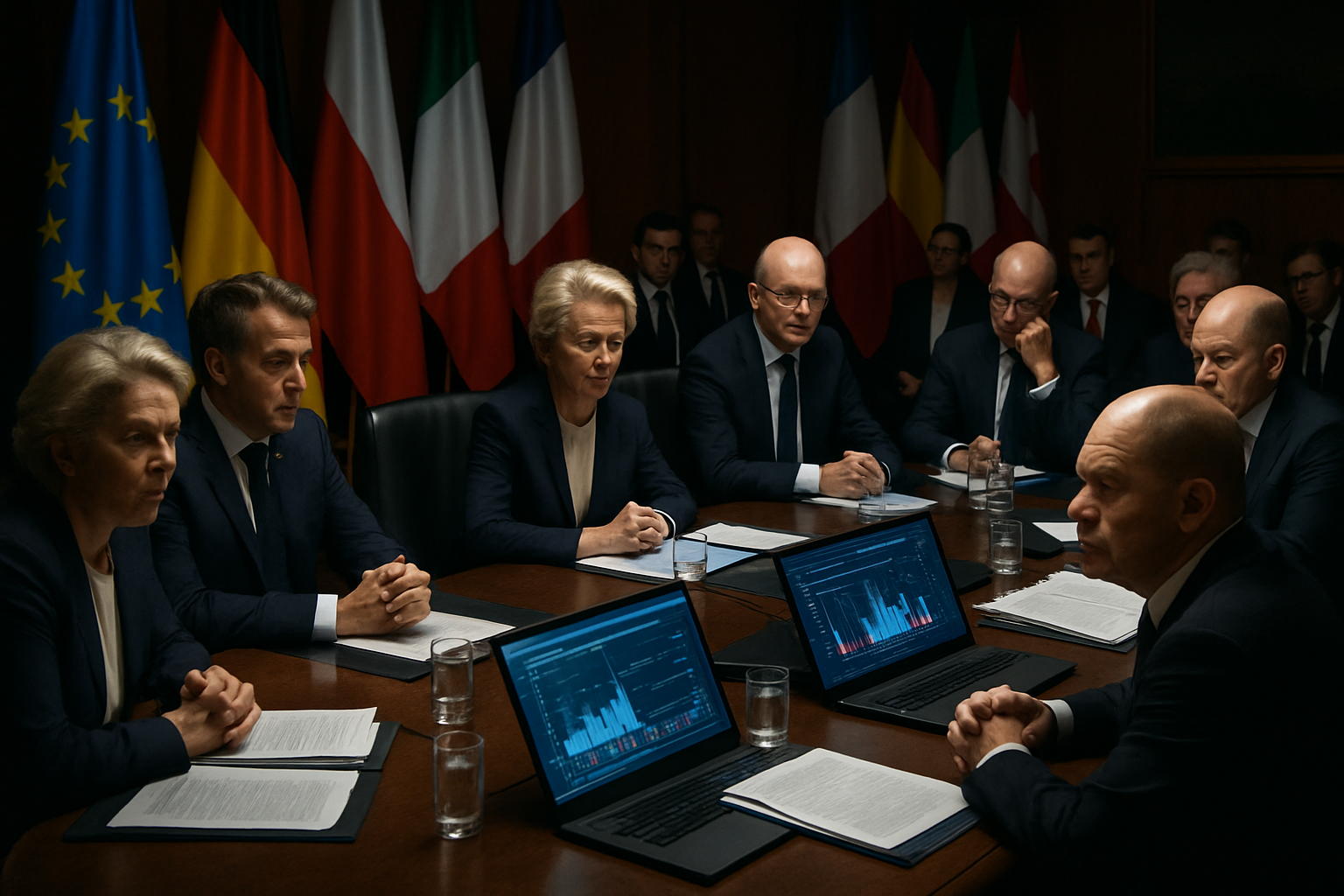
European political systems face unprecedented challenges as Austria's SPÖ reshuffles economic leadership, Cyprus overhauls parliamentary procedures, Finland confronts industrial relations reforms, Greece advances constitutional changes, and Spain experiences a significant leadership transition amid coalition instability.
The convergence of these developments across five key European Union member states reflects broader tensions within the continental democratic framework, as traditional party structures adapt to mounting economic pressures, institutional reforms, and shifting public expectations in what experts describe as the most significant period of European political transformation since the post-war era.
Austria's SPÖ Reorganizes Economic Strategy
Austria's Social Democratic Party (SPÖ) has appointed Christoph Matznetter as the party's new economic spokesperson, while Paul Stich assumes responsibilities for construction and housing policy. This strategic reorganization comes as the SPÖ positions itself as a credible alternative government following Andreas Babler's consolidation of party leadership with 81.51% delegate support in March.
The appointments signal a renewed focus on addressing Austria's pressing economic challenges, particularly inflation and housing affordability, which have dominated public discourse. Matznetter's return to the economic portfolio suggests the party's commitment to maintaining continuity in its opposition to current government policies while preparing comprehensive alternatives ahead of potential federal elections.
"These appointments reflect our commitment to providing clear economic alternatives that prioritize working families and address the housing crisis affecting millions of Austrians."
— SPÖ Leadership Statement
Cyprus Parliament Modernizes Speaker Selection Process
Cyprus is set to revolutionize its parliamentary procedures with the House Rules Committee's proposal to eliminate the traditional three-round voting system for Speaker elections. The new framework would streamline the process to a maximum of two rounds, requiring only a simple majority for victory rather than the current 29-vote threshold.
The reform, scheduled for parliamentary approval, represents more than procedural efficiency—it fundamentally alters the political mathematics that have governed Cypriot coalition-building for decades. By eliminating the practice of MPs supporting multiple candidates simultaneously, the changes could reshape party alliance strategies and potentially strengthen smaller political formations' influence.
According to parliamentary sources, the simplified system would allow for more decisive outcomes while opening pathways for new coalition arrangements that better reflect the evolving Cypriot political landscape.
Finland's Labor Movement Challenges Government Reforms
The Finnish Industrial Union, led by Chairman Riku Aalto, has announced a comprehensive reform package aimed at "returning labor markets to their proper tracks" following what the union characterizes as damaging policies implemented by Prime Minister Petteri Orpo's administration.
The union's proposed corrections target recent changes to Finland's traditionally collaborative labor relations model, seeking to reverse policies that union leadership argues have "overlooked the working class." The initiative reflects broader tensions within Finnish society as the Nordic welfare state model faces pressure from economic realities and international competitiveness demands.
This development occurs within the context of Finland's broader political evolution, as the country navigates its recent NATO membership while maintaining its distinctive approach to labor relations and social democracy.
Greece's PASOK Advances Constitutional Reforms
Greece's PASOK party conducted a significant Political Secretariat session focused on advancing constitutional changes, with discussions proceeding in what sources describe as a "unifying climate without disagreements." The session addressed statutory modifications that could reshape the party's internal governance structure and decision-making processes.
The constitutional discussions reflect PASOK's efforts to modernize its organizational framework while positioning itself as a credible center-left alternative within Greece's complex multi-party system. The reforms are seen as essential for strengthening the party's capacity to participate effectively in potential coalition governments.
Political analysts note that these internal reforms occur as Greece faces significant challenges in European integration, economic recovery, and regional security issues, particularly given recent developments in the Eastern Mediterranean.
Spain Confronts Major Government Transition
Spain experienced a dramatic political development with reports that Prime Minister Pedro Sánchez is finalizing the replacement of Deputy Prime Minister María Jesús Montero. The transition represents what government sources describe as a "surgical crisis" while maintaining overall governmental stability through the end of the current legislative term.
The leadership change comes amid mounting pressure on the governing coalition, as opposition parties have intensified their criticism of economic policies and governance approaches. Montero's potential departure marks the culmination of sustained political tensions that have characterized Spanish politics throughout the current mandate.
According to political observers, the government restructuring aims to address specific policy challenges while preserving the broader coalition framework that has enabled the PSOE-led administration to maintain parliamentary support.
"This represents a strategic adjustment to enhance governmental effectiveness while maintaining our commitment to progressive policies."
— Government Spokesperson
Broader European Democratic Context
These simultaneous political developments across five EU member states reflect deeper structural challenges facing European democracy in 2026. The changes occur against the backdrop of what political scientists describe as the most challenging period for continental governance since World War II, with traditional party systems adapting to new voter expectations, economic pressures, and geopolitical realities.
Recent Eurobarometer data reveals that 89% of Europeans demand greater EU unity, yet political reality demonstrates increasing fragmentation and sovereignty assertions—creating what experts call a critical disconnect between public aspirations and institutional capacity.
International Implications
The coordinated nature of these political adaptations suggests that European democratic institutions are responding to common pressures: economic uncertainty, demographic changes, digital transformation challenges, and shifting international relationships. Success in managing these transitions will influence European integration's trajectory and establish precedents for democratic governance under contemporary pressures.
Political developments in these five nations are being closely monitored by international observers as templates for how established democracies navigate institutional reform while preserving democratic values and effectiveness. The outcomes will significantly influence European political evolution in the critical years ahead.
Looking Forward
As these political transformations unfold across Austria, Cyprus, Finland, Greece, and Spain, their success in maintaining democratic stability while adapting to contemporary challenges will determine Europe's capacity for effective governance in an increasingly complex international environment.
The coming months will prove decisive as these nations implement their respective reforms and navigate the broader European project's evolution. The stakes extend beyond individual national politics to encompass fundamental questions about democratic resilience, institutional adaptation, and Europe's role in global governance.
These developments collectively represent a critical test of European democracy's ability to evolve while preserving the institutional frameworks that have underpinned continental stability and prosperity since 1945.