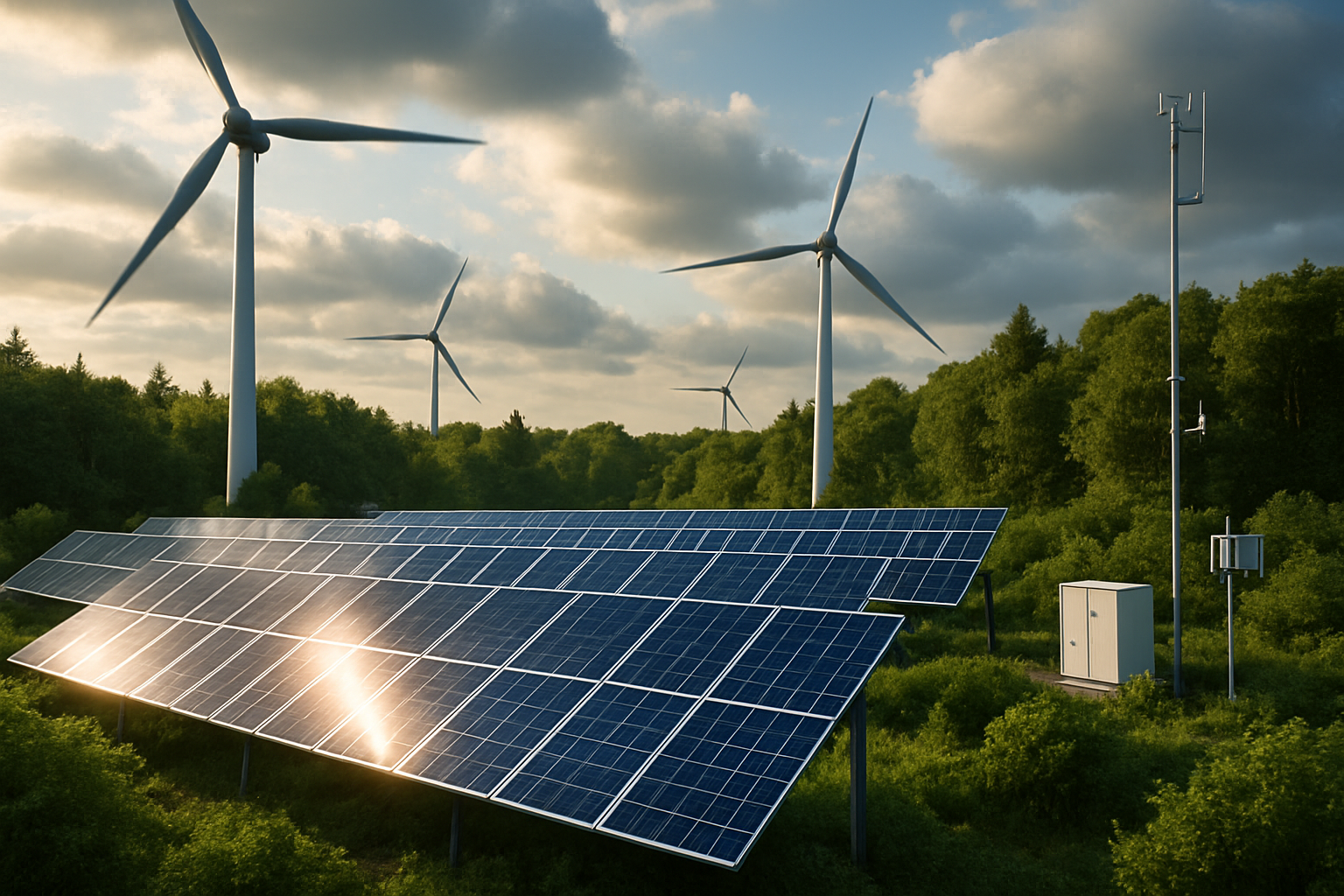
Europe is experiencing a transformative renewable energy revolution as Portugal leverages renewable resources to mitigate global energy instability while Austria pioneers sustainable agricultural practices, marking a decisive shift toward environmental resilience during unprecedented climate challenges.
José Pimenta Machado, president of Portugal's Environmental Agency (APA), revealed that the nation's strategic investment in renewable energy sources is successfully buffering the country against the global energy crisis triggered by Middle Eastern conflicts. This development comes as Europe faces mounting pressure to reduce fossil fuel dependencies while maintaining energy security for its 450 million citizens.
Portugal Leads Continental Energy Independence
Portugal's renewable energy strategy has positioned the nation as a regional leader in clean energy transition, demonstrating how strategic investments in wind, solar, and hydroelectric power can provide economic and geopolitical advantages. The country's renewable infrastructure has created a protective buffer against volatile international energy markets, offering a template for other European nations seeking energy sovereignty.
The Portuguese model emphasizes grid flexibility and storage solutions, enabling the integration of variable renewable sources while maintaining power system stability. This approach has attracted billions in international investment and positioned Portugal as a potential energy exporter to neighboring countries during periods of excess renewable generation.
"Portugal's commitment to renewable energy allows us to mitigate the impacts of global energy instability caused by Middle Eastern conflicts."
— José Pimenta Machado, President of Portugal's Environmental Agency
Austria Pioneers Sustainable Food Systems
Simultaneously, Austria is revolutionizing its approach to sustainable agriculture through innovative alternative food network logistics. An international project with Austrian participation is investigating methods to improve the efficiency of local food distribution systems, challenging traditional large-scale agricultural distribution models.
The initiative focuses on strengthening local food networks including organic box schemes and farm shops, which are increasingly competing with conventional wholesale operations. This represents a fundamental shift toward regionalized, sustainable food systems that reduce transportation emissions while supporting local economies and biodiversity.
Austrian researchers are analyzing how these alternative networks can scale effectively while maintaining their environmental and social benefits. The project combines cutting-edge logistics analysis with traditional agricultural knowledge, creating comprehensive frameworks that respect local conditions while leveraging technological capabilities.
Public Support for Energy Independence Grows
Austrian public opinion research reveals strong support for reducing oil and gas imports, reflecting broader European sentiment for energy independence. This grassroots support provides crucial political backing for aggressive renewable energy policies and sustainable development initiatives across the continent.
The convergence of public opinion, policy innovation, and technological advancement is creating unprecedented momentum for Europe's green transition. Citizens are increasingly recognizing the economic and security benefits of renewable energy independence, moving beyond environmental concerns to embrace clean energy as essential infrastructure.
Agricultural Sustainability Meets Energy Transition
France's environmental authorities have highlighted critical concerns about cadmium contamination in agricultural systems, with cereals, potatoes, and vegetables showing significant heavy metal concentrations affecting public health. The French National Agency for Food, Environmental and Occupational Health Safety (Anses) is pushing for dramatic reductions in cadmium levels in phosphate fertilizers.
This crisis underscores the interconnection between agricultural practices and environmental health, demonstrating how sustainable farming methods must evolve alongside energy systems. The contamination particularly affects children and represents a widespread challenge requiring coordinated European response.
Technology Integration Driving Success
Successful environmental initiatives across Europe demonstrate sophisticated synthesis of cutting-edge technology with traditional ecological knowledge and community-based management. Portugal's renewable systems incorporate advanced grid management and predictive analytics, while Austria's food networks utilize digital platforms to optimize local distribution efficiency.
Digital monitoring, automated control systems, and artificial intelligence are becoming standard features of renewable energy infrastructure, enabling unprecedented efficiency and reliability. These technologies allow real-time optimization of energy production and consumption while managing the challenges of renewable intermittency.
Economic Development Through Environmental Action
Environmental protection is increasingly recognized as an economic development strategy rather than a regulatory burden. Portugal's renewable energy leadership attracts sustainable investment and positions the country as a clean technology export hub. Austria's sustainable agriculture initiatives support regional economic development while reducing environmental impact.
Countries implementing comprehensive environmental protection demonstrate greater economic resilience and attract sustainable investment across multiple sectors including green technology manufacturing, eco-tourism, and environmental services. The economic multiplier effects include improved public health, enhanced agricultural productivity, and reduced infrastructure costs from natural disaster prevention.
Climate Urgency Driving Innovation
These initiatives emerge during an unprecedented period of climate challenge, with January 2026 marking the 19th consecutive month of global temperatures exceeding 1.5°C above pre-industrial levels. This sustained warming demonstrates that human-induced climate change has fundamentally altered atmospheric systems beyond natural recovery mechanisms.
The persistent temperature elevation is overriding natural climate variability, including La Niña cooling effects that typically moderate global temperatures. This creates additional stress on environmental systems already under pressure from development, pollution, and ecosystem degradation, making coordinated European response particularly significant.
Supply Chain Resilience and Strategic Materials
European leaders are increasingly concerned about critical material dependencies, particularly China's dominance in producing 60% of lithium, cobalt, and rare earth elements essential for renewable energy infrastructure. The US-EU-Japan Critical Minerals Partnership, involving 55 countries and seven African suppliers, represents a strategic effort to diversify supply chains.
This geopolitical dimension of the energy transition underscores how environmental policies are becoming central to national security considerations. European nations are investing in domestic mineral processing capabilities and developing strategic partnerships to reduce vulnerability to supply chain disruptions.
International Cooperation and Knowledge Sharing
Success in environmental protection requires unprecedented international cooperation as atmospheric systems, ocean currents, and species migrations cross political boundaries. Knowledge sharing between Portuguese renewable energy innovations, Austrian sustainable agriculture models, and French environmental health research creates global networks that strengthen local capacity while contributing to planetary sustainability.
The evolution from traditional North-South aid relationships toward peer-to-peer cooperation is enabling developing nations to emerge as environmental solution providers, leveraging indigenous knowledge, renewable resources, and innovative governance approaches.
Critical Implementation Challenges
Despite promising developments, significant challenges remain in scaling environmental protection efforts. Funding sustainability is particularly difficult for developing nations where immediate economic pressures can override long-term environmental considerations. Technical capacity building requires sustained investment in education, training, and institutional development.
Climate change continues to disrupt project timelines, requiring adaptive management approaches that can respond to rapidly changing conditions. However, the diversity of approaches across European nations provides resilience against single-solution dependencies, offering multiple adaptation pathways for complex environmental challenges.
Strategic Implications for Global Climate Action
The developments in Portugal, Austria, and France represent a critical juncture in global environmental protection, demonstrating the choice between reactive crisis management and proactive ecosystem service management. The environmental action window is narrowing as ecological systems approach critical thresholds that could trigger irreversible changes affecting global food security, climate stability, and human settlements.
Tools, knowledge, and cooperation frameworks exist for comprehensive environmental protection, as demonstrated by these European initiatives. Success depends on sustained international cooperation, enhanced multi-sector coordination, and increased financial commitments that recognize environmental protection as essential infrastructure for human prosperity and planetary sustainability.
The convergence of political will, technological innovation, and community engagement offers genuine hope for maintaining planetary habitability during what may be Earth's most environmentally challenging period in recorded history. Europe's renewable energy revolution and sustainable agriculture innovations provide practical templates for scaling environmental protection globally, but success requires unprecedented speed and coordination to match the scale of current environmental challenges.