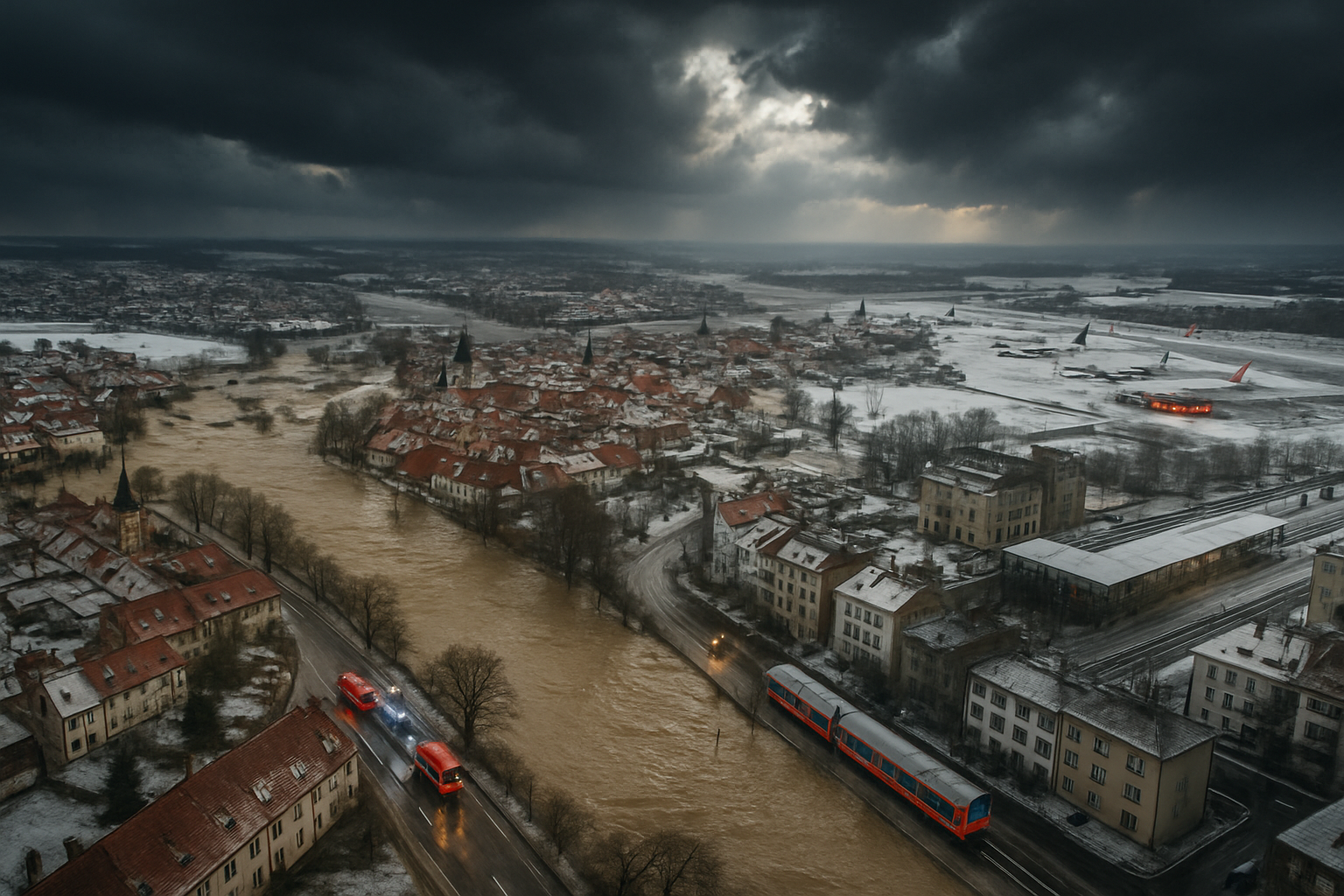
A severe weather emergency is unfolding across multiple European countries as extreme conditions including flooding, heavy snow, and hurricane-force winds disrupt daily life and force authorities to implement emergency measures from the Netherlands to Bulgaria.
The crisis represents the latest chapter in what meteorologists are calling an unprecedented winter of extreme weather events that have already claimed dozens of lives and caused billions in damages across the continent. From airport closures in the Netherlands to ski resort shutdowns in Bulgaria, the widespread nature of the emergency is testing European emergency response systems to their limits.
Netherlands Aviation Crisis
Schiphol Airport, one of Europe's busiest aviation hubs, has canceled at least 150 flights as a preventive measure due to expected snowfall conditions. KLM confirmed the significant flight reductions as authorities implemented nationwide code yellow warnings for snow and icy roads across the Netherlands.
The Dutch meteorological service KNMI issued urgent warnings for hazardous travel conditions, with forecasters predicting up to 5 centimeters of snow accumulation that could create treacherous driving conditions throughout the country. The code yellow alert took effect Sunday afternoon, marking the first time this winter that such comprehensive snow warnings have been issued nationwide.
French Flooding Emergency
France continues to battle severe flooding as Storm Nils maintains the Garonne River under red alert status until at least Monday. The national flood monitoring service Vigicrues has warned of "important and major overflows" occurring or expected within the next 24 hours for rivers under orange or red vigilance levels.
The flooding crisis represents a continuation of the devastating storm succession that has battered France throughout February 2026, following the destructive path of previous storms that have overwhelmed emergency services and caused widespread infrastructure damage across southwestern regions.
Bulgaria Ski Resort Closures
The popular ski resort of Pamporovo has been forced to close all operations due to dangerous meteorological conditions. The resort's management issued a statement citing "complicated meteorological conditions and tourist safety concerns" as the primary reasons for shutting down the ski zone and all lift operations.
The closure affects thousands of tourists who had planned winter holidays at one of Bulgaria's premier mountain destinations, highlighting how extreme weather is disrupting the critical winter tourism season across southeastern Europe.
Austrian Alpine Dangers
Austria has recorded serious mountain accidents amid the extreme winter conditions. A 37-year-old woman suffered severe injuries during an ice climbing tour in St. Leonhard im Pitztal when she slipped on an ice plate and fell after removing her crampons in tricky snow conditions.
The incident occurred near the Klockelefall waterfall as the climbing pair was descending toward Luibisalm. Emergency services responded with a full mountain rescue operation, demonstrating the increased risks that extreme winter weather poses to outdoor recreational activities across the Austrian Alps.
Polish Winter Transportation Crisis
Poland continues to grapple with severe frost and snow conditions that have disrupted aviation operations across the country. French aviation authorities have announced flight reductions of up to 30 percent at major Parisian airports, including Charles de Gaulle, due to snow and ice conditions that are affecting operations throughout Europe.
The transportation disruptions extend beyond aviation, with railway services experiencing delays and cancellations as infrastructure struggles to cope with the prolonged period of extreme cold and snow accumulation that has characterized this winter across Central Europe.
Albania Weather Instability
Albanian meteorological services report continued unstable atmospheric conditions affecting the country, with intermittent rainfall and precipitation of low to moderate intensity expected to persist through the weekend. The weather service has issued warnings about variable conditions that could change rapidly.
Sunday's forecast calls for moderate to heavy cloud cover with short-term intervals of clearing (sunshine) during midday hours, followed by sporadic rain showers with low to moderate intensity during the first hours of the 24-hour period and continuing into morning hours across most of the country.
Historical Context and Response
The current weather emergency comes as Europe continues to recover from a devastating succession of major Atlantic storms throughout February 2026. Previous storms including Kristin, Leonardo, Marta, and Nils have collectively killed more than 16 people across Portugal and Spain alone, requiring the deployment of over 26,500 emergency personnel in what has been described as the largest peacetime rescue operation in Portuguese history.
The European Union's Civil Protection Mechanism has been activated multiple times this winter, with Sweden and Denmark providing a €246 million assistance package to support affected countries. This represents one of the largest coordinated European weather response efforts in recent history.
Infrastructure and Economic Impact
The cumulative impact of the extreme weather events is placing unprecedented strain on European infrastructure networks. Transportation systems, power grids, and communication networks designed for historical rather than current climate conditions are showing vulnerabilities as extreme weather events become more frequent and intense.
Economic losses are mounting across multiple sectors, with agriculture, tourism, and transportation industries facing billions in damages. The timing of the crisis during peak winter tourism season has particularly affected ski resorts and mountain destinations across the Alps and other European mountain ranges.
"The frequency and intensity of these weather events represent a new normal that requires fundamental adaptation of our emergency response capabilities and infrastructure resilience."
— EU Emergency Response Official
Climate Context
The current crisis occurs against the backdrop of January 2026 being confirmed as the hottest month in recorded history globally - marking the 18th consecutive month to exceed 1.5°C above pre-industrial levels. This seemingly contradictory situation of global heat records alongside devastating regional cold and storms demonstrates the complex nature of climate change impacts.
Scientists explain that global warming can actually enable more extreme regional weather events by disrupting traditional atmospheric patterns, including the polar vortex, which can bring Arctic conditions to lower latitudes while simultaneously allowing unusual warmth in polar regions.
Recovery and Adaptation Challenges
Recovery efforts from the current weather emergency are expected to take months, with some infrastructure damage requiring years to fully repair. The scale of simultaneous disasters across multiple countries is straining traditional mutual aid mechanisms, as neighboring nations are dealing with their own weather-related emergencies.
Emergency services across the affected countries report operating at capacity limits, highlighting the need for enhanced climate adaptation strategies and infrastructure designed to withstand the increasing volatility of weather patterns. The crisis is forcing a fundamental rethinking of emergency preparedness and response capabilities across Europe.
As additional Atlantic weather systems continue to develop, meteorologists warn that the crisis may persist for weeks, representing what many experts describe as a preview of the routine weather conditions expected in the 2030s without significant climate action and adaptation measures.
The ongoing European weather emergency serves as a stark reminder of the urgent need for comprehensive climate adaptation strategies, enhanced international cooperation, and infrastructure resilience measures to protect communities from the increasing frequency and intensity of extreme weather events.