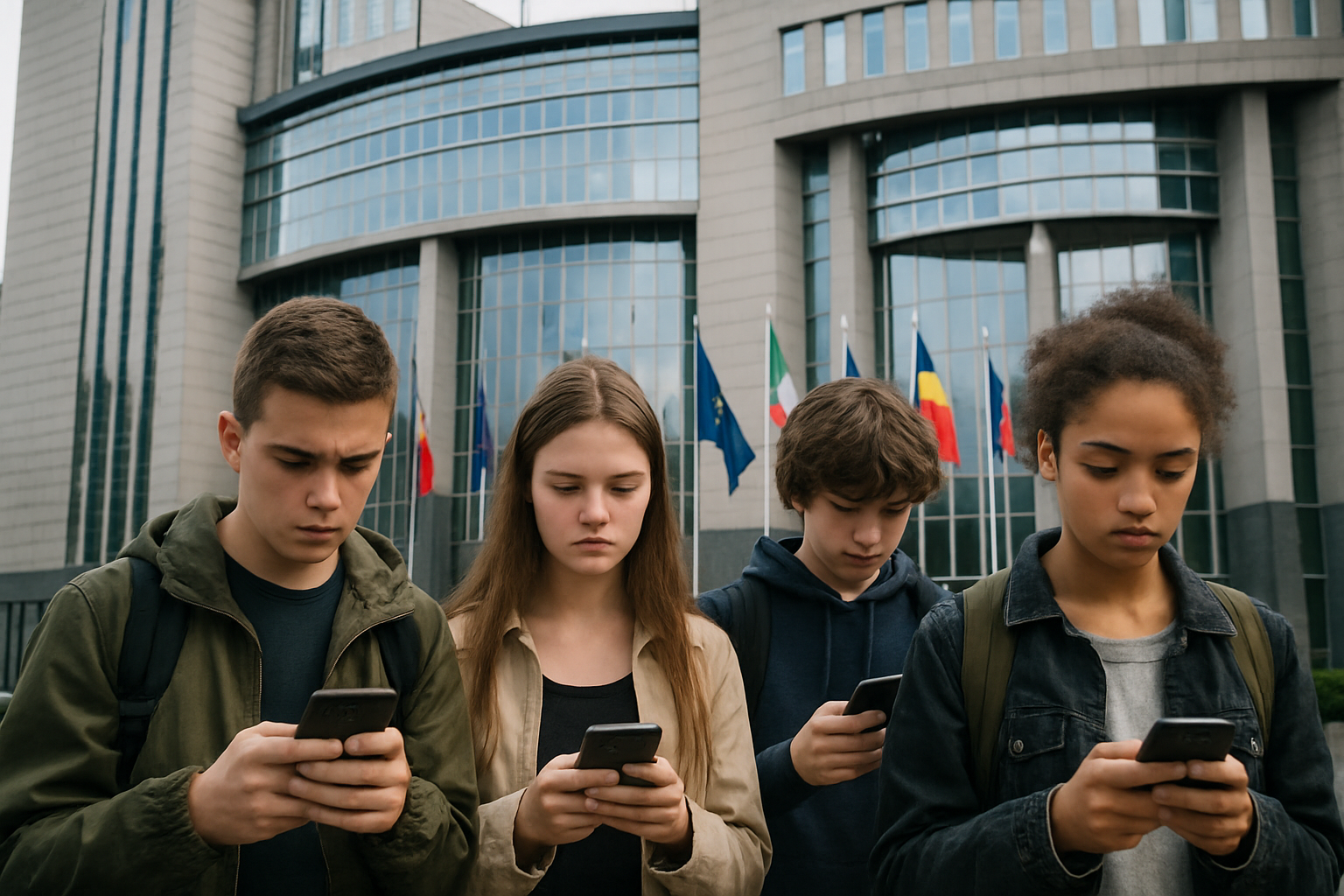
European nations are accelerating plans to implement comprehensive social media age restrictions for children under 16, with Ireland taking a leadership role in discussions while Hungary demonstrates overwhelming public support for such measures.
The momentum represents the most coordinated international approach to children's digital safety since Australia successfully eliminated 4.7 million teen social media accounts in December 2025, proving that age-based restrictions are technically feasible and politically viable.
Ireland Emerges as European Leader
Irish Tánaiste Simon Harris announced that Ireland may implement age limits for social media platforms even without broader European Union agreement, signaling the country's willingness to act independently on youth protection measures. The announcement comes as Ireland's digital wallet system represents what Harris described as an "important first step" toward comprehensive digital governance.
Ireland's position builds on extensive research showing that 96% of children aged 10-15 currently use social media platforms, with 70% experiencing harmful content exposure and over 50% encountering cyberbullying. The statistics have galvanized public opinion, with polling indicating 75% of Irish voters support under-16 social media bans.
Hungary Shows Overwhelming Public Support
Hungarian adults demonstrate some of the strongest support for social media restrictions in Europe, with polling data revealing that a majority would support banning social media access for children under 16. Particularly notable is that three-quarters of Fidesz party supporters would back a complete prohibition, suggesting broad cross-party consensus on protecting children from digital harm.
The Hungarian data reflects a broader European shift in public opinion, where concerns about children's mental health, sleep disruption, and academic performance have created unprecedented political support for regulatory intervention in the technology sector.
Coordinated European Response
The current wave of European social media restrictions represents a fundamental departure from isolated national responses toward a unified regulatory framework. Spain has implemented the most aggressive measures, including complete under-16 social media prohibition with unprecedented criminal executive liability for platform executives who fail to comply.
Greece stands "very close" to implementing under-15 restrictions through its Kids Wallet application, while France, Denmark, and Austria are conducting formal national consultations. The United Kingdom has launched official review processes, and Germany's Christian Democrat Union is actively considering similar measures.
"The era of unlimited freedom in the online world may be ending for young people across Europe,"
— European policy analysts tracking the coordination
Technical Implementation Challenges
The push for "real age verification systems" suggests requirements for biometric authentication or identity document validation, moving far beyond simple checkbox confirmations currently used by platforms. These robust verification systems raise significant privacy concerns while governments argue they provide necessary legal scrutiny of existing data collection practices.
Cross-border enforcement requires sophisticated international cooperation, as global platforms operate across multiple jurisdictions. The European approach of simultaneous implementation is specifically designed to prevent "jurisdictional shopping," where platforms might relocate operations to countries with more lenient regulations.
Industry Resistance and Criminal Liability
Technology companies face unprecedented personal legal risks under the new frameworks, particularly Spain's criminal executive liability model that creates imprisonment possibilities for platform leadership. Elon Musk has called Spanish Prime Minister Pedro Sánchez a "fascist totalitarian," while Telegram's Pavel Durov sent mass alerts to Spanish users warning of a potential "surveillance state."
European governments have used this coordinated industry resistance as evidence supporting the need for regulation, arguing that platform executives' extreme reactions demonstrate the urgent necessity of government oversight in children's digital safety.
Research Supporting Restrictions
Scientific evidence continues mounting in support of age-based social media restrictions. Dr. Ran Barzilay's University of Pennsylvania research demonstrates clear connections between early smartphone exposure and sleep disorders, weight problems, and diminished cognitive abilities among children and adolescents. Children exposed to devices before age 5 show significantly higher rates of sleep disruption and decreased physical activity.
The European Commission's investigation into TikTok found the platform violated EU Digital Services Act requirements through "addictive design" features including unlimited scrolling, automatic video playback, and personalized recommendations designed to maximize user dependency rather than wellbeing.
Global Precedent and Implementation Timeline
Australia's under-16 social media ban serves as the primary implementation model, having successfully eliminated millions of teen accounts while proving that age verification technology can be deployed at scale. The Australian success provides European policymakers with evidence that ambitious age restrictions are both technically achievable and democratically sustainable.
Parliamentary approval is required across participating European nations throughout 2026, with implementation targeted for year-end. The coordinated timing prevents platforms from exploiting regulatory gaps between countries and establishes Europe as the global leader in children's digital rights protection.
Economic and Democratic Implications
The regulations represent the most significant test of democratic governments' ability to regulate multinational technology platforms in the internet era. Success could trigger worldwide adoption of similar frameworks, fundamentally altering how global platforms operate and how executives calculate legal risks.
Failure might strengthen technology industry arguments against government intervention, potentially setting back children's digital safety initiatives globally. The stakes extend beyond social media regulation to fundamental questions about democratic governance, childhood development, and human agency in the digital age.
Looking Forward
The European approach represents a critical inflection point in technology governance, balancing child protection with digital rights and economic competitiveness. As Ireland leads discussions and Hungary demonstrates public support, the continent appears positioned to establish unprecedented precedents for democratic oversight of global technology platforms.
The resolution of Europe's social media age restriction initiatives will influence global technology policy for years, affecting millions of families and potentially reshaping the relationship between democratic institutions and multinational technology companies in the 21st century.