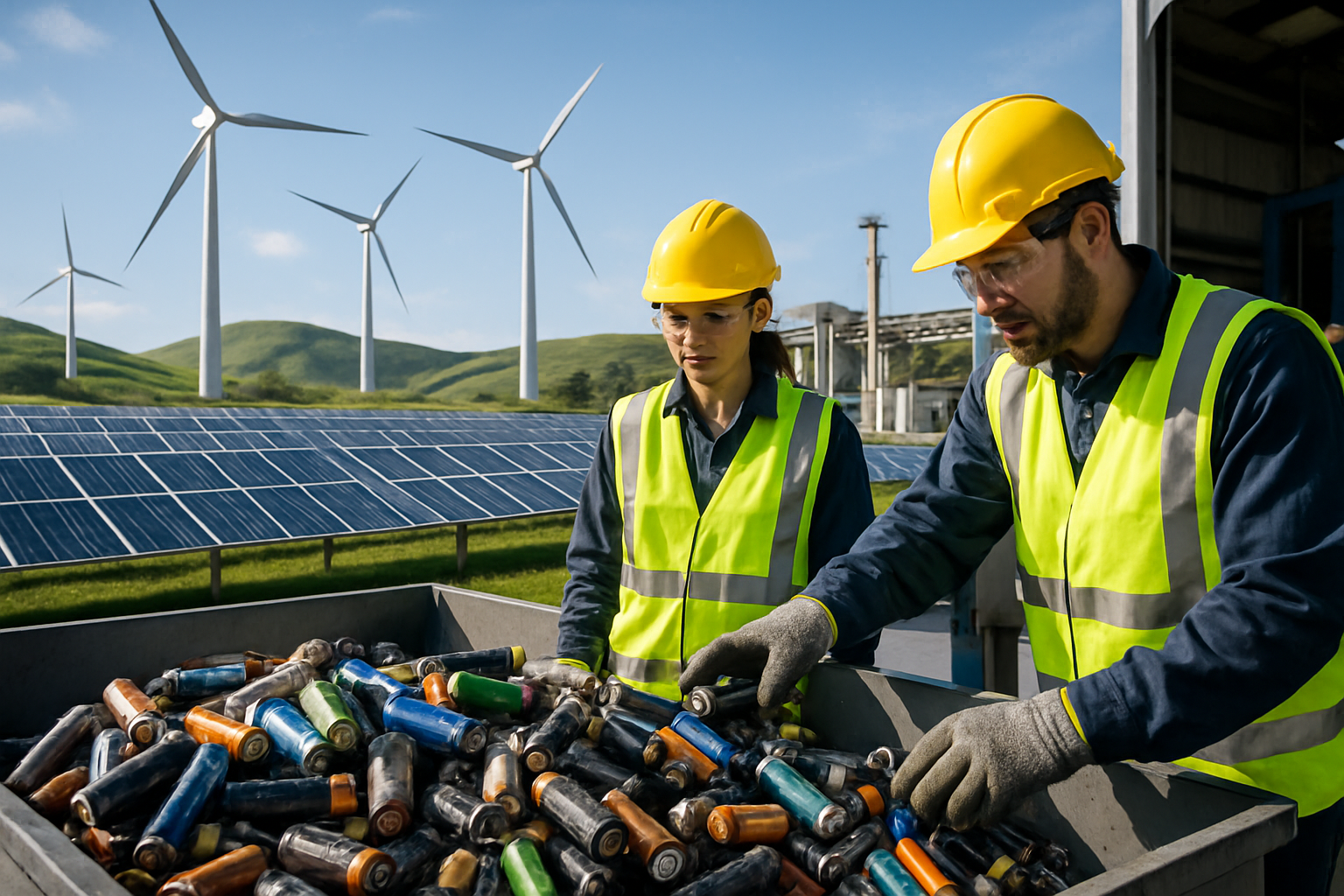
Europe is experiencing a sustainability renaissance as groundbreaking battery recycling initiatives deliver promising results, while comprehensive clean energy projects and environmental protection measures gain momentum across the continent during the 21st consecutive month of temperatures exceeding 1.5°C pre-industrial levels.
Austrian Battery Recycling Breakthrough
Austria's MoLIBity project has achieved significant breakthroughs in battery recycling technology since launching in 2023, with industry leaders expressing strong support for new digital product passport initiatives. The innovative project focuses on developing advanced methods and concepts for recovering raw materials from used batteries, addressing critical supply chain vulnerabilities that threaten Europe's renewable energy transition.
The Austrian battery recycling industry has warmly embraced the introduction of digital product passports, which will provide comprehensive tracking of battery components throughout their lifecycle. This technological advancement represents a crucial step toward achieving true circular economy principles in the critical materials sector, where Europe faces significant strategic dependencies.
"The promising interim results from the MoLIBity project demonstrate that Europe can reduce its dependence on imported raw materials while building a sustainable circular economy," according to industry representatives.
— Austrian Battery Industry Association
Clean Energy Transformation Accelerates
The sustainability surge extends far beyond battery recycling, encompassing comprehensive renewable energy initiatives across multiple European nations. Latvia's Deep Space Energy company recently won a prestigious 10,000 euro prize at the TechChill pitching contest, highlighting the region's emerging leadership in innovative energy solutions.
This recognition comes as European nations grapple with mounting energy challenges, including significant price volatility and supply security concerns. Austrian energy market analysts warn that ongoing disruptions in global energy markets could lead to substantial price increases for electricity and gas consumers, making renewable energy independence increasingly critical.
Estonia continues to demonstrate European renewable leadership, maintaining 88% renewable electricity generation backed by continental Europe's largest battery storage facility serving 90,000 households. This success provides a practical template for other European nations seeking to balance renewable intermittency with grid stability requirements.
Environmental Protection Through International Cooperation
The sustainability renaissance encompasses ambitious environmental protection initiatives across multiple sectors. The World Bank has approved a significant multi-million dollar Caspian cleanup project in Azerbaijan, demonstrating international commitment to addressing regional environmental challenges through coordinated action.
These developments occur within a broader context of unprecedented environmental urgency. January 2026 marked the 18th consecutive month of temperatures exceeding the critical 1.5°C pre-industrial threshold, with human-induced climate change now overriding natural climate variability including La Niña cooling effects.

Supply Chain Vulnerabilities and Strategic Independence
European sustainability initiatives gain particular significance amid growing awareness of critical supply chain vulnerabilities. China currently controls 60% of global production and 90% of refining capacity for lithium, cobalt, and rare earth elements essential to renewable energy infrastructure. EU auditors have warned that these dependencies threaten the achievement of climate goals without strategic diversification efforts.
The US-EU-Japan Critical Minerals Partnership, involving 55 countries and seven African alternative suppliers, represents a coordinated response to these vulnerabilities. However, developing alternative supply chains requires massive investment and years of infrastructure development, making circular economy approaches like Austria's battery recycling project increasingly valuable.
Memory chip shortages have driven semiconductor prices to sixfold increases, affecting smart grid systems and renewable energy control technologies until new fabrication facilities come online in 2027. These challenges underscore the importance of developing resilient, locally-controlled supply chains for critical energy technologies.
Technology-Tradition Integration Success
The most successful European sustainability initiatives demonstrate sophisticated integration of cutting-edge technology with traditional ecological knowledge and community-based management systems. Austria's battery recycling project combines advanced materials science with established industrial expertise, while Latvia's space energy innovations build on the region's strong technical education foundations.
Digital monitoring systems, automated control processes, and artificial intelligence optimization are becoming standard requirements for renewable energy infrastructure. These technologies enable real-time management of renewable intermittency while improving system reliability and reducing operational costs.
Economic Development Engine
Environmental protection is increasingly recognized as an economic development strategy rather than a regulatory burden. Austria's battery recycling initiatives create high-tech manufacturing jobs while reducing import dependencies. Estonia's renewable energy leadership attracts billions in sustainable investment while positioning the country as a clean technology export hub.
The economic multiplier effects extend beyond environmental sectors through improved public health, enhanced agricultural productivity, and reduced infrastructure costs from natural disaster prevention. Countries implementing comprehensive environmental protection demonstrate greater economic resilience and attract more sustainable investment across multiple sectors.
Climate Urgency Context
European sustainability initiatives emerge during Earth's most challenging environmental period in recorded history. The sustained warming over 21 consecutive months demonstrates that climate change has fundamentally altered atmospheric systems beyond natural recovery mechanisms, creating cascading environmental effects that traditional conservation approaches struggle to address.
This unprecedented climate context makes initiatives like Austria's battery recycling project and Latvia's clean energy innovations particularly significant. They represent practical solutions to immediate challenges while building long-term resilience against accelerating environmental change.
"We are facing a critical juncture where reactive crisis management must give way to proactive ecosystem service management if we are to keep pace with accelerating environmental change during this decisive climate action decade."
— European Climate Scientific Advisory Board
International Cooperation Framework
Success in addressing sustainability challenges requires unprecedented international cooperation, as environmental systems transcend political boundaries through ocean currents, atmospheric systems, and species migrations. The diversity of approaches across European nations provides resilience against single-solution dependencies while offering multiple adaptation pathways for complex environmental challenges.
Knowledge sharing creates global networks that strengthen local capacity while contributing to planetary sustainability. Austria's battery recycling methodologies can inform worldwide materials recovery efforts, while Estonia's renewable integration innovations advance clean technology deployment internationally.
Strategic Significance for Global Action
March 2026 represents a critical juncture for global environmental protection, with the choice between reactive crisis management and proactive ecosystem service management potentially determining whether conservation efforts can keep pace with accelerating environmental change during this decisive climate action decade.
The environmental action window is narrowing rapidly as ecological systems approach critical thresholds that could trigger irreversible changes affecting global food security, climate stability, and human settlements. However, the tools, knowledge, and cooperation frameworks demonstrated by European sustainability initiatives provide hope for comprehensive environmental protection.
Success depends on sustained international cooperation, enhanced multi-sector coordination, and increased financial commitments that recognize environmental protection as essential infrastructure for human prosperity and planetary sustainability. The European sustainability renaissance offers practical templates for scaling environmental protection globally while building the technological and institutional capacity required for comprehensive transformation.