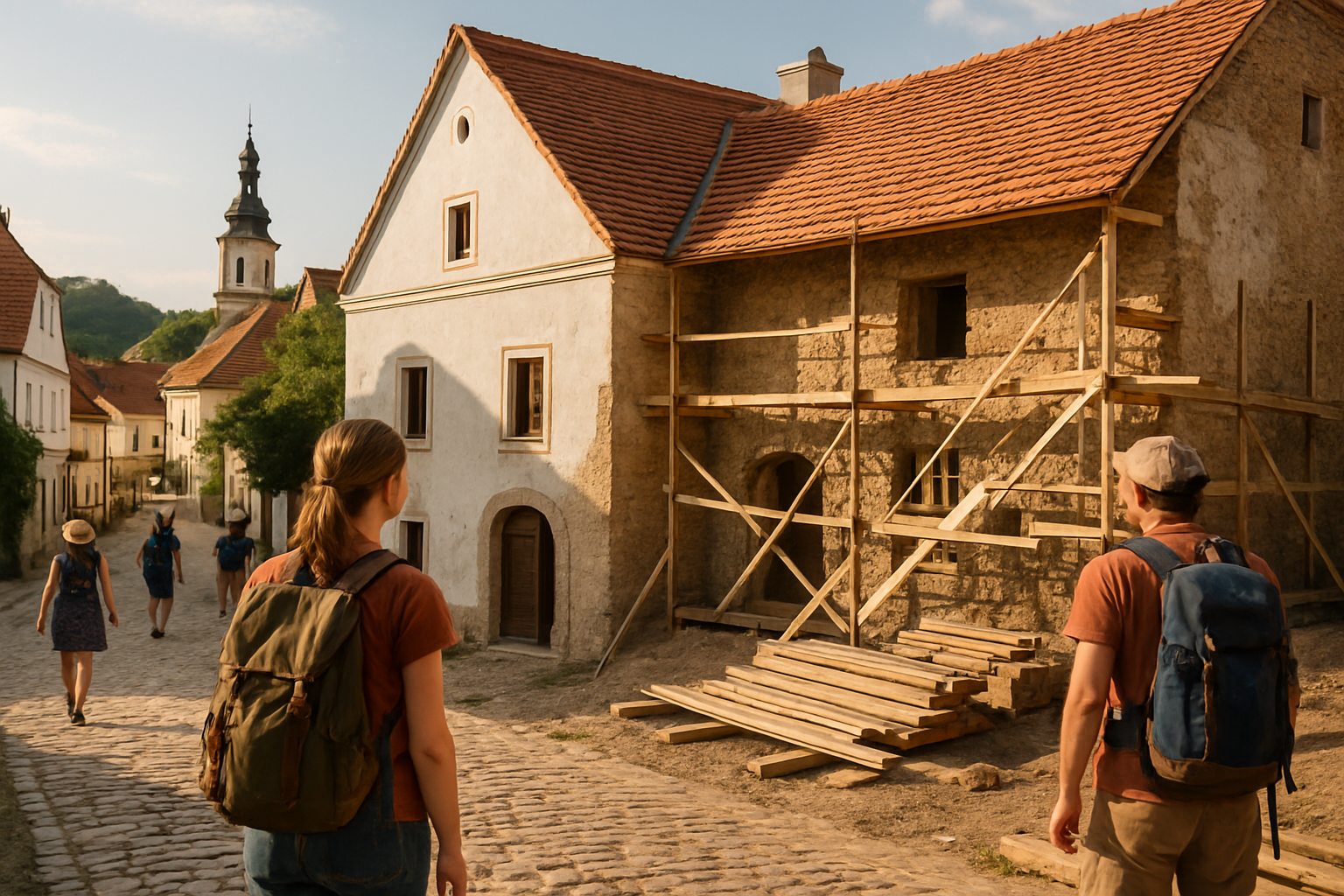
European tourism destinations are demonstrating remarkable resilience while fundamentally transforming their approach to visitor management, as exemplified by innovative restoration projects in the Czech Republic and evolving travel planning strategies that prioritize sustainability over volume-based growth.
The tourism industry across Europe is experiencing a watershed moment, balancing robust recovery with sustainability concerns as destinations implement quality-focused strategies that benefit both visitors and local communities. Recent developments in the Czech Republic showcase this transformation, where authentic restoration projects are breathing new life into historic properties while creating unique cultural experiences.
Czech Republic Leads Authentic Tourism Revival
In the Czech-Polish borderlands, the baroque rectory at Hoprich represents a microcosm of this industry evolution. Anna and Adam Smékal, the property's owners, have transformed what they affectionately call a "mega-romantic ruin" into a thriving cultural destination through careful restoration that honors historical authenticity while adapting to contemporary needs.
"We like it when you don't renovate something exactly as it was, but you draw from it and adapt it to the present,"
— Anna Smékal, Hoprich Rectory Owner
Their approach exemplifies the broader shift toward sustainable tourism development that preserves cultural heritage while creating meaningful economic opportunities. The rectory now hosts cultural events and artist residencies, demonstrating how authentic renovation projects can serve multiple purposes: historical preservation, cultural programming, and tourism attraction.
This model reflects the industry's evolution from mass tourism toward experiential travel that Generation Z increasingly demands. With 50% of Generation Z travelers making multiple trips of five or more days annually, the market is driving demand for AI-integrated travel planning combined with authentic cultural experiences.
Planning Challenges Reshape Travel Industry
Modern vacation planning has become increasingly sophisticated, incorporating not just traditional factors like weather and social media inspiration, but also current world events, destination accessibility, and desires for meaningful experiences beyond simple beach relaxation. Czech travelers, like their European counterparts, have demonstrated remarkable resilience, continuing to travel despite global uncertainties and conflicts.
The transformation reflects broader industry patterns where authentic experiences are replacing standardized tourism products. Destinations implementing comprehensive visitor management strategies—combining cultural authenticity, strategic infrastructure investment, and community engagement—are positioned for sustained competitive advantages.
Infrastructure Investment Surge Supports Quality Tourism
The European tourism sector is benefiting from an unprecedented €570+ billion global infrastructure investment surge supporting comprehensive visitor services beyond traditional accommodation. Croatia leads this evolution with 62 tourist medical clinics planned for the 2026 season, representing Europe's most extensive seasonal healthcare network.
Technology integration is enhancing rather than replacing authentic cultural experiences. Successful examples include Rome's Trevi Fountain managed access system, which generates €6 million annually through €2 entry fees while protecting the historic site, and Venice's expanded entry fee system covering 60 days in 2026 compared to 29 days in the 2024 pilot program.
These innovations demonstrate how destinations can balance economic objectives with cultural preservation and environmental responsibility. Cyprus achieved record performance in 2025 with 4.5 million visitors generating €3.6 billion in revenue through market diversification strategies that emphasize quality over volume approaches.
Regional Cooperation Replaces Competition
The tourism industry is witnessing a fundamental shift from individual destination competition toward regional cooperation through coordinated marketing, collaborative infrastructure development, and shared best practices. This approach creates multi-destination experiences that benefit entire regions while maintaining distinct cultural identities.
Climate resilience has become essential for destination competitiveness, with January 2026 marking the 18th consecutive month of global temperatures exceeding 1.5°C above pre-industrial levels. Destinations implementing proactive infrastructure design and adaptive management strategies are demonstrating greater resilience to environmental challenges.
Economic Multiplier Effects Beyond Hospitality
Tourism recovery is generating comprehensive economic multiplier effects extending beyond traditional hospitality sectors. Infrastructure improvements, cultural industry support, artisan networks, and transportation development create year-round employment opportunities and sustainable economic foundations for local communities.
Countries implementing comprehensive tourism infrastructure demonstrate greater economic resilience and sustainable investment attraction through sophisticated destination management that combines marketing excellence, operational efficiency, and crisis communication capabilities.
Sustainability as Competitive Advantage
The industry's maturation toward value-based development is establishing new standards for sustainable community-focused tourism. Success factors consistently emerging across European destinations include cultural authenticity preservation enhanced by technology, strategic infrastructure investment, meaningful community involvement, international cooperation, and adaptive management responding to evolving consumer preferences.
Environmental consciousness is driving demand for sustainable tourism options, particularly among younger travelers who prioritize experiences that contribute positively to destinations rather than merely consuming local resources. This trend is supporting destinations that implement eco-friendly policies and cultural preservation alongside economic development objectives.
Future Implications for European Tourism
The current transformation represents a fundamental shift in how European tourism destinations approach development and visitor management. The emphasis on authentic experiences, community engagement, and environmental sustainability is establishing precedents that will influence tourism policy and practice for decades ahead.
Regional integration through coordinated marketing initiatives, infrastructure sharing, and collaborative development is creating stronger tourism economies while preserving the distinct cultural characteristics that make European destinations compelling to international visitors.
As exemplified by projects like the Hoprich rectory restoration, successful tourism development now requires balancing immediate operational needs with long-term community benefits, cultural preservation, and environmental responsibility. This approach serves both visitors and host communities effectively in an increasingly complex global marketplace that demands authenticity, sustainability, and meaningful cultural exchange.
The industry's evolution toward sophisticated destination management combining economic objectives with cultural preservation and environmental responsibility positions Europe to maintain its leadership in global tourism while serving as a model for sustainable development practices worldwide.