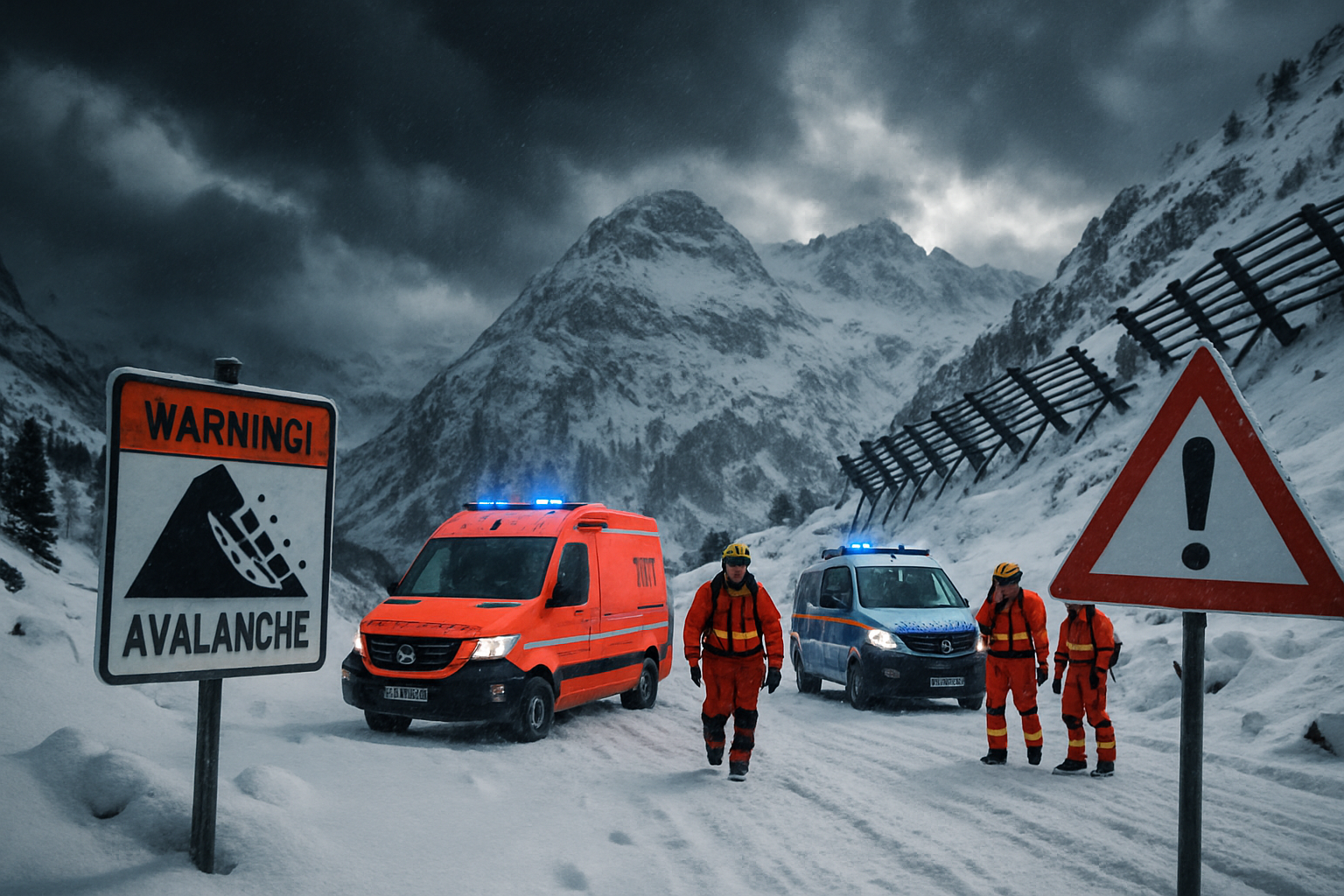
Europe faces an escalating multi-national weather crisis as Austria reports at least five avalanche deaths while France maintains critical flood warnings, marking the latest phase in February 2026's devastating sequence of extreme weather events that has overwhelmed continental emergency systems.
The Austrian state of Vorarlberg issued its highest avalanche warning level 4 - categorized as "extremely high" danger - as emergency services deployed across the mountainous regions. The deadly avalanches claimed multiple victims, including foreign nationals, highlighting the extreme conditions affecting Alpine areas across Western Austria.
France Battles Persistent Flooding Crisis
French authorities maintain red flood alerts for three departments - Loire-Atlantique, Charente-Maritime, and Maine-et-Loire - as meteorological services warn the situation remains "very exposed to risk." The persistent flooding crisis reflects the cumulative impact of weeks of relentless rainfall that has saturated soils beyond their absorption capacity.
The Loire-Atlantique region, already battered by previous storms in the devastating February sequence, faces continued threats as river systems strain under unprecedented water volumes. Local authorities report widespread infrastructure damage, with businesses and residential areas facing extended recovery periods.
Romania Emerges from Severe Winter Episode
Romanian meteorological authorities report the country is recovering from what officials describe as "the most severe winter episode of 2026." The crisis left at least five people dead in a series of avalanches that struck 450-meter-wide areas in Alpine resort regions, according to emergency service reports.
The Tirol police region confirmed that five skiers were caught in a massive avalanche at the Saint Anton resort in the Tyrolean Alps, triggered at an altitude exceeding 2,000 meters. The incident represents part of a broader pattern of extreme mountain conditions affecting recreational and professional activities across the European Alpine chain.
Swedish Transport Crisis Intensifies
Sweden faces mounting transportation disruptions as emergency services report "extremely slippery" road conditions following meteorological warnings for snow and ice accumulation. Multiple traffic accidents occurred throughout the night across Western Götaland and Halland regions, according to L-O Nordström from Rescue Services Greater Gothenburg.
"It should be extremely slippery out there,"
— L-O Nordström, Rescue Services Greater Gothenburg
The Swedish Meteorological and Hydrological Institute (SMHI) issued yellow snow warnings affecting southern regions, with authorities advising extreme caution for anyone venturing onto western Swedish roads during the weekend period.
Continental Emergency Response Reaches Breaking Point
The current crisis represents the continuation of an unprecedented weather emergency that has tested European emergency response systems beyond their designed capacity. Since early February 2026, the continent has endured a relentless succession of Atlantic storms - designated Kristin, Leonardo, Marta, Nils, and Pedro - that have claimed over 35 lives across Portugal, Spain, and France.
Portugal deployed 26,500 emergency personnel in what officials described as the largest peacetime rescue operation in the nation's history, including 1,975 military personnel and 30 naval vessels responding to more than 1,800 weather-related incidents. The scale of the response underscores the exceptional nature of the current emergency.
Infrastructure Vulnerabilities Exposed
The crisis has exposed critical vulnerabilities in European infrastructure systems designed for historical rather than current climate conditions. Portugal's A1 highway viaduct collapsed near Coimbra due to Mondego River flooding, severing the critical Lisbon-Porto transportation corridor for several weeks according to Infrastructure Minister Miguel Pinto Luz.
Transportation networks across the continent operate beyond their design parameters, with railways suspended, highways closed, and aviation systems experiencing repeated disruptions. The Netherlands' Schiphol Airport has cancelled hundreds of flights, while multiple European airports struggle with ice conditions and extreme weather protocols.
Climate Context and Scientific Warnings
The current crisis occurs against the backdrop of January 2026 being confirmed as the hottest month in recorded history - the 18th consecutive month with global temperatures exceeding 1.5°C above pre-industrial levels. This creates what scientists describe as a "climate volatility paradox" where global warming enables both heat records and extreme regional weather events through disruption of atmospheric circulation patterns.
The European Scientific Advisory Board on Climate Change has warned that the European Union remains "critically unprepared" for accelerating climate impacts, emphasizing the urgent need for infrastructure investment to protect populations from floods, extreme heat, and severe weather events.
International Cooperation Under Strain
The simultaneous nature of weather emergencies across multiple European nations has strained traditional mutual aid mechanisms. The EU Civil Protection Mechanism has been activated, with Sweden and Denmark providing a €246 million assistance package - representing the largest coordinated European weather response on record.
However, the scale and geographic breadth of the current crisis exposes limitations in emergency response systems designed to handle sequential rather than simultaneous disasters. Emergency services across the continent report operating at capacity limits, with traditional regional aid complicated by multiple countries facing concurrent emergencies.
Economic and Social Impact Mounting
The cumulative economic impact spans billions of euros across agricultural, tourism, and infrastructure sectors. Spanish reservoirs have surged to 67.3% capacity with 31 facilities at 100% capacity, while agricultural operations face massive crop losses across the Iberian Peninsula.
The human cost extends beyond immediate casualties, with families losing generational homes, small businesses facing extinction, and vulnerable populations requiring extended emergency support. Mental health services report increased demand as communities grapple with repeated extreme weather trauma.
Democratic Resilience Tested
The crisis has created what experts term a "climate-democracy intersection" as extreme weather disrupts governance systems. Portugal's presidential election proceeded despite the emergency, with António José Seguro achieving a decisive victory even as 36,000 voters were unable to participate due to weather-related displacement and infrastructure damage.
Looking Forward: Adaptation Imperatives
Scientists emphasize that current conditions likely represent a preview of routine weather patterns expected in the 2030s without significant climate adaptation investment. The choice facing European leaders increasingly centers on reactive crisis management versus transformative infrastructure adaptation designed for long-term climate resilience.
Recovery timelines extend from months to years rather than the weeks traditionally expected for weather-related damage. The emphasis has shifted toward "building back better" with climate-resilient infrastructure designed for future rather than historical climate conditions.
Additional Atlantic storm systems continue to develop, suggesting the current crisis may persist for weeks. Authorities maintain high alert levels while advising against unnecessary travel and emphasizing the importance of monitoring weather warnings.
"The frequency and intensity of extreme weather will continue to increase as global warming progresses. February 2026 represents a watershed moment that forces us to fundamentally reconsider our preparedness for permanent climate volatility."
— European Scientific Advisory Council on Climate Change
The February 2026 weather crisis provides a template for managing climate emergencies while maintaining democratic governance, demonstrating both the necessity and effectiveness of continental cooperation while highlighting the urgent need for transformative rather than reactive approaches to climate adaptation in an era of increasing weather volatility.