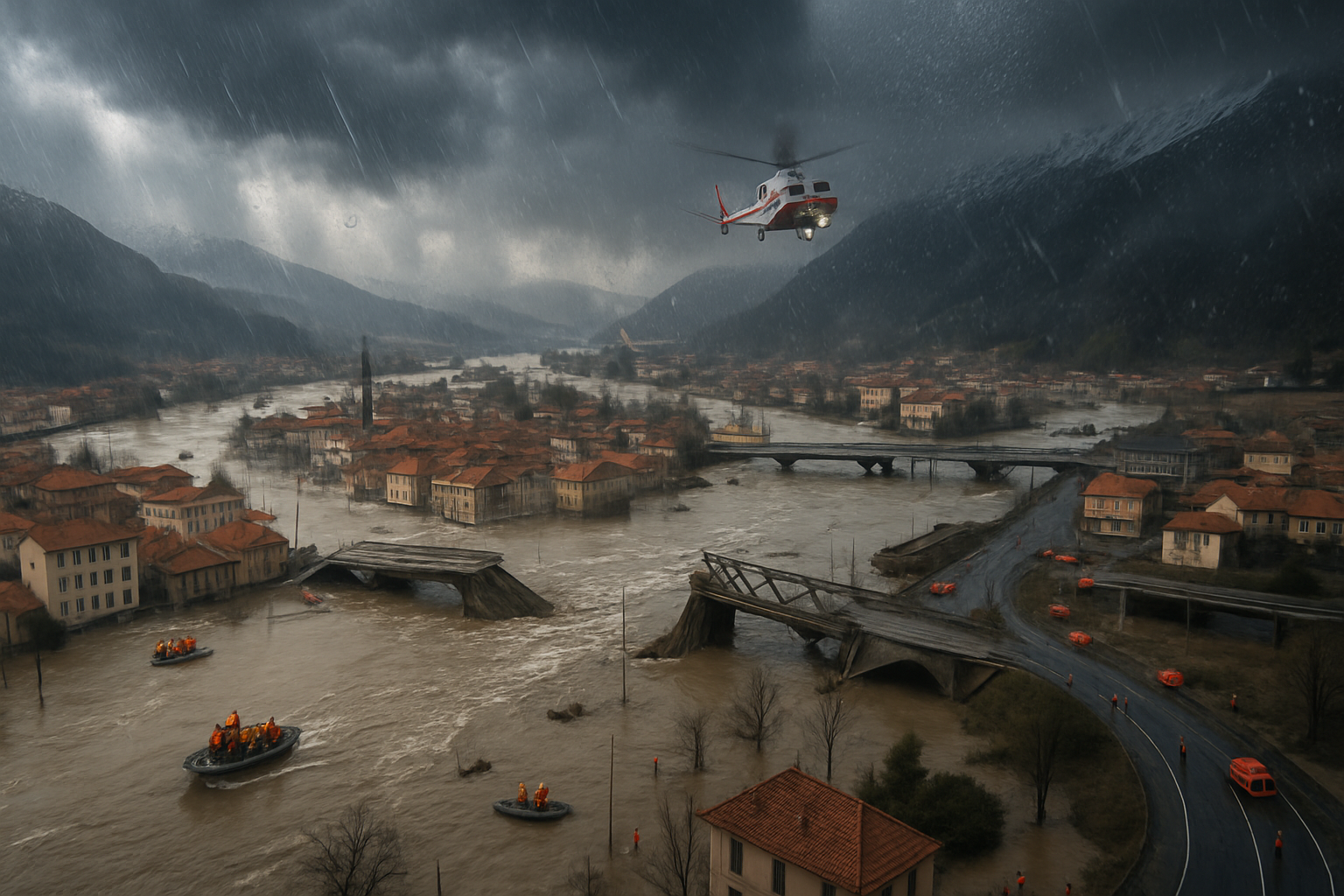
A devastating convergence of extreme weather events across Europe has pushed continental emergency systems to their breaking point, with flooding, avalanches, severe storms, and unprecedented rainfall affecting millions of residents from Romania to France, demanding the largest coordinated rescue operations in European peacetime history.
The crisis intensified February 18, 2026, as Romania battled what meteorologists describe as the "most severe winter episode" of the season, with heavy snowfall leaving 166,000 families without power and forcing widespread transportation shutdowns. Simultaneously, France experienced its longest period of continuous rainfall on record, with authorities issuing red flood alerts for the Garonne River basin as water levels threaten "important and major overflows within 24 hours."
Multi-National Emergency Response Overwhelmed
The scope of the crisis has necessitated unprecedented international cooperation, with the European Union's Civil Protection Mechanism activated to coordinate assistance across affected nations. Portugal alone has deployed 26,500 emergency personnel—including 1,975 military and 30 naval vessels—in what officials describe as the largest peacetime rescue operation in the country's history.
"This is perhaps the most serious weather phenomenon. It's probably the most important episode of this winter," French meteorologist Flori commented on the devastating conditions affecting multiple European regions.
— Flori, French Meteorologist
The human toll continues mounting, with avalanches in the French Alps claiming multiple lives, while the successive Atlantic storm systems have killed at least 16 people across Portugal and Spain. The Portuguese A1 highway viaduct collapsed near Coimbra due to catastrophic flooding from the Mondego River, severing the critical Lisbon-Porto transportation corridor.
Infrastructure Systems at Breaking Point
Transportation networks across Europe face unprecedented strain. In Romania, aviation authorities report major disruptions at airports, while road conditions have become "extremely dangerous" across multiple districts. French airports have reduced operations by 30% at Paris Charles de Gaulle due to ice conditions, and the Netherlands' Schiphol Airport cancelled over 150 flights due to severe weather from Storm Nils.
The crisis has exposed critical vulnerabilities in European infrastructure designed for historical rather than current climate conditions. Power grids struggle under extraordinary demand, with Estonia reporting record electricity consumption of 1,723 megawatts during what meteorologists confirm as the coldest winter in 25 years.
Climate Context and Historical Significance
The extreme weather occurs against the backdrop of January 2026 marking the hottest month in recorded global history—the 18th consecutive month exceeding 1.5°C above pre-industrial levels. This paradoxical combination of global warming with regional extreme cold demonstrates the complex nature of climate volatility, where warming trends override natural cooling cycles while enabling devastating weather extremes.
Historical records are being shattered across the continent. In France's Lot-et-Garonne region, flooding has reached levels not seen since the catastrophic events of 1963, while Portugal's Alcácer do Sal is experiencing its worst flooding in over 60 years. The succession of storms—named Kristin, Leonardo, Marta, and Nils—represents an unprecedented sequence of major Atlantic weather systems striking Europe within a single month.
Agricultural and Economic Devastation
The economic toll spans multiple sectors, with agricultural communities bearing severe losses. Portuguese vineyards in the Tejo basin have suffered devastating flooding, while Spanish olive groves and citrus operations face billions in damages. Spanish reservoirs have surged to 67.3% capacity, with 31 facilities reaching 100% capacity, highlighting both the severity of rainfall and potential future flood risks.
Tourism infrastructure has sustained extensive damage, with many rural businesses questioning their ability to reopen for the critical summer season. The cultural heritage sector faces particular challenges, with over 100 Portuguese museums and monuments reporting damage from the storm succession.
Democratic Resilience Under Environmental Stress
The crisis has tested democratic institutions, with Portugal successfully conducting presidential elections despite infrastructure disruption and 36,000 voters unable to participate in the worst-affected areas. The election proceeded as scheduled, demonstrating institutional resilience under extreme environmental stress and providing a template for maintaining democratic processes during climate emergencies.
António José Seguro's landslide victory with 66.82% of the vote against far-right candidate André Ventura occurred during active emergency operations, with the new president inheriting massive reconstruction challenges that will define his administration.
International Response and Future Preparedness
International assistance has reached unprecedented levels, with Sweden and Denmark providing a combined €246 million emergency assistance package—the largest coordinated European weather response in history. Military assets from multiple nations support rescue operations, while specialized equipment crosses borders to address simultaneous emergencies.
Emergency services report reaching operational capacity limits continent-wide, with traditional regional aid mechanisms strained by the simultaneous nature of multiple national disasters. This has prompted urgent discussions about fundamentally transforming European emergency response capabilities for an era of increasing climate volatility.
Scientific Warnings and Adaptation Imperatives
Climate scientists warn that current conditions provide a preview of routine circumstances expected in the 2030s without significant climate action and infrastructure adaptation. The European Scientific Advisory Council on Climate Change has issued urgent warnings that the European Union remains critically underprepared for accelerating climate impacts.
"Extreme meteorological and climate phenomena are already causing severe losses across Europe, with heat events causing tens of thousands of premature deaths annually," the advisory council reported, emphasizing the urgent need for adaptation acceleration.
— European Scientific Advisory Council on Climate Change
Recovery timelines extend from months to years for different regions, with governments emphasizing "build back better" approaches to create climate-resilient infrastructure. However, the frequency of extreme events raises questions about whether recovery periods allow adequate reconstruction before the next crisis.
Long-term Implications for European Unity
The crisis represents a watershed moment for European climate adaptation strategy, demonstrating both the necessity and effectiveness of continental cooperation while highlighting the urgent need for transformative rather than reactive approaches to extreme weather preparedness.
As additional Atlantic storm systems develop and the crisis may persist for weeks, European leaders face critical decisions between continuing reactive crisis management and implementing fundamental infrastructure transformation for long-term climate resilience. The human impact—families losing generational homes, businesses facing extinction, vulnerable populations requiring extended support—underscores the urgency of this transition.
The February 2026 weather crisis may ultimately be remembered as the moment Europe fully recognized the need for continental-scale climate adaptation, moving from managing individual weather events to preparing for permanent climate volatility as the new normal for European society and governance.