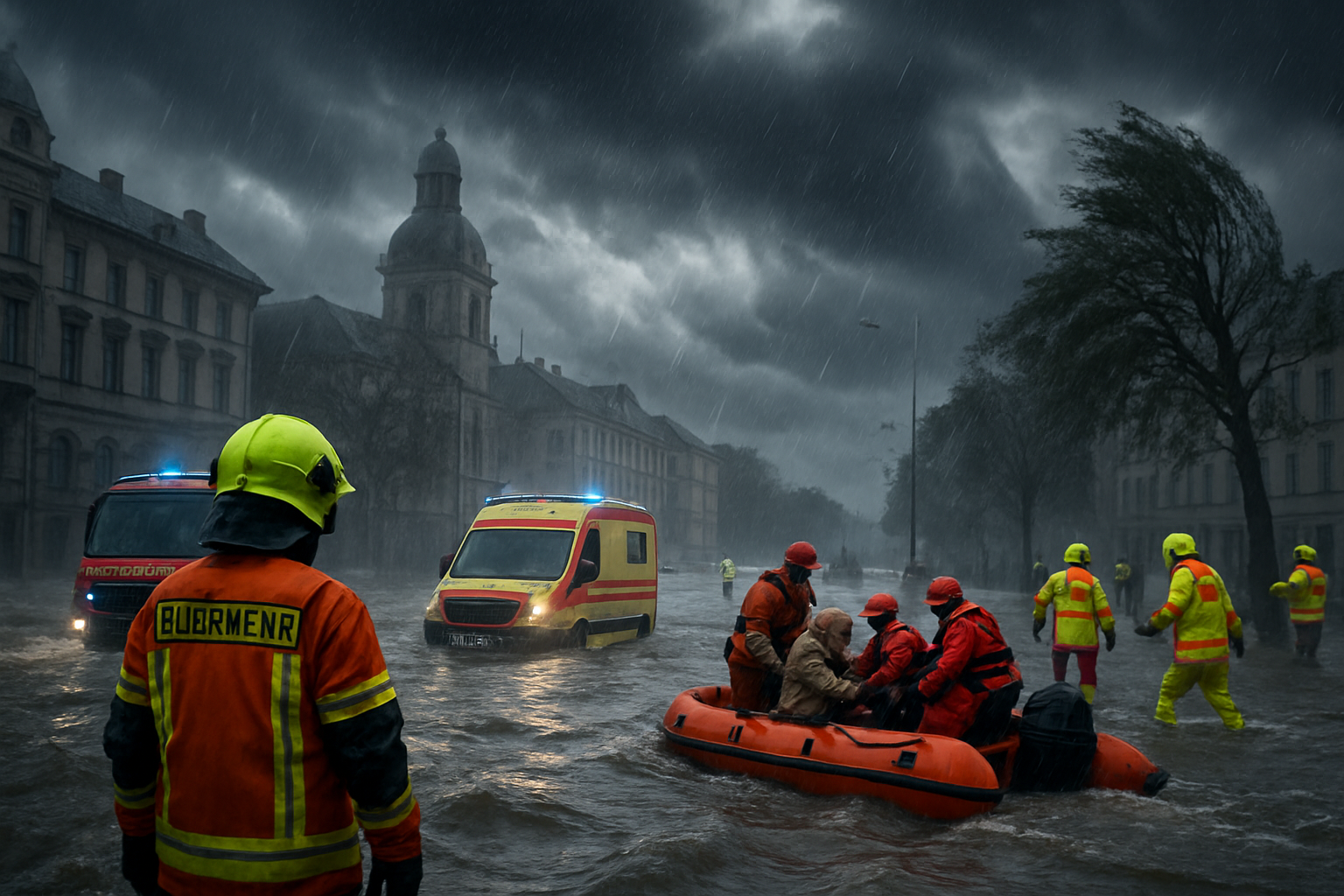
Europe finds itself in the grip of an unprecedented multi-national weather emergency as France battles "exceptional" flooding with 70 departments under flood alerts, Latvia records Europe's coldest temperatures at -32°C, and Portugal continues assessing billions in storm damage from successive Atlantic systems.
The latest weather crisis, unfolding across February 17, 2026, represents a continuation of Europe's most severe winter weather emergency in decades, with emergency services stretched to breaking points and critical infrastructure failing under the strain of extreme conditions.
France Faces Exceptional Flooding Crisis
French meteorological services have declared an unprecedented flood emergency, with 70 departments remaining under flood surveillance, including three under the highest red alert level. According to Le Monde, a new weather disturbance arriving through Brittany threatens to strike France on Wednesday and Thursday, generating intense precipitation and violent winds that could exacerbate the already critical situation.
The flooding has been described by authorities as "exceptional" and is expected to persist throughout the entire week. Rivers across the country are bursting their banks as already saturated ground struggles to absorb additional rainfall, creating dangerous conditions that have forced widespread evacuations and transport disruptions.
Historic Cold Wave Grips Eastern Europe
In a stark contrast to the flooding in Western Europe, Latvia experienced the continent's most extreme cold conditions on Tuesday morning. The Daugavpils observation station, located in the eastern part of the city near the Ruģeļu reservoir, recorded temperatures plunging to -32°C (-25.6°F), establishing both the coldest temperature in Europe and a new February 17th record for Latvia.
Multiple meteorological sources confirmed that this temperature reading represents the most severe cold snap affecting the European continent during the current weather emergency. The extreme conditions have created dangerous situations for residents and placed additional strain on heating systems and energy infrastructure across the Baltic region.
Portugal Continues Storm Recovery
Portugal remains in recovery mode following a devastating succession of Atlantic storms that have battered the Iberian Peninsula throughout February. The Portuguese Casa do Douro is currently assessing damage from recent tempests, while the agricultural and fishing sectors face significant economic losses.
The impact on Portugal's vital industries has been severe, with fishing communities particularly affected by the succession of storms that have made maritime operations extremely dangerous. The agricultural sector, including vineyards in the renowned Douro region, has suffered extensive damage that could have long-lasting economic implications.
Transportation Networks Under Severe Strain
The extreme weather conditions have created a continental transportation crisis, with railway services suspended, highways closed, and aviation severely disrupted. The combination of flooding in western regions and extreme cold in eastern areas has created a perfect storm for infrastructure failure.
Portuguese railway services remain suspended on multiple lines, while French transportation authorities have issued warnings about dangerous travel conditions. The economic impact of these disruptions extends far beyond immediate inconvenience, affecting supply chains, tourism, and international trade routes.
Historical Context of Crisis
The current weather emergency builds upon what has been characterized as Europe's harshest winter in decades. The crisis follows a devastating succession of Atlantic storms, including Kristin, Leonardo, Marta, and Nils, which collectively claimed more than 16 lives across Portugal and Spain and required the deployment of over 26,500 rescue personnel in Portugal's largest peacetime emergency operation.
This weather pattern occurs against the backdrop of January 2026 being confirmed as the hottest month on record globally, marking the 18th consecutive month to exceed 1.5°C above pre-industrial levels. This paradox demonstrates the increasing volatility of global climate systems, where record global warmth can coexist with extreme regional cold and severe storm systems.
Emergency Response and International Cooperation
European nations have activated unprecedented levels of emergency response coordination. The EU Civil Protection Mechanism has been engaged, with Sweden and Denmark providing a €246 million assistance package—the largest coordinated European weather response effort in recent history.
Emergency services across the continent report operating at capacity limits, with traditional regional aid mechanisms strained by the simultaneous nature of multiple weather emergencies affecting different regions. The scope of the crisis has required enhanced international cooperation and resource sharing on a scale rarely seen outside of wartime emergencies.
Infrastructure Vulnerabilities Exposed
The current crisis has exposed critical vulnerabilities in European infrastructure systems that were designed for historical rather than future climate conditions. Transportation networks, power grids, and communication systems are struggling to cope with the frequency and intensity of extreme weather events.
The succession of storms has caused billions in economic damage across agricultural, tourism, and infrastructure sectors. Major projects, including highway reconstructions and railway repairs, are expected to take months or years to complete, highlighting the need for "build back better" approaches that incorporate climate resilience into reconstruction efforts.
Looking Ahead: Climate Adaptation Imperative
Scientists warn that the current conditions may represent a preview of routine circumstances expected in the 2030s without significant climate adaptation investments. The frequency and intensity of extreme weather events are expected to increase as global warming progresses, making the current crisis a potential template for future emergency management needs.
The February 2026 weather emergency represents a watershed moment that is forcing fundamental reconsideration of European climate volatility preparedness. Emergency management experts emphasize the need for transformative rather than reactive approaches to infrastructure development and emergency response capabilities.
Recovery from the current crisis is expected to extend well into the coming months, with some reconstruction projects spanning years. The human impact extends beyond immediate safety concerns to long-term displacement of families losing generational homes, businesses facing extinction, and vulnerable populations requiring extended emergency support.
As additional Atlantic weather systems continue to develop, European authorities warn that the crisis may persist for weeks, establishing what officials describe as a "new normal" of extreme weather frequency that requires comprehensive adaptation strategies across all sectors of European society.