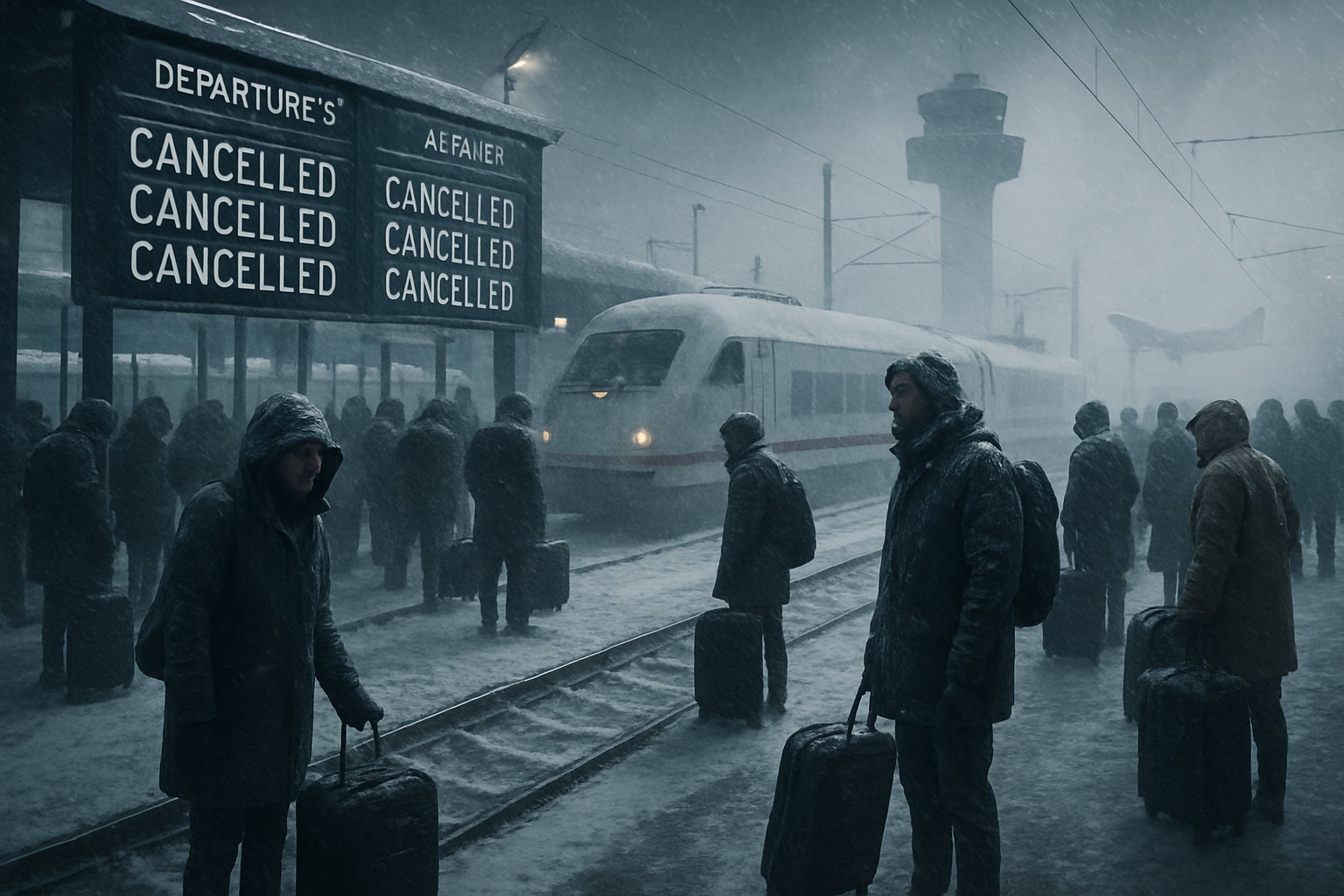
A devastating winter weather system has paralyzed transportation networks across Central and Northern Europe, with Berlin Brandenburg Airport suspending all flights due to dangerous black ice conditions while railway services face massive delays throughout the region.
The crisis intensified on Thursday morning as freezing rain and black ice created treacherous conditions from Germany to Poland, marking the latest escalation in what meteorologists are calling one of Europe's harshest winters in decades.
Berlin Airport Shuts Down Operations
Berlin Brandenburg Airport, Germany's busiest aviation hub, issued an unprecedented warning early Thursday morning: "No take-offs are currently possible," forcing the cancellation of dozens of domestic and international flights. The closure affected thousands of passengers as black ice made runway operations too dangerous to continue.
Airport authorities confirmed that freezing rain had created a layer of black ice across critical infrastructure, making aircraft operations impossible despite extensive de-icing efforts. The suspension represents one of the most significant weather-related airport closures in Germany this winter.
The disruption comes as Germany faces a perfect storm of challenges, with the ongoing Verdi transport union strike already affecting 100,000 public transport workers nationwide. The combination of industrial action and extreme weather has created unprecedented mobility challenges for millions of Germans.
Polish Railways Paralyzed by Ice Conditions
Poland's Lower Silesia region experienced what authorities described as a complete railway paralysis due to intensive icing. PKP Intercity issued urgent warnings about extensive delays and service modifications, while regional operator Koleje Dolnośląskie reported blocked sections and stations unable to operate normally.
In the city of Głogów, several trains were unable to move early Thursday morning as they had literally frozen to the tracks overnight. The situation forced emergency crews to work around the clock using specialized equipment to free the immobilized rolling stock.
The railway crisis extends across western Poland, with services from Szczecin to Wrocław facing multi-hour delays as maintenance crews struggle to clear ice-covered tracks and restore electrical systems damaged by freezing precipitation.
Nordic Region Braces for Extreme Snowfall
Norway's meteorological service has issued yellow weather warnings for eastern regions, predicting up to 25 centimeters of snow by Friday. The forecast covers areas from Drammen to Arendal, encompassing parts of Buskerud, Vestfold, Telemark, and Agder counties.
Meteorologists warn that the combination of heavy snowfall and strong northeastern winds will create dangerous driving conditions with significant snowdrift formation. Traffic operators have urged motorists to exercise extreme caution and avoid unnecessary travel.
Sweden's SMHI weather service has also issued warnings, with extreme cold conditions reaching -25°C in some northern regions. The harsh conditions have begun affecting wildlife, with reports of waterfowl suffering from frozen beaks in several locations.
Regional Impact and Emergency Response
Slovakia's Bratislava airport temporarily suspended departures due to snow and freezing rain, echoing similar disruptions across the region. The weather system has created a domino effect of cancellations and delays throughout Central European aviation networks.
Emergency services across affected countries have activated winter weather protocols, with authorities urging citizens to monitor weather warnings closely and postpone non-essential travel. Road maintenance crews are working continuously to treat highways and major arterial routes with salt and sand.
The crisis has highlighted the vulnerability of modern transportation infrastructure to extreme weather events, even in countries well-prepared for winter conditions.
Historical Context and Climate Concerns
This week's severe weather represents the continuation of what experts are calling one of Europe's most challenging winters in recent memory. The continent has experienced a series of extreme weather events since late January, including record-breaking cold temperatures in Estonia and unprecedented snow accumulation across multiple countries.
The current crisis follows closely on the heels of Storm Leonardo, which devastated southern Spain and Portugal with catastrophic flooding, demonstrating the continent's vulnerability to increasingly volatile weather patterns.
Climate scientists note the concerning trend of simultaneous extreme weather events affecting different regions of Europe, from Arctic conditions in the north to severe storms in the south, reflecting broader patterns of climate instability.
Economic and Social Disruption
The transportation chaos has created significant economic disruption across the affected regions. Supply chains are experiencing delays as trucking operations face hazardous road conditions, while businesses dependent on air transport connections struggle with flight cancellations and rescheduling.
Educational institutions in several Polish provinces have announced closures, prioritizing student safety over maintaining normal schedules. Healthcare systems are also experiencing strain as emergency services respond to increased numbers of weather-related incidents.
The tourism industry, already operating under challenging winter conditions, faces additional pressure as travelers cancel or postpone trips due to transportation uncertainties.
Looking Ahead
Weather forecasters predict that the current system will continue to affect the region through the weekend, with gradual improvement expected early next week. However, meteorologists warn that additional cold fronts are developing over the Atlantic, potentially bringing more severe weather to Europe in the coming days.
Transportation authorities are working to restore normal operations as quickly as safety conditions permit. Berlin Airport officials stated they are monitoring conditions continuously and will resume flights as soon as runway conditions allow safe operations.
The crisis underscores the need for enhanced infrastructure resilience and improved coordination between transportation networks as Europe faces increasingly unpredictable weather patterns. Emergency management officials emphasize that citizens should remain vigilant and prepared for continued disruption as the continent navigates through this challenging winter period.