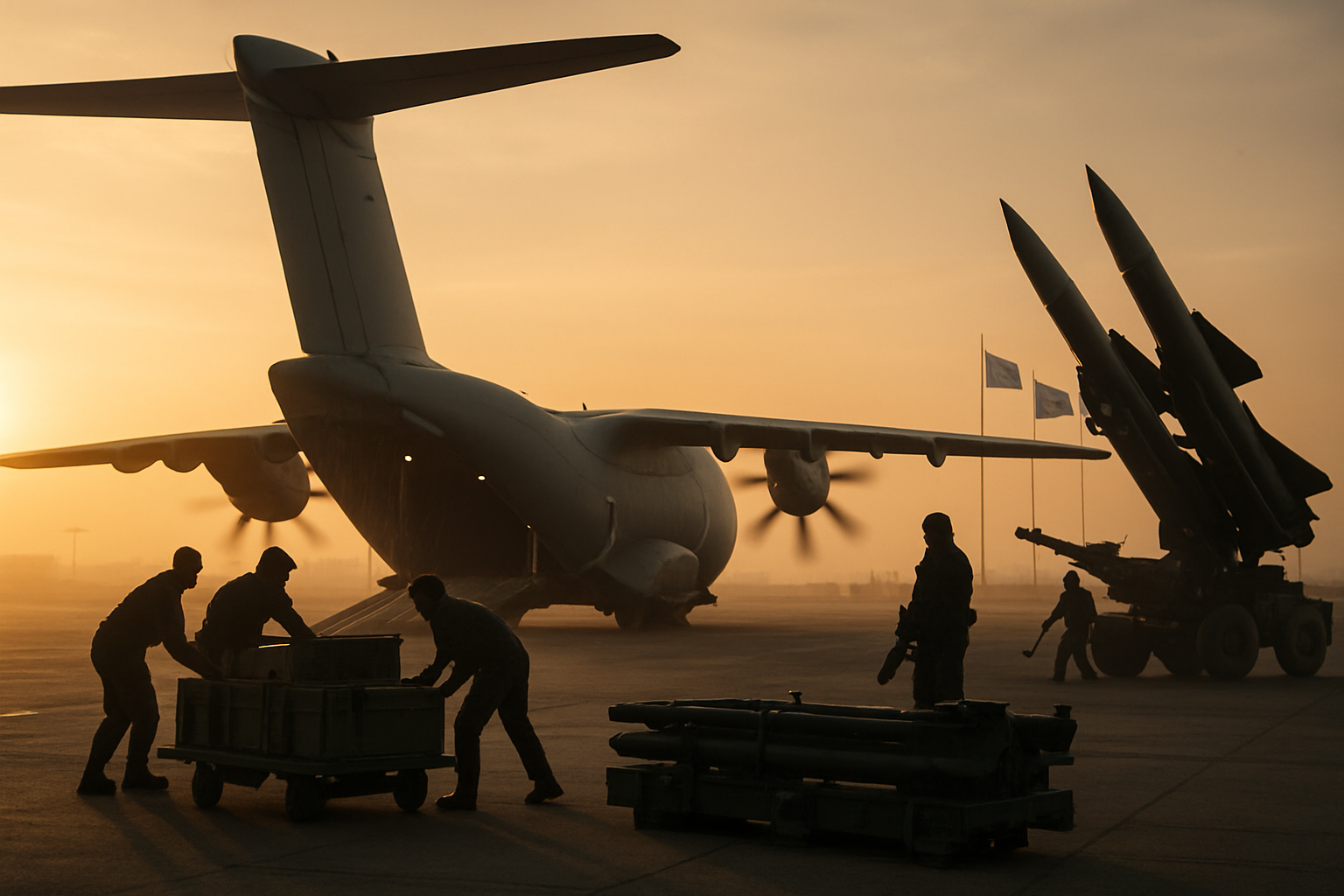
Global weapons exports have surged to their highest levels in over a decade, driven primarily by European demand as nations reassess their defense capabilities amid ongoing conflicts in Ukraine and rising geopolitical tensions worldwide.
According to the Stockholm International Peace Research Institute (SIPRI), Europe has more than tripled its arms imports between 2021-2025, fundamentally reshaping the global defense market. The dramatic increase reflects the continent's urgent response to Russia's invasion of Ukraine and growing security concerns across multiple theaters.
Germany Emerges as Major Arms Exporter
In a significant shift in the global arms trade landscape, Germany has surpassed China to become the world's fourth-largest weapons exporter. The development represents a major transformation of German defense policy, which historically maintained restrictive arms export controls.
German manufacturers have benefited from increased European demand for advanced defense systems, particularly air defense capabilities and precision-guided munitions. The country's rise in the export rankings reflects both expanded production capacity and policy changes that have relaxed traditional restrictions on arms sales to allied nations.
"The numbers show a clear shift in how European nations view their security environment. The traditional approach of limited defense spending is no longer sustainable," said a European defense analyst.
— Defense Industry Expert
Ukraine Conflict Drives Military Modernization
The ongoing Ukraine conflict has served as the primary catalyst for European military modernization efforts. Multiple EU nations have committed to substantial increases in defense spending, with many targeting NATO's 2% GDP benchmark for the first time since the Cold War.
Finland has been among the most active importers, reflecting its decision to join NATO and secure its eastern border. The Nordic nation has invested heavily in air defense systems, artillery, and advanced communication equipment to integrate with Allied command structures.
Denmark has similarly accelerated its defense procurement programs, focusing on maritime security capabilities and cyber defense infrastructure. The country's strategic position in the Baltic Sea has made it a key player in regional security arrangements.
European Defense Industrial Cooperation
Beyond individual national procurement programs, European countries are developing unprecedented levels of defense industrial cooperation. Joint development projects for next-generation weapons systems have accelerated, reducing dependence on non-European suppliers.
Austria has participated in several collaborative programs, including the development of advanced communication systems for military forces. According to Der Standard, Austrian companies are working with partners from Germany and other EU nations to create secure military communication networks as alternatives to existing systems.
The trend reflects broader European strategic autonomy goals, as leaders seek to reduce dependence on external defense suppliers while building indigenous capabilities. These cooperation agreements represent a fundamental shift from the traditional model of purchasing complete systems from established exporters.
Global Implications of European Demand
The surge in European arms imports has created ripple effects throughout the global defense market. Traditional suppliers, including the United States and Russia, have faced increased competition as European manufacturers expand their market share.
Japan has observed these developments with keen interest, as Tokyo develops its own defense industrial partnerships and expands military cooperation agreements. The interconnected nature of modern security challenges has created opportunities for non-traditional defense cooperation arrangements.
Supply chain considerations have become increasingly important as nations seek to secure reliable access to critical defense technologies. The pandemic and recent geopolitical tensions have highlighted vulnerabilities in global manufacturing networks, prompting countries to diversify their supplier bases.
Technology Transfer and Innovation
Modern arms trade involves far more than simple equipment purchases. Technology transfer agreements, joint development programs, and shared research initiatives have become central to contemporary defense relationships.
European nations are particularly focused on acquiring advanced technologies in areas such as artificial intelligence, cyber warfare capabilities, and space-based defense systems. These emerging technologies represent the future of military capability and have become key areas of international cooperation.
The integration of civilian and military technologies has also accelerated, with dual-use innovations playing an increasingly important role in defense modernization efforts. This trend has created new opportunities for technology companies to contribute to national security objectives.
Regional Security Architecture
The transformation of global arms trade patterns reflects broader changes in regional security architectures. Traditional alliance structures are adapting to new threats, while new partnerships emerge to address specific security challenges.
Nordic and Baltic cooperation has intensified significantly, with these nations coordinating defense procurement to achieve interoperability and cost efficiencies. Similar regional groupings have emerged in other parts of Europe, creating new dynamics in the global arms market.
The shift towards regional cooperation has implications beyond Europe, as other regions observe and potentially emulate these coordination models. The success or failure of European defense integration will influence global approaches to collective security.
Economic and Industrial Impact
The arms trade surge has significant economic implications for both importing and exporting nations. Defense industries in supplier countries have expanded production capacity and employment to meet increased demand.
For importing nations, the substantial defense expenditures represent both a significant fiscal commitment and an opportunity to develop domestic industrial capabilities through offset agreements and technology transfer arrangements.
The long-term economic effects will depend on how successfully nations can translate defense investments into broader industrial and technological capabilities that benefit civilian sectors.
Looking Ahead: Sustainable Security
As European nations continue to build their defense capabilities, questions remain about the sustainability of current spending levels and the long-term strategic objectives of military modernization efforts.
The challenge will be maintaining adequate defense capabilities while avoiding an arms race dynamic that could destabilize regional security. Diplomatic efforts to address underlying security concerns will be crucial to preventing escalating military competition.
The evolution of global arms trade patterns will continue to reflect changing geopolitical realities, technological developments, and alliance relationships. The current European-driven surge represents just one chapter in the ongoing transformation of international security arrangements.
Success in building sustainable security will require balancing military preparedness with diplomatic engagement, ensuring that increased defense capabilities contribute to rather than undermine regional stability and international cooperation.