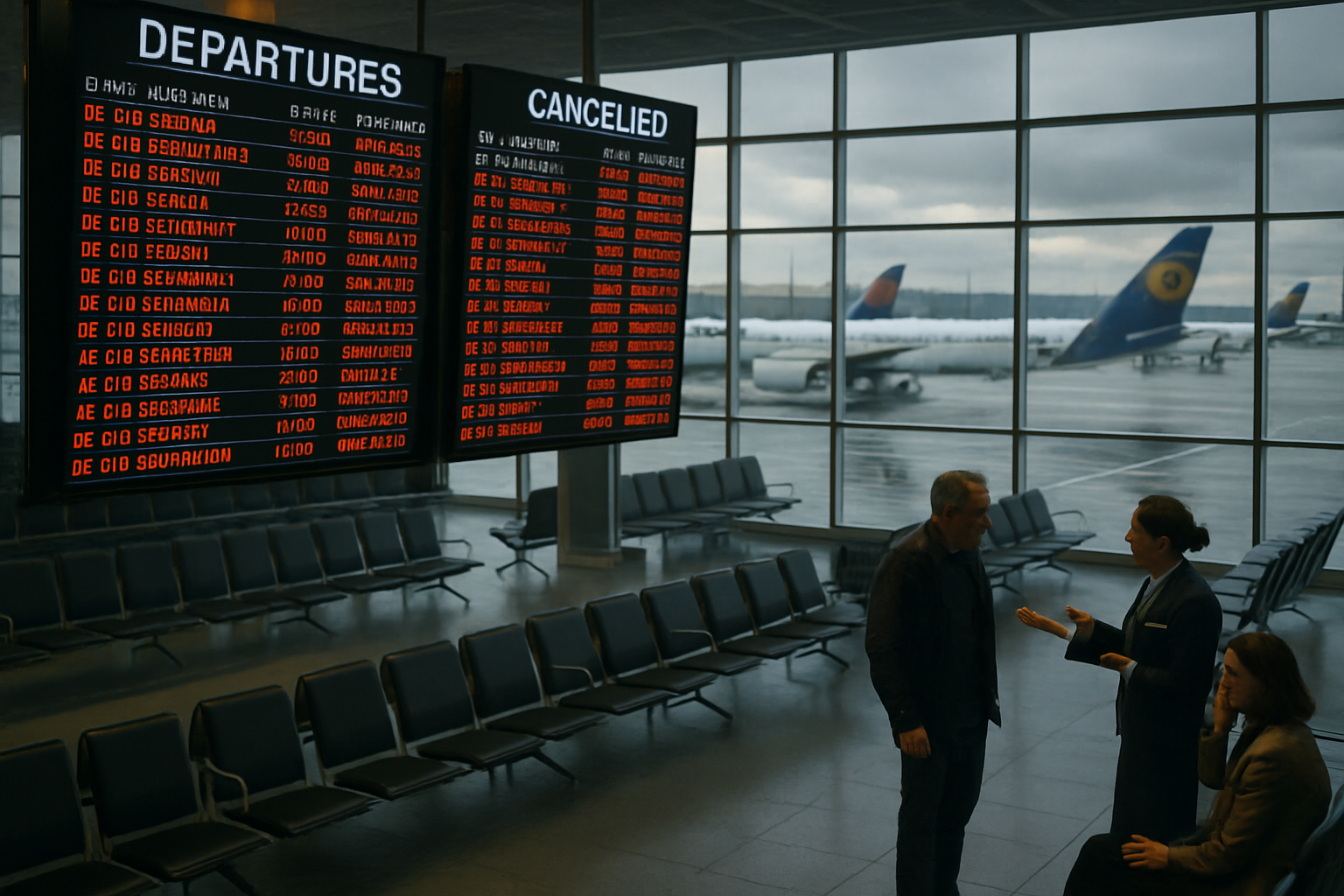
European aviation faces its most severe operational crisis since the COVID-19 pandemic as Lufthansa pilots prepare for extended strikes while fuel shortages and Middle East tensions create a perfect storm affecting hundreds of thousands of passengers across the continent.
The German aviation union Vereinigung Cockpit announced Wednesday evening that Lufthansa pilots will strike again Thursday and Friday, marking the latest escalation in a labor dispute that has already grounded hundreds of flights. The union simultaneously proposed arbitration talks, which Lufthansa has indicated willingness to accept, though the immediate disruptions will continue.
This latest strike action compounds an already dire situation for European aviation, with over 18,000 flights cancelled worldwide since March 2026 due to Middle East conflicts and the worst fuel crisis in decades. The convergence of labor disputes, geopolitical tensions, and operational challenges has created what industry experts describe as an unprecedented test of the aviation sector's resilience.
Labor Disputes Intensify Across German Aviation
The Vereinigung Cockpit union's call for renewed strikes affects all Lufthansa Group operations, including Lufthansa, CityLine, and Lufthansa Cargo. According to Bulgarian media reports, twelve flights between Sofia and German hubs Munich and Frankfurt were among the hundreds cancelled during Tuesday's action alone.
This marks a significant escalation from February's pension contribution disputes and the March 12 strike that caused massive disruptions across Frankfurt and Munich airports. The current labor unrest represents a departure from traditional German social partnership models toward more confrontational approaches during the industry's critical recovery phase.
German transportation workers across multiple sectors are leveraging post-pandemic staffages and specialized training requirements to demand substantial improvements. The Ver.di union, representing over 100,000 German transport workers, has been seeking 20% salary increases, while pilots demand better working conditions and pension arrangements.
Fuel Crisis Compounds Operational Challenges
Beyond labor disputes, European airlines are grappling with jet fuel costs that have surged 122% from $85-90 to $150-200 per barrel following Iran's closure of the Strait of Hormuz, which handles 40% of global oil transit. Greek media reports highlight how this fuel price explosion has forced airlines to implement emergency operational adjustments.
The energy crisis stems from ongoing Middle East conflicts that have effectively created an "aviation black hole" across the region. Eight countries maintain simultaneous airspace closures (Iran, Iraq, Israel, UAE, Qatar, Syria, Kuwait, and Bahrain), while Dubai International Airport—the world's busiest with 86 million passengers annually—remains shut down due to missile damage.
Airlines across Europe are implementing emergency fare surcharges to offset unsustainable fuel costs. Air France-KLM has added €50 to economy long-haul tickets and €200 to business class fares. Norwegian Airlines deployed 125 additional flights to capture market share after SAS cancelled over 1,000 flights due to fuel cost pressures.
International Ripple Effects
The aviation crisis extends far beyond European borders, affecting global connectivity patterns. Malaysia Airlines CEO Nasaruddin Bakar stated his company sees this "crisis as opportunity to expand while competitors reduce capacity," securing 36% of fuel needs for 2026 and targeting 50% by Q2 despite volatile markets.
Routes that previously connected Europe with Asia through Middle Eastern hubs have been severely disrupted, forcing complex rerouting through Caribbean stopovers for trans-Pacific routes. This has dramatically increased flight times and operational costs, with some passengers paying hundreds of dollars extra for alternative routing.
The crisis has exposed critical vulnerabilities in the aviation industry's dependence on Middle Eastern hubs and single chokepoint transit routes. Industry experts warn that recovery timelines remain uncertain, depending on diplomatic resolution of geopolitical conflicts rather than predictable operational factors.
Government and Industry Response
European governments are implementing emergency measures to address both fuel shortages and passenger protection needs. The International Energy Agency has coordinated the largest strategic petroleum reserve release in its 50-year history—400 million barrels from 32 countries—to stabilize global energy markets.
The European Commission is urging enhanced crisis management frameworks as the aviation sector faces what officials describe as a template-setting moment for 21st-century crisis response. Passenger rights organizations are advocating for stronger protections, while industry groups call for temporary regulatory relief during this unprecedented period.
Airlines are accelerating discussions around route diversification to reduce dependence on Middle Eastern hubs. Enhanced security screening, mandatory conflict insurance, and pre-approval systems for high-risk destinations are becoming standard industry practices.
Economic and Social Impact
The aviation crisis is generating significant economic ripple effects across Europe. Tourism-dependent regions are experiencing booking cancellations and delays, while business travel faces severe constraints. Supply chains reliant on air cargo are exploring alternative transportation methods, though with limited capacity and higher costs.
Financial markets have reflected the crisis severity, with aviation stocks experiencing volatility and broader economic indicators showing stress from energy price pressures. The Pakistan KSE-100 experienced its largest single-day decline in history (-8.97%), while South Korea's KOSPI fell 12% with circuit breakers activated.
Consumer behavior is shifting toward last-minute bookings and more flexible travel arrangements, with many opting for package tours over independent travel due to insurance gaps that exclude war-related cancellations.
Looking Ahead: Uncertain Recovery
Unlike weather-related disruptions that have predictable timelines, the current crisis depends on resolution of military conflicts and diplomatic tensions in the Middle East. Airlines are conducting daily operational reviews but cannot make long-term scheduling decisions while multiple airspaces remain closed and fuel markets remain volatile.
Industry transformation appears inevitable, with enhanced emergency protocols, alternative routing strategies, and route diversification becoming permanent features of aviation operations. The crisis is forcing a fundamental reconsideration of risk assessment procedures and international cooperation frameworks.
UN Secretary-General António Guterres has characterized the situation as the "greatest test of multilateral cooperation in crisis management in the modern era." The aviation industry's response to this convergence of challenges will likely influence operational practices, regulatory frameworks, and international cooperation approaches for decades to come.
As European aviation enters what may be its most challenging period since World War II, the industry faces a choice between maintaining global connectivity despite security risks or accepting a more regionalized, security-conscious approach to international air travel. The decisions made in the coming weeks will shape the future of global mobility in an increasingly volatile world.