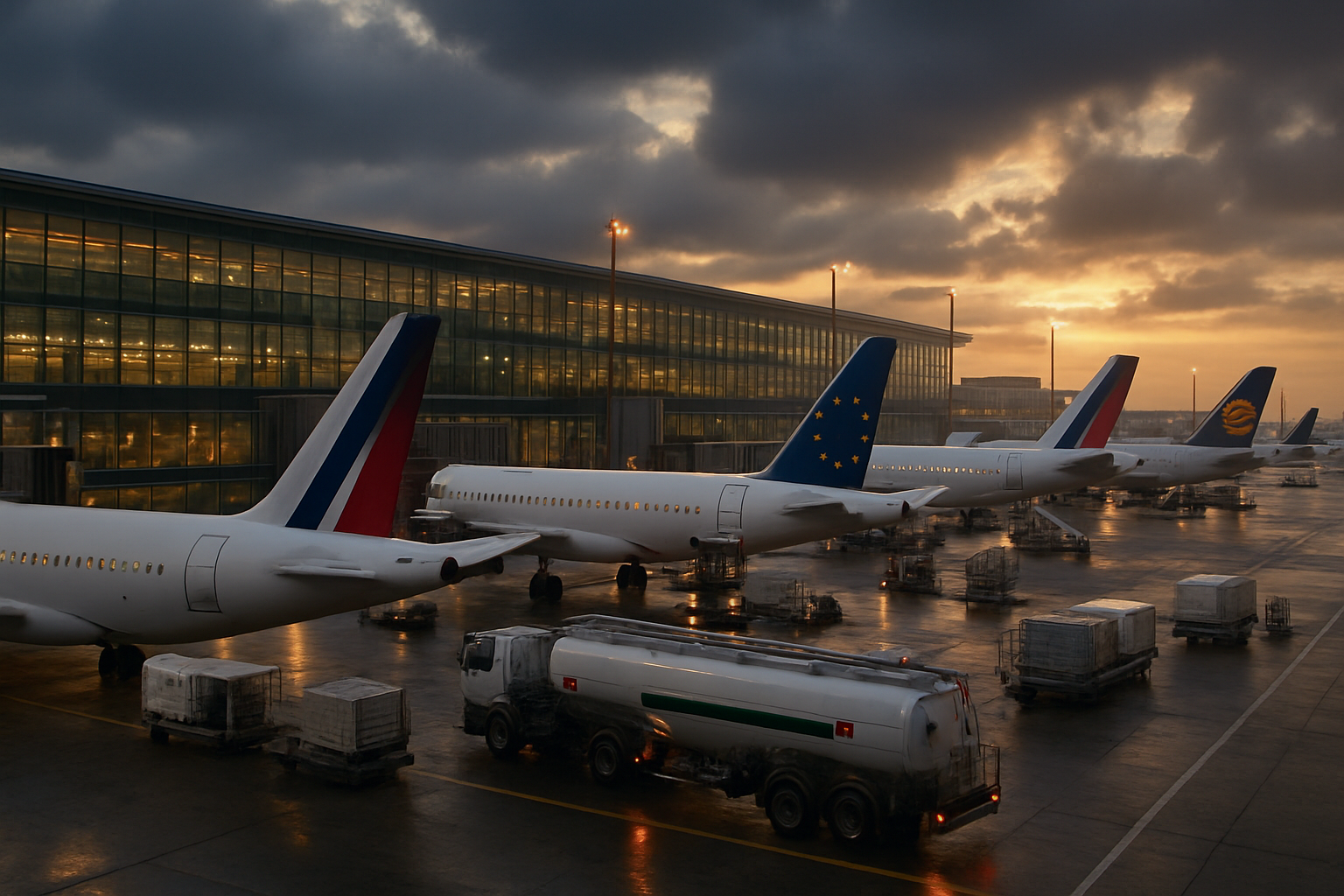
European airlines are implementing the most significant operational changes in decades, with major carriers announcing route suspensions, fare increases, and strategic shifts as the industry confronts a perfect storm of rising fuel costs, geopolitical tensions, and ongoing aviation disruptions from the Middle East crisis.
The European aviation sector is experiencing its most challenging period since the COVID-19 pandemic, as airlines across the continent adapt to dramatically altered operational realities. From Dublin to Riga, carriers are making difficult decisions about route viability while passengers face higher prices and reduced connectivity options.
Fuel Crisis Drives Industry-Wide Changes
The catalyst for these sweeping changes is an unprecedented surge in aviation fuel costs, with prices soaring from $85-90 per barrel to $150-200 per barrel—a staggering 122% increase driven by the ongoing Middle East conflict and Iran's closure of the Strait of Hormuz, which handles 40% of global seaborne oil transit.
Nordic carriers are leading the charge in implementing fuel surcharges. Tallink Silja has raised ticket prices by one euro for fast ferries operating between Helsinki and Tallinn, directly citing Iran's impact on global fuel markets. The company's decision reflects broader industry struggles as airlines grapple with unsustainable operating costs.
"Increases of this magnitude make it necessary to react in order to maintain stable and reliable operations,"
— SAS Spokesperson
The Scandinavian carrier SAS has joined international airlines including Qantas Airways, Air New Zealand, and Norwegian in implementing emergency fare increases to offset the abrupt spike in fuel costs.
Route Suspensions and Network Restructuring
The crisis has forced airlines to make painful cuts to their route networks. Ireland's budget airline Ryanair announced it will not resume flights from Riga to six destinations during the 2026 summer season, marking a significant reduction in Baltic connectivity.
Meanwhile, Latvia's national carrier airBaltic is taking a different approach. Despite the fuel price surge, the airline's Chief Financial Officer Vitolds Jakovļevs stated during an investor call that the company has no immediate plans to raise ticket prices due to the fuel cost increases, instead absorbing the additional costs for now.
The divergent strategies reflect the complex calculations airlines must make between maintaining market share and preserving profitability in an increasingly volatile environment.
Middle East Hub Dependency Crisis
The ongoing aviation crisis in the Middle East has exposed European airlines' dangerous over-dependence on regional hubs for Asia-Europe connectivity. With over 18,000 flights cancelled worldwide since March 1, 2026, and Dubai International Airport—the world's busiest with 86+ million passengers annually—completely shut down due to missile damage, European carriers face unprecedented routing challenges.
Eight countries have simultaneously closed their airspace (Iran, Iraq, Israel, UAE, Qatar, Syria, Kuwait, and Bahrain), creating the most comprehensive regional aviation disruption in modern history. This has forced airlines to implement emergency protocols including enhanced fuel loading, complex rerouting through Caribbean stopovers for trans-Pacific routes, and dramatically increased operational costs.
Alternative Routing Strategies
Airlines are exploring innovative solutions to maintain global connectivity. Some carriers are implementing Caribbean stopovers for trans-Pacific routes, while others are increasing direct Europe-Asia services to bypass Middle Eastern hubs entirely. These adaptations come with significant cost penalties and reduced operational efficiency.
The crisis has accelerated discussions about route diversification that had been in planning phases for years, forcing immediate implementation of contingency strategies that were previously considered long-term options.
Economic Impact and Consumer Consequences
The economic ripple effects extend far beyond airline balance sheets. Swedish authorities predict electricity price increases of 10-20 öre per kilowatt-hour and gasoline price rises of 1-2 kronor per liter, with the Malmö region being particularly exposed due to its continental European market integration.
Irish Deputy Pearse Doherty has condemned what he calls "brazen rip-offs" in heating oil prices, which have surged 40% in a single week. Similar consumer impacts are being felt across Europe, with Austria reporting fuel cost increases of 20% and Malta facing prices 45% higher without government subsidies.
The crisis demonstrates how regional conflicts can instantly affect European consumers, highlighting the interconnected nature of global energy and transportation markets.
Government and Regulatory Response
European governments and regulatory bodies are scrambling to address the crisis. The European Union is rapidly developing emergency options for state aid to energy-intensive industries, while individual nations are implementing their own protective measures.
France has deployed 500 inspectors to fuel stations to prevent price manipulation, while Romania has developed five scenarios to prevent diesel prices from exceeding 10 lei per liter. Cyprus has activated its ESTIA evacuation plan for the first time, coordinating the extraction of over 2,000 EU nationals from the UAE.
Strategic Petroleum Reserve Considerations
The G7 finance ministers are discussing coordinated strategic petroleum reserve releases through the International Energy Agency. Japan is considering deploying its national oil stockpiles for the first time since the 2011 Fukushima disaster, highlighting the severity of the current situation given Japan's 95% dependence on Middle Eastern oil.
Industry Transformation and Long-Term Implications
This crisis represents a watershed moment for European aviation, forcing fundamental reconsideration of route planning, risk assessment, and international cooperation frameworks. The over-reliance on Middle Eastern hubs for Europe-Asia connectivity has been brutally exposed, with Russian and Ukrainian airspace already closed since 2022.
Airlines are implementing enhanced contingency planning measures, including alternative routing strategies, diversified fuel sourcing, and improved passenger communication systems. The crisis is accelerating investments in route diversification that might have taken years to implement under normal circumstances.
"This is a template-setting moment for 21st-century aviation crisis management. The industry must reconsider its fundamental approach to geopolitical risk."
— Aviation Industry Analyst
Recovery Timeline and Future Outlook
Unlike weather-related disruptions that have predictable recovery timelines, the current crisis depends entirely on the resolution of military operations and diplomatic tensions. Airlines are conducting daily operational reviews but cannot make long-term scheduling decisions due to the volatile security environment.
The recovery process will likely take weeks even after services resume, as airlines work to clear passenger backlogs and restore normal operations. The industry faces the challenge of rebuilding passenger confidence while implementing new operational protocols designed to handle similar crises in the future.
European aviation emerges from this crisis fundamentally changed, with enhanced resilience planning, diversified route networks, and a new understanding of geopolitical risk management becoming standard operating procedures.
Looking Ahead: A New Aviation Paradigm
The events of March 2026 will likely be remembered as the moment European aviation entered a new era of geopolitical awareness. The industry's response to this unprecedented challenge—from immediate operational adaptations to long-term strategic planning—will serve as a template for managing future crises in an increasingly volatile world.
As airlines continue to adapt their networks and governments refine their emergency response capabilities, the European aviation sector is positioning itself for a future where flexibility, diversification, and crisis preparedness are not optional extras but essential survival skills.