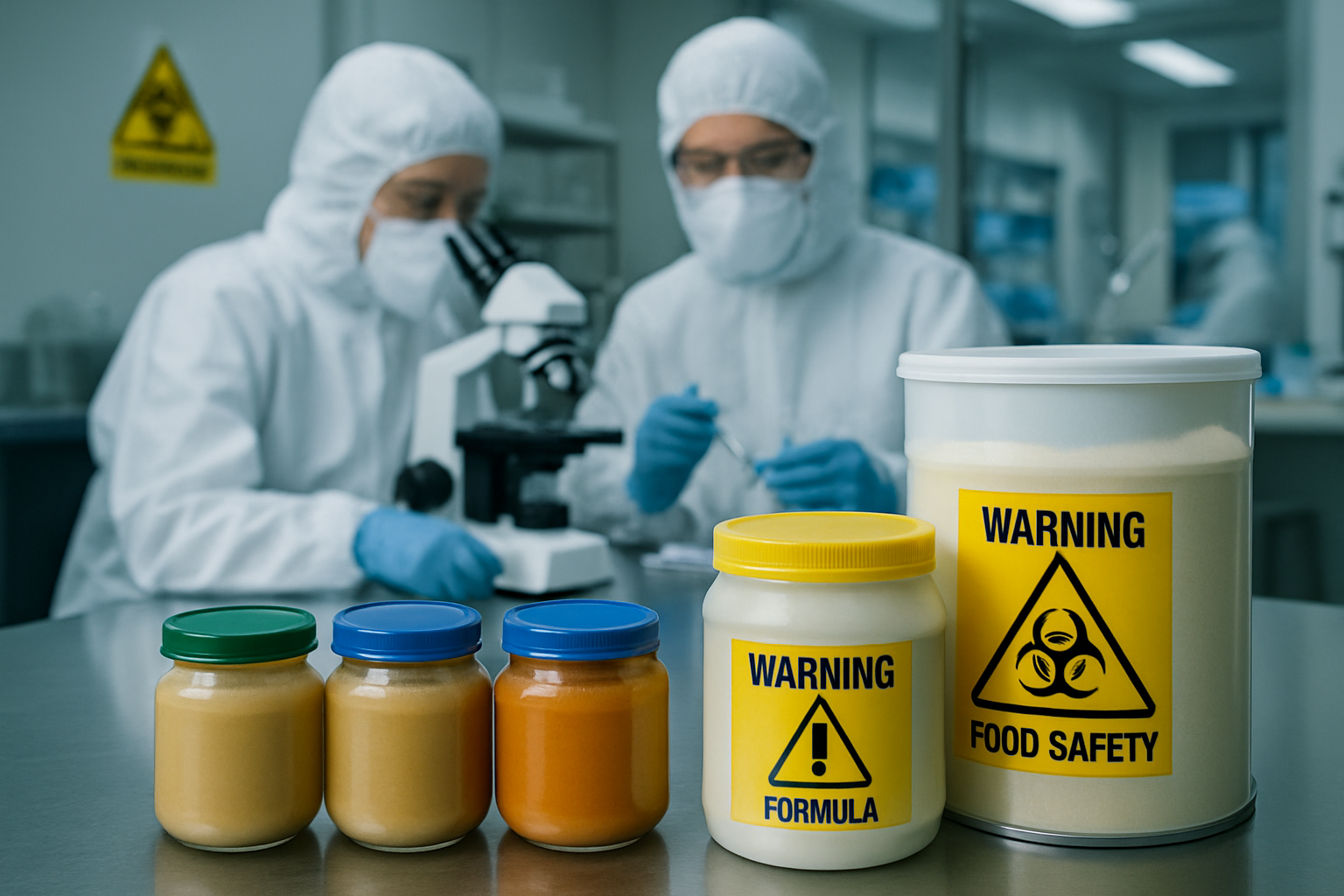
Austrian health authorities have reported four possible cases of illness linked to baby food contaminated with the dangerous cereulide toxin, marking the latest development in a continent-wide food safety crisis that has affected dozens of infants across Europe since early February 2026.
The Austrian cases involve infant milk formula contaminated with cereulide, a heat-stable toxin produced by Bacillus cereus bacteria, according to reports from Austrian health officials. The authorities have filed formal reports and initiated legal proceedings as the contamination crisis continues to spread across European borders.
This development follows a joint assessment by the European Centre for Disease Prevention and Control (ECDC) and the European Food Safety Authority (EFSA), which concluded that the risk from the European-wide baby food recall is now assessed as "low," according to Armenian health sources citing the European evaluation.
Expanding Crisis Across Europe
The contamination crisis has affected multiple European countries since early February, with authorities confirming that cereulide toxin has been detected in infant formula products from major manufacturers including Nestlé and Danone. The toxin, which survives standard pasteurization processes and remains dangerous even after cooking, has created unprecedented challenges for food safety regulators.
Previous investigations have documented at least 36 infant cases across the United Kingdom, France, Luxembourg, and Greece, with brands including Blédilait, Gallia, Guigoz, Picot, Popote, and Babybio all subject to recalls. The heat-stable nature of cereulide makes it particularly dangerous, as it cannot be eliminated through normal food preparation methods that would destroy other bacterial contamination.
Scientific Understanding of Cereulide Toxin
Cereulide toxin represents a significant challenge for food safety protocols because of its unique properties. Unlike many bacterial toxins, cereulide remains active even after exposure to high temperatures, making traditional pasteurization ineffective. The toxin causes severe gastrointestinal symptoms including vomiting and diarrhea, which can be particularly dangerous for infants whose immune systems are still developing.
EFSA has revised safety thresholds for cereulide, identifying contamination levels previously considered acceptable as potentially dangerous. This revision reflects advancing scientific understanding of the toxin's effects and has contributed to the expansion of recall notices across Europe.
Regulatory Response and Industry Impact
The contamination crisis has prompted intensive regulatory response across Europe, with enhanced molecular testing protocols being implemented to detect heat-stable toxins beyond conventional bacterial screening methods. Food safety authorities are prioritizing consumer education over reactive enforcement, recognizing that public awareness is crucial for preventing further exposure.
Industry experts predict that 2026 will mark a turning point requiring enhanced testing protocols, improved international coordination, and greater consumer awareness of food safety risks. The crisis has accelerated the adoption of advanced detection technologies specifically designed to identify heat-stable toxins that survive traditional food processing methods.
"The cereulide contamination represents a fundamental challenge to our existing food safety infrastructure. We need enhanced molecular testing capabilities that go beyond conventional bacterial detection methods."
— European Food Safety Expert
Consumer Confidence and Market Response
The ongoing crisis has significantly impacted consumer confidence in multinational food corporations, with measurable shifts toward local sourcing and simplified supply chains. Parents are increasingly demanding transparency about ingredient sourcing, particularly regarding components from international suppliers, as supply chain complexity has been identified as a contributing factor to the contamination spread.
Social media has emerged as a powerful enforcement tool, exposing food safety violations and accelerating regulatory responses. The rapid spread of information through digital platforms has both helped alert consumers to potential risks and created additional pressure on manufacturers to implement comprehensive safety measures.
Climate and Environmental Factors
The contamination crisis is occurring during the 18th consecutive month of global temperatures exceeding 1.5°C above pre-industrial levels, with January 2026 recorded as the hottest month in history. Climate scientists note that extreme weather conditions can stress food processing systems and create additional challenges for maintaining safety protocols throughout the supply chain.
Rising insurance costs and molecular testing investments are becoming significant economic factors for food manufacturers, while potential long-term market share losses threaten companies that fail to demonstrate adequate safety measures. The infant formula sector faces particular scrutiny, with enhanced testing protocols becoming industry standard.
International Coordination Efforts
The crisis has highlighted the need for enhanced international coordination in food safety management, as contamination crosses borders through interconnected supply chains. European authorities are developing standardized detection methods and coordinated response protocols to prevent future cross-border contamination incidents.
Prevention-focused approaches are gaining prominence over reactive enforcement strategies, with authorities recognizing that proactive monitoring and early warning systems offer superior protection compared to crisis response measures. This shift represents a fundamental change in how food safety agencies approach risk management.
Looking Forward: Industry Transformation
The 2026 cereulide crisis is driving significant transformation in food safety practices, with companies investing in climate-adaptive processing technologies and prevention-focused approaches. Traditional methods of quality control are being supplemented with advanced molecular diagnostics capable of detecting previously undetectable contamination.
Success in preventing future contamination will depend on sustained political commitment, adequate funding for safety infrastructure, effective oversight mechanisms, and unprecedented international cooperation. The integration of traditional safety wisdom with modern scientific understanding is becoming increasingly crucial for maintaining food security in an era of climate change and global supply chain complexity.
As the investigation continues in Austria and across Europe, health authorities emphasize that parents should immediately discontinue use of any recalled products and seek medical attention if infants show symptoms of gastrointestinal illness. The crisis serves as a stark reminder that food safety vigilance must evolve to match the sophisticated challenges of modern global food systems.