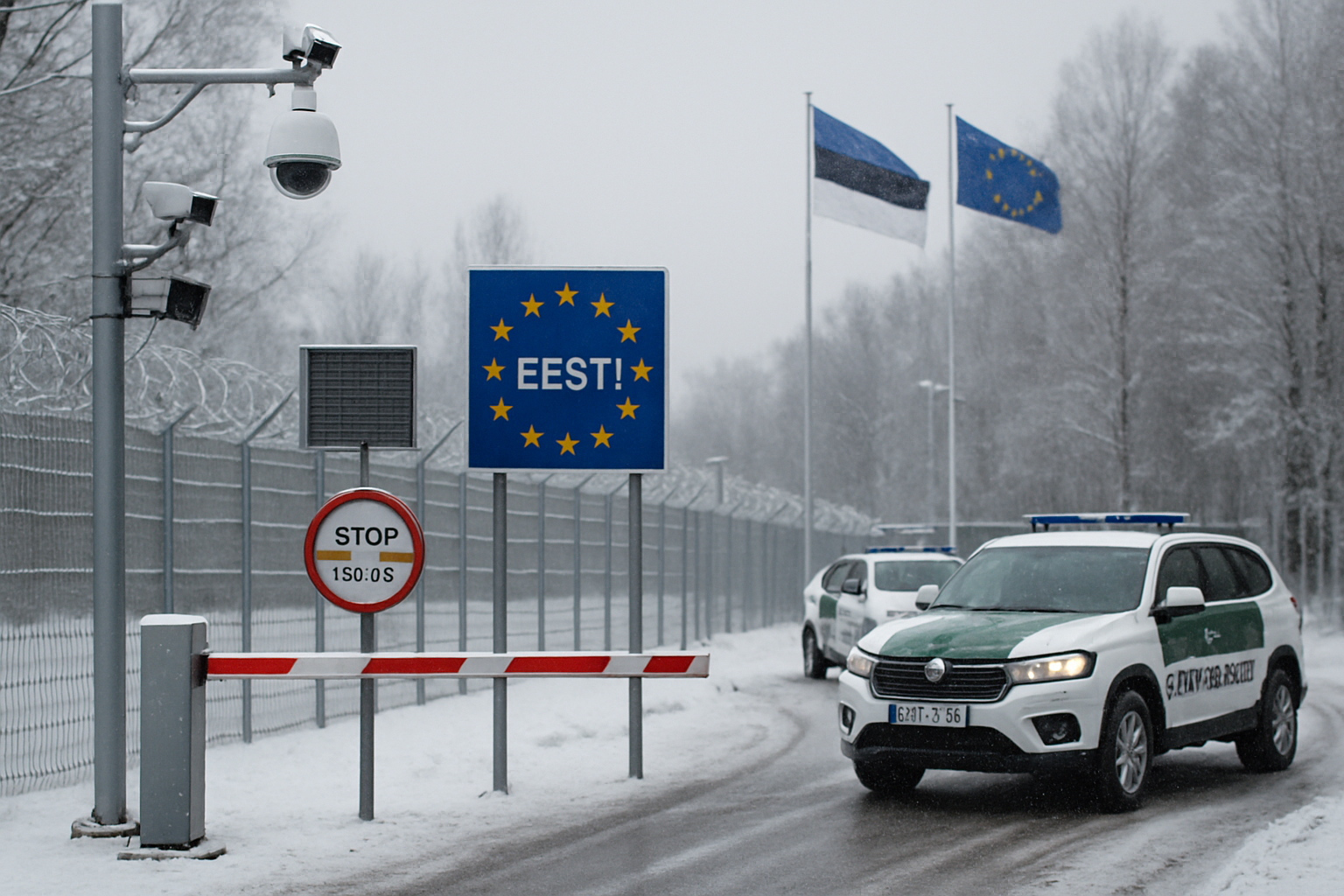
European nations are implementing emergency border control measures as security tensions escalate, with Estonia temporarily closing two Russian border crossings while Austria grapples with controversial US immigration enforcement practices affecting vulnerable populations.
Estonia announced the overnight closure of two critical border crossing points with Russia following what officials described as "a string of border incidents" that have heightened security concerns. The decision, which took effect February 8, 2026, has significant implications for cross-border transportation and commerce in the Baltic region.
Estonia's Security-Driven Border Response
The Estonian government's decision to close the border crossings has particularly affected bus companies and roadside service operators, according to state broadcaster ERR. These businesses, which rely heavily on cross-border traffic, now face operational disruptions and revenue losses during what authorities describe as a necessary security response.
The border incidents that prompted this action have not been detailed publicly, but the timing coincides with heightened tensions across the European Union's eastern borders. Estonia, as a NATO member state and EU frontier country, has consistently maintained a robust security posture regarding its border with Russia, particularly since the conflict in Ukraine began.
The closures affect both commercial and passenger transport, with bus companies bearing the brunt of immediate economic impact. These operators, which provide vital links between Estonian and Russian communities, must now navigate alternative routes or suspend services entirely during the closure period.
Austria's Immigration Enforcement Controversy
Meanwhile, Austria finds itself embroiled in a different kind of border and immigration controversy involving US authorities. Austrian media reports detail a disturbing case where US Immigration and Customs Enforcement (ICE) allegedly withheld critical medications from an 18-month-old child suffering from a life-threatening respiratory condition.
"She should never have been imprisoned at all."
— Family Attorney, representing the detained family
The case has drawn international attention to US immigration enforcement practices and their impact on vulnerable populations, including children with serious medical conditions. The family's legal representatives argue that the detention itself was inappropriate given the child's health status, highlighting broader concerns about humanitarian considerations in immigration enforcement.
This incident reflects ongoing tensions between security imperatives and human rights obligations that European nations themselves face when managing migration flows. The case has prompted discussions within Austrian political circles about the country's own immigration policies and the treatment of vulnerable migrants, particularly children with medical needs.
Broader European Migration Context
These developments occur against a backdrop of significant migration pressures across Europe. Recent memory data indicates that European nations have been grappling with complex migration challenges, from Mediterranean crossings resulting in tragic losses of life to the ongoing management of Ukrainian refugees fleeing conflict.
The February 2026 Eurobarometer survey revealed that 89% of Europeans demand greater EU unity, with 72% expressing concerns about conflicts and wars near EU borders. These statistics underscore the public's desire for coordinated European responses to security and migration challenges.
Estonia's border closure decision demonstrates the ongoing security concerns along the EU's eastern frontier, where member states must balance commercial interests with national security imperatives. The economic impact on transportation companies illustrates the real-world costs of security decisions in interconnected border regions.
Regional Security Implications
The Estonian border incidents come at a particularly sensitive time for European security. The Baltic states have maintained heightened vigilance since Russia's invasion of Ukraine, implementing enhanced border monitoring and security protocols. Estonia's decision to close crossing points suggests that recent incidents have exceeded normal security threshold tolerances.
For regional transportation networks, the closures create significant logistical challenges. Bus companies that have operated these routes for years must now adapt to sudden service interruptions, affecting both business travelers and individuals with family connections across the border.
The roadside service industry, which includes fuel stations, restaurants, and rest facilities, faces immediate revenue impacts as cross-border traffic diverts to other routes or ceases entirely. These businesses, often located in border communities that depend on transit traffic, exemplify how security decisions ripple through local economies.
Immigration Policy Divergence
The contrasting situations in Estonia and Austria highlight the diverse challenges European nations face regarding border and immigration policies. While Estonia addresses direct security threats along its eastern border, Austria confronts questions about international cooperation in immigration enforcement and the protection of vulnerable populations.
The Austrian case involving the US detention of a medically vulnerable child raises fundamental questions about humanitarian obligations in immigration enforcement. Legal experts argue that such cases demonstrate the need for clearer international protocols regarding the treatment of children and medical patients in immigration proceedings.
European nations increasingly find themselves navigating between security necessities and humanitarian commitments, a balance that becomes more complex as global migration patterns evolve and security threats persist.
Economic and Social Impact
The immediate economic consequences of Estonia's border closures extend beyond transportation companies to affect broader regional trade relationships. Cross-border commerce, which has developed over decades, must now adapt to new constraints that could persist depending on the evolution of security concerns.
Local communities along the Estonian-Russian border, which have historically benefited from cross-border exchange, face uncertainty about the duration of these restrictions. The social connections between communities on both sides of the border, maintained through regular travel and commerce, are temporarily disrupted.
For Austria, the reputational implications of association with controversial US immigration enforcement practices could affect its standing in European discussions about migration policy. As EU member states work toward coordinated approaches to migration challenges, incidents involving partner nations' enforcement practices complicate diplomatic relationships.
Future Policy Directions
These concurrent border and migration challenges underscore the need for comprehensive European approaches that balance security, economic, and humanitarian considerations. Estonia's security-focused response and Austria's entanglement in international immigration enforcement controversies represent different aspects of contemporary border management challenges.
The European Union's ongoing efforts to develop unified migration and border security policies must account for diverse national circumstances, from direct security threats along eastern borders to complex international cooperation arrangements. Recent Eurobarometer data suggesting strong public support for European unity provides political momentum for such coordinated approaches.
As European nations navigate these challenges, the experiences of Estonia and Austria offer important lessons about the interconnected nature of security, economic, and humanitarian considerations in contemporary border management. The effectiveness of responses to these immediate challenges will influence future European policy development and international cooperation frameworks.
The resolution of Estonia's security concerns and Austria's role in addressing immigration enforcement controversies will serve as important indicators of European capacity to manage complex border challenges while maintaining both security and humanitarian commitments in an increasingly interconnected world.