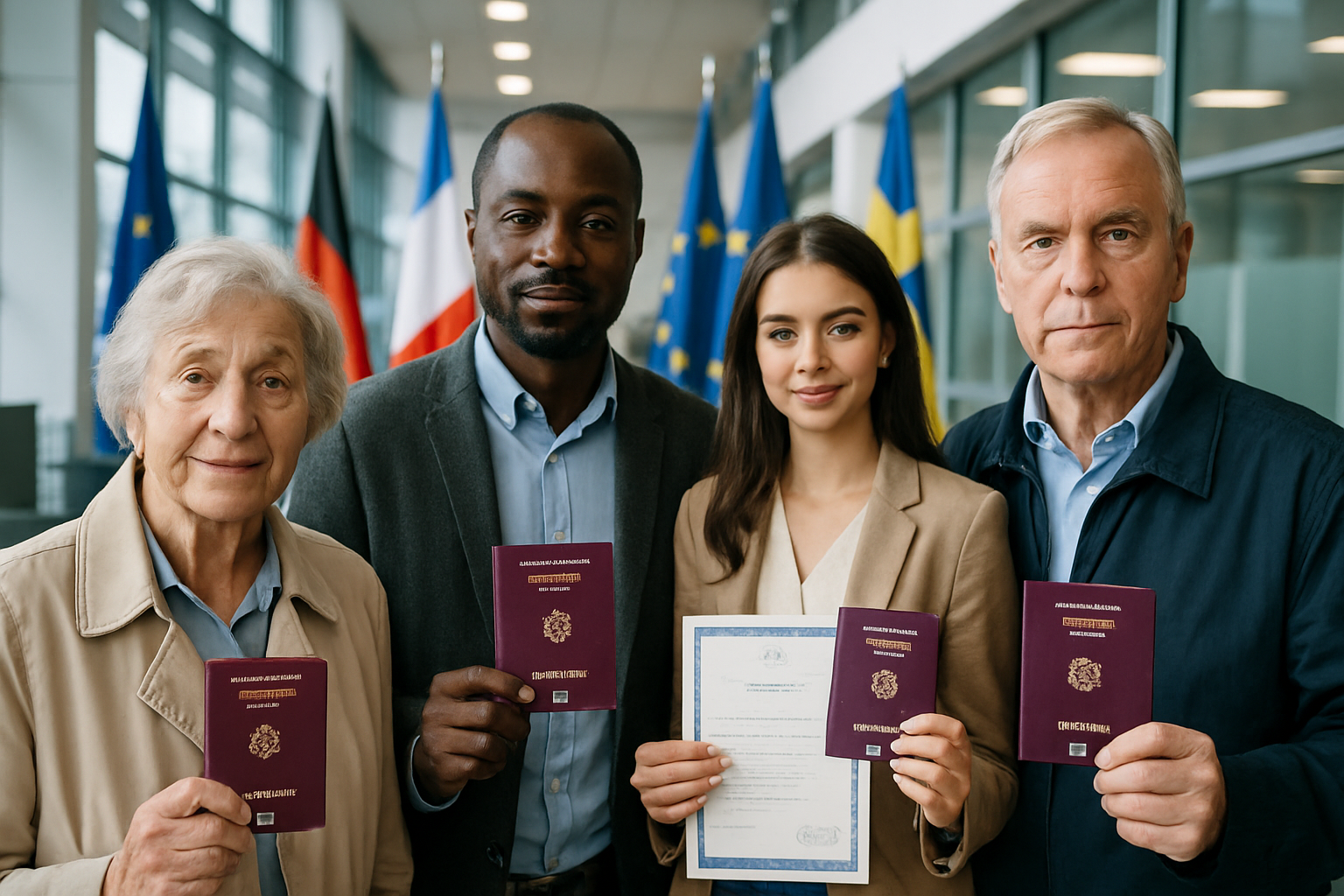
The number of people acquiring citizenship in European countries has increased dramatically compared to a decade ago, with experts reporting an acceleration in recent years driven by various geopolitical, economic, and security factors reshaping migration patterns across the continent.
According to multiple sources across France, Germany, Italy, and Spain, the surge in European citizenship applications represents one of the most significant demographic shifts in recent memory, reflecting broader global trends toward seeking enhanced mobility rights and security through European Union membership.
The Numbers Tell the Story
Historical context from recent developments shows the magnitude of this trend. France experienced a doubling of citizenship applications in December 2025 as applicants rushed to meet new B2 French language requirements implemented in January 2026. Even those who applied before the deadline still face the enhanced language testing, leading to what officials describe as a "given up hope" sentiment among some applicants who find the requirements too challenging.
Germany has simultaneously pursued more assertive enforcement policies, including controversial deportations to Afghanistan via agreements with Taliban authorities, while processing record numbers of naturalization applications. The country's approach reflects the complex balance European nations must strike between humanitarian obligations and border security concerns.
Brexit's Lasting Impact on European Mobility
The United Kingdom's implementation of the Electronic Travel Authorization (ETA) system has fundamentally altered European mobility patterns. The £16 fee requirement for citizens of 85 countries, including all EU states, marks the complete end of European freedom of movement privileges. British dual nationals now face additional complications, with many considering citizenship renunciation due to bureaucratic burdens and costs.
This policy shift has created a powerful incentive for those with European heritage to secure EU citizenship before further restrictions potentially take effect. The psychological impact of watching previously seamless travel become complicated and expensive has motivated many to seek alternative pathways to European mobility.
Security and Stability Concerns
Recent memory records indicate that geopolitical instability has become a primary driver of citizenship applications. The ongoing crisis in Ukraine, tensions in the Middle East, and broader concerns about global security have led many individuals to seek the stability and protection offered by European Union citizenship.
Cyprus, despite facing recent security challenges including Iranian attacks on British sovereign bases, continues to process citizenship applications. The island nation's experience demonstrates how even frontline EU states maintain their attractiveness to prospective citizens seeking the security umbrella of European integration.
Enhanced Cooperation and Policy Coordination
European Union member states have increasingly coordinated their approach to citizenship and migration policies. Enhanced cooperation mechanisms now allow smaller groups of member states to advance policies without requiring unanimous consent, leading to more flexible but sometimes controversial approaches to naturalization and border control.
The EU's recognition of citizenship trends as a transnational challenge has sparked unprecedented regional coordination. Recent developments include standardized language requirements, improved information sharing between national citizenship offices, and coordinated approaches to dual nationality recognition.
Economic Motivations Drive Applications
Beyond security considerations, economic factors play a crucial role in the citizenship surge. European Union citizenship provides access to 27 national job markets, enhanced educational opportunities, and social benefits that can significantly improve long-term economic prospects.
Professional mobility has become particularly important as remote work and digital nomadism have normalized international career patterns. EU citizenship enables individuals to respond flexibly to economic opportunities across the continent without visa restrictions or work permit complications.
Administrative Challenges and Backlogs
The surge in applications has created significant administrative pressures on national citizenship offices. Processing times have extended substantially in most European countries, with some jurisdictions reporting backlogs extending beyond two years for routine applications.
France's implementation of enhanced language requirements has created particular bottlenecks, as testing capacity has not kept pace with demand. Similar pressures exist across European capitals as governments struggle to balance thorough vetting with reasonable processing timelines.
Regional Variations in Approach
Different European countries have adopted varying strategies for managing the citizenship surge. Some, like Portugal and Spain, have maintained relatively accessible pathways for those with historical connections or significant investments. Others, including Denmark and the Netherlands, have implemented more stringent requirements that prioritize integration over numerical targets.
Italy continues processing applications despite political debates about citizenship policies, while Greece has simplified certain procedures for individuals with Greek heritage. These national variations create a complex landscape where prospective citizens must navigate different requirements and timelines depending on their chosen destination.
Technology and Modernization
European countries have increasingly adopted digital solutions to manage the citizenship application surge. Online application systems, digital document submission, and virtual interviews have become standard practices, though implementation quality varies significantly between countries.
The digitization effort has been complicated by supply chain challenges affecting smart card production and biometric systems. Memory chip shortages have delayed the deployment of next-generation citizenship documentation systems, forcing countries to rely on temporary solutions while awaiting new technology infrastructure.
Long-term Demographic Implications
The citizenship surge represents more than administrative statistics—it signals a fundamental shift in how Europeans conceptualize nationality and belonging. Young professionals increasingly view EU citizenship as essential career infrastructure rather than a traditional national identity marker.
This trend has particular implications for European countries facing aging populations and labor shortages. New citizens often contribute to filling critical skill gaps while helping to balance demographic challenges that threaten pension systems and economic growth.
Future Policy Challenges
As the citizenship surge continues, European policymakers face complex decisions about balancing accessibility with integration requirements. Recent polling shows 89% of Europeans demand greater EU unity, suggesting public support for coordinated approaches to citizenship policy.
However, individual member states continue to assert sovereignty over naturalization decisions, creating tension between national prerogatives and continental coordination efforts. The resolution of these tensions will likely shape European integration for decades to come.
Conclusion: A Transformative Moment
The unprecedented surge in European citizenship applications represents a transformative moment for the continent's demographic and political development. Driven by security concerns, economic opportunities, and mobility aspirations, this trend reflects broader global shifts toward seeking stability through European integration.
As European countries adapt their systems to manage this surge, the decisions made in 2026 will establish precedents affecting citizenship policy for generations. The success or failure of current approaches will determine whether Europe can maintain its attractiveness as a destination for global talent while preserving the integration and social cohesion that make European citizenship valuable in the first place.
The coming months will prove critical as countries balance competing demands for accessibility, security, and administrative efficiency in shaping the future of European citizenship and identity.