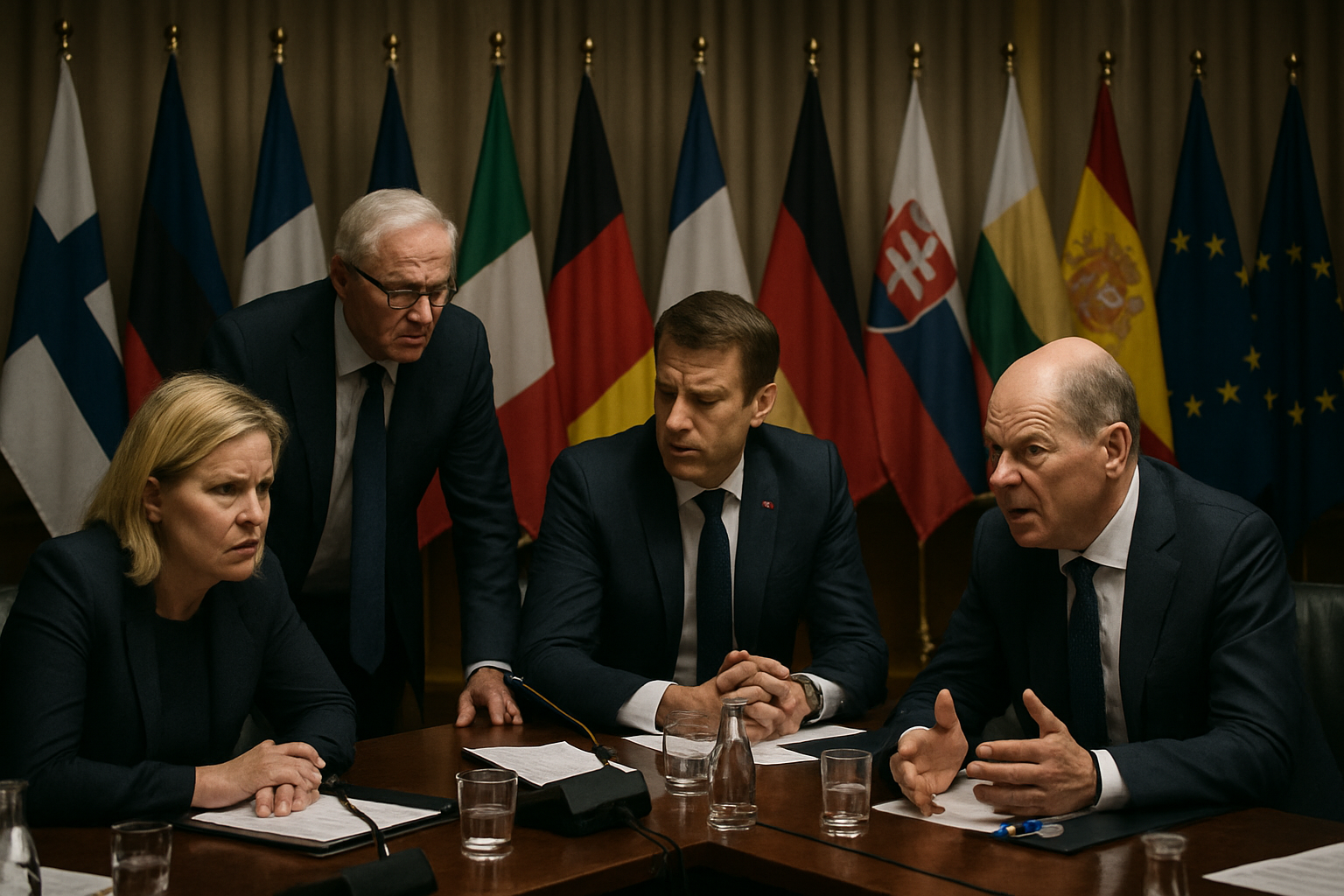
Europe faces its most significant political crisis since World War II as multiple nations grapple with coalition collapses, snap elections, and unprecedented governmental instability across the continent.
From Austria's controversial budget reforms to Romania's dramatic coalition breakdown and Malta's surprise early election call, the past week has demonstrated the fragility of European political arrangements amid mounting economic pressures and growing polarization.
Austria Implements Sweeping Economic Reforms
Austria's government has finalized controversial budget measures that will fundamentally reshape the country's economic landscape. Starting in 2028, companies will benefit from reduced non-wage labor costs, while unemployment insurance contributions will increase for many workers.
The reforms include an enhanced banking levy and new tax obligations extending to pensioners and families. Most significantly, companies with profits exceeding one million euros will face higher tax rates, representing a substantial shift in Austria's corporate taxation approach.
These measures come as Austria navigates complex coalition dynamics and economic pressures that have affected governments across Europe. The timing of these reforms reflects broader continental challenges in balancing fiscal responsibility with social obligations.
Romania's Coalition Government Collapses
Romania's political landscape has been transformed by the most serious governmental crisis in recent memory, as the Social Democratic Party (PSD) announced a historic alliance with the far-right Alliance for the Unity of Romanians (AUR) to topple Prime Minister Ilie Bolojan's pro-European government.
"The motion is not about Ilie Bolojan, it's about Romania's struggle not to return to the '90s"
— Radu Miruță, Minister of Defence
The crisis threatens over €10 billion in EU pandemic recovery funds with an August deadline looming. Minister Dragoș Pîslaru warned of potential losses exceeding €8 billion if implementation fails to meet EU requirements. Romania had achieved 24 of 25 OECD membership approvals under the Bolojan administration.
PSD President Sorin Grindeanu's decision to ally with AUR marks a dramatic departure from traditional political alignments, creating uncertainty about Romania's European trajectory and NATO eastern flank stability.
Malta's Snap Election Surprise
Malta's political establishment was shaken when Prime Minister Robert Abela announced a snap general election for May 30, 2026, catching opposition parties off guard and triggering immediate campaign preparations across the Mediterranean island nation.
The Labour Party has already announced its first mass meeting in Żejtun Square, while former Nationalist Party leader Bernard Grech confirmed his candidacy just minutes after Abela's announcement. The decision has also led to significant personnel changes, with former housing minister Roderick Galdes being barred from contesting the election by the Labour Party executive.
Abela defended the early election call in a WhatsApp voice message, emphasizing Malta's need for "stability and peace of mind in the face of ongoing global uncertainty." The Prime Minister stressed that the country requires a government capable of navigating challenging international conditions while maintaining strong local foundations.
Germany's Coalition Strains Intensify
Chancellor Friedrich Merz faces mounting pressure within his coalition as the black-red federal government struggles with reform initiatives amid growing internal tensions. The Union parliamentary group's retreat has been marked by criticism and challenges to Merz's leadership approach.
Political observers describe the atmosphere as "anything but pleasant" for the CDU, regardless of outcomes from current policy debates. The coalition dynamics reflect broader European challenges where traditional political arrangements face pressure from changing voter preferences and economic constraints.
Greece Confronts Surveillance Scandal
In Greece, SYRIZA has expressed support for PASOK's proposal to establish an investigative committee regarding the wiretapping scandal, signaling potential cross-party cooperation on issues of democratic accountability and civil liberties.
The development indicates growing parliamentary pressure for transparency regarding surveillance practices, reflecting broader European concerns about democratic institutions and citizen privacy rights.
United Kingdom's Standards Investigation
Prime Minister Keir Starmer faces a critical test of his leadership as he confronts a standards investigation over the Mandelson affair and potentially damaging testimony from former chief of staff Morgan McSweeney.
Starmer has urged Labour MPs to "stick together and fight together" as his government launches a comprehensive operation to shore up his position before what many view as a decisive moment for his premiership. The crisis represents a significant challenge to Labour's governing stability and Starmer's personal political future.
France's Political Realignment
The crisis in Romania particularly echoes developments documented across Europe, where traditional center-left and center-right coalitions face pressure from both far-left and far-right alternatives. In France, similar alliance patterns have emerged around opposition to centrist governance, while the Interior Ministry's controversial reclassification of political movements has created additional institutional tensions.
Broader European Implications
These simultaneous political crises reflect deeper structural challenges facing European democracies. The convergence of economic pressures, migration concerns, and sovereignty questions within the European framework has created unprecedented strain on traditional governing coalitions.
According to recent Eurobarometer polling, 89% of Europeans demand greater EU unity, yet political reality demonstrates increasing fragmentation across member states. This disconnect between public aspirations and institutional capacity represents one of the most significant challenges facing European integration.
"Europe is writing the template for 21st-century crisis management, with the world watching whether democratic institutions can adapt while preserving European values"
— Senior EU Official
The pattern of "authoritarian innovation" – sophisticated far-right movements operating within democratic systems while gradually eroding liberal norms – has proven more effective than traditional revolutionary approaches. This development challenges conventional mechanisms of parliamentary coalitions, media scrutiny, and civil society opposition.
Economic and Strategic Consequences
The political instability carries significant economic implications. Romania's crisis threatens crucial EU funding streams, while Austria's reforms represent attempts to address competitive pressures within European markets. Malta's early election adds uncertainty to Mediterranean stability, and the UK's leadership crisis affects post-Brexit European relationships.
These developments occur amid broader international tensions, including energy security challenges, migration pressures, and questions about European strategic autonomy. The success or failure of European institutions in managing these concurrent crises will establish crucial precedents for democratic governance in an increasingly complex global environment.
Looking Ahead
The coming months will be decisive for European political development. Malta's May election will test voter sentiment in a key Mediterranean state, while Romania's coalition crisis resolution will determine the country's European trajectory. Germany's coalition stability affects the EU's largest economy, and the UK's standards investigation impacts post-Brexit cooperation frameworks.
Success in channeling political tensions through electoral competition while preserving institutional integrity would strengthen the European democratic model globally. However, continued fragmentation risks undermining the cooperation principles that have underpinned European success since 1945.
As one senior EU official noted, Europe is currently "writing the template for 21st-century crisis management," with global observers monitoring whether democratic institutions can adapt to contemporary challenges while maintaining the frameworks that enable effective governance in an increasingly complex international environment.