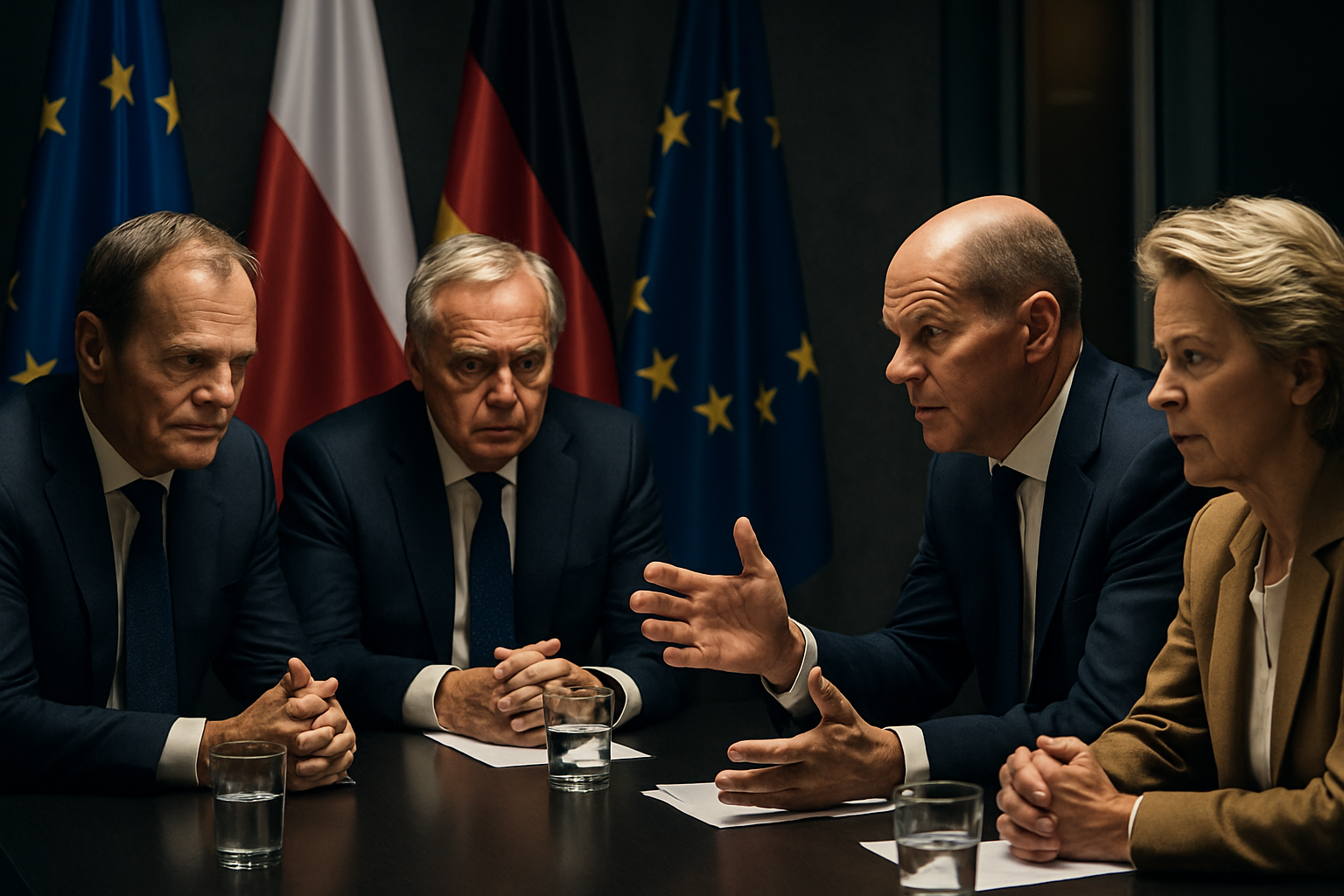
European nations face a period of unprecedented political realignment as coalition negotiations intensify across the continent, with Estonia witnessing surprising electoral shifts, France grappling with municipal election tensions, and Sweden's former Liberal leader making a political comeback.
Estonia: Center Party Gains Ground
In a significant development for Estonian politics, the Center Party has experienced a remarkable surge in support among non-Estonian voters during March, reaching its highest level in recent years. This increase has substantially boosted the party's overall rating, bringing it within striking distance of Isamaa in national polling.
The Center Party's rise among minority communities represents a strategic breakthrough that could reshape Estonia's political landscape. Historically, the party has maintained strong ties with Russian-speaking populations, but this latest polling suggests an expansion of its appeal across diverse ethnic communities.
"The Center Party's ability to mobilize non-Estonian voters demonstrates the evolving nature of Estonian democracy and the importance of inclusive political representation."
— Political analyst, ERR News
This development occurs against the backdrop of broader European challenges, where minority representation and integration policies have become central political issues. Estonia's experience may provide insights for other EU member states grappling with similar demographic changes.
France: Municipal Elections Under Shadow of Political Crisis
France's political landscape remains turbulent as the nation prepares for municipal elections amid ongoing controversies surrounding left-wing coalitions. The political climate has been significantly affected by the tragic death of Quentin Deranque in Lyon, which has intensified debates about political extremism and violence.
Les Républicains, under the leadership of Bruno Retailleau, have positioned themselves as the primary opposition to left-wing alliances, particularly targeting coalitions that include La France Insoumise (LFI). The party has denounced what it calls "shameful agreements" between mainstream left parties and more radical elements.
The Interior Ministry's controversial reclassification of La France Insoumise from "left" to "extreme left" has triggered legal challenges through the Council of State, raising questions about administrative neutrality in electoral processes. This development reflects deeper tensions within French democracy about how to categorize and manage political movements across the spectrum.
Marine Le Pen's Strategic Shift
The National Rally continues its evolution from rural populism to sophisticated urban campaigning, what political scientists term "authoritarian innovation." This strategic transformation aims to make far-right governance more palatable to metropolitan voters who have traditionally rejected extremist parties.
The upcoming municipal elections serve as a crucial test for this new approach, with implications extending far beyond local governance. Success in urban areas would provide the National Rally with governing experience and enhanced credibility ahead of the 2027 presidential race.
Sweden: Political Comeback and Coalition Possibilities
Former Liberal Party leader Lars Leijonborg's return to parliamentary candidacy marks a significant moment in Swedish politics. His decision to seek a Riksdag seat represents both a personal comeback and potentially signals broader changes within the Liberal Party's strategic direction.
Sweden's political system has been under considerable strain, with traditional coalition patterns facing pressure from changing voter preferences and the rise of populist movements. The Liberal Party's positioning will be crucial as Sweden navigates complex coalition mathematics in future governments.
"Leijonborg's return brings experienced leadership at a time when Swedish politics requires steady guidance through challenging coalition negotiations."
— SVT Political Correspondent
The former leader's candidacy comes as Sweden grapples with questions about cooperation with the Sweden Democrats, a debate that has divided the political establishment and challenged traditional Nordic consensus politics.
Broader European Context
These developments across Estonia, France, and Sweden reflect broader patterns affecting European democracy. Traditional party systems face pressure from changing demographics, economic uncertainty, and the rise of populist movements that challenge established political norms.
The European Union continues to grapple with how to maintain democratic cohesion while respecting national political autonomy. Recent Eurobarometer polling shows that 89% of Europeans demand greater EU unity, yet political reality demonstrates increasing fragmentation and sovereignty assertions across member states.
Coalition Mathematics and Democratic Resilience
The complexity of modern European coalition politics requires sophisticated alliance-building capabilities. Traditional left-right divides have given way to more nuanced political positioning that incorporates issues of identity, sovereignty, and European integration.
Estonia's multicultural coalition building, France's struggle with political extremism, and Sweden's coalition dilemmas all demonstrate the challenges facing European democracies in the 21st century. Success in managing these transitions while preserving democratic values will be crucial for the continent's political stability.
Looking Forward: Implications for European Integration
The outcome of these political developments will significantly impact European integration efforts. Countries with stable, pro-European governments can more effectively participate in continental initiatives, while political fragmentation complicates decision-making processes.
The European Council's ability to reach consensus on major issues depends largely on the domestic political stability of member states. As coalition negotiations continue across the continent, the stakes extend far beyond national boundaries.
These political realignments occur during one of the most challenging periods for European democracy since World War II. The success or failure of moderate forces in maintaining governance effectiveness while addressing citizen concerns will determine whether European integration strengthens or weakens in the coming decade.
As European nations navigate these complex political transitions, the international community watches closely for templates of democratic resilience that can be applied to similar challenges worldwide. The coming months will be decisive in determining whether European political systems can adapt to contemporary pressures while preserving the democratic values that have underpinned the continent's success since 1945.