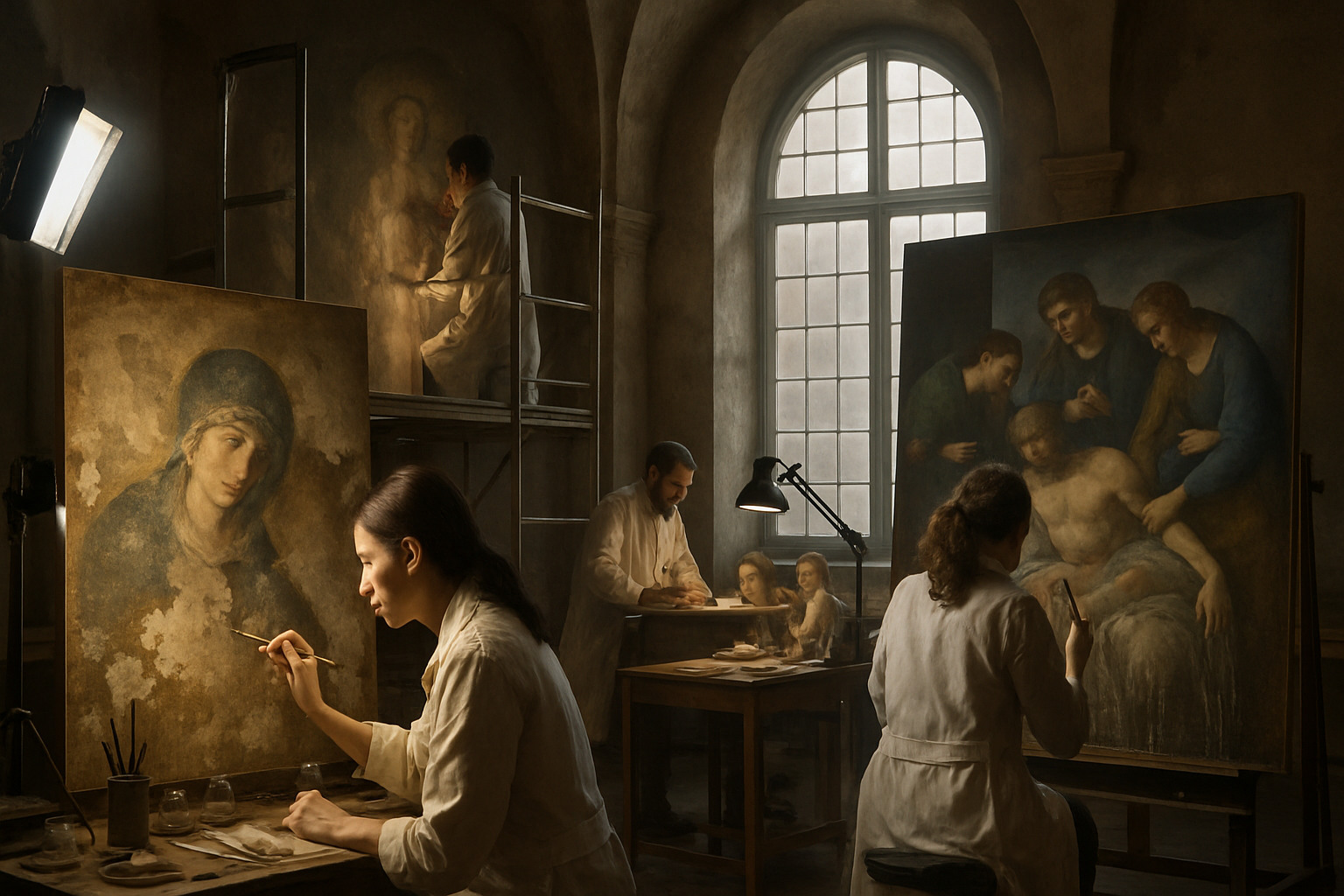
Europe's cultural institutions face an unprecedented crisis as severe weather events, infrastructure failures, and resource constraints threaten centuries of artistic heritage, from the Louvre's flooded Renaissance galleries to the closure of historic castle collections.
The Louvre Disaster: Water Threatens Masterpieces
The world's most visited museum confronts a deepening crisis following a catastrophic water leak that has forced the closure of critical Renaissance galleries. Rooms 706 and 707, housing invaluable works including Beato Angelico's "Calvary with Saint Dominic in Prayer" and Bernardino Luini's "The Blessing of Christ," remain sealed to visitors after water from a broken pipe flooded the spaces.
The incident compounds what Italian media describe as a series of disasters plaguing the Louvre, following the spectacular October 19 jewelry theft worth €88 million and ongoing staff strikes that have disrupted operations. Most concerning is the damage to a 19th-century fresco by Charles Meynier, representing irreplaceable artistic heritage that may be permanently compromised.
"The ceiling painted by Charles Meynier in the 19th century has suffered severe damage that may prove irreversible."
— Corriere della Sera
Portugal's Gallery Network Under Pressure
The crisis extends beyond France's borders, with Portugal's contemporary art scene facing systematic disruption. The Galeria Duarte Sequeira in Braga has been forced to temporarily close its exhibition spaces, while Lisbon's Vera Cortês and Miguel Nabinho galleries have suffered significant water infiltration damage.
These closures represent more than mere inconvenience—they signal a broader vulnerability in Europe's cultural infrastructure, where centuries-old buildings struggle to protect contemporary art collections from increasingly severe weather events.
Innovation Amid Crisis: Digital Renaissance
Despite these challenges, Europe demonstrates remarkable innovation in cultural preservation and presentation. The "Monet: The Immersive Experience" opens February 26 in Lyon, utilizing cutting-edge 360° digital art technology that has already captivated over one million visitors worldwide.
This immersive approach, hosted at Studio 24 in Villeurbanne by Exhibition Hub and Fever, represents a new frontier in making classical art accessible while preserving original works from potential environmental damage. The exhibition follows the success of similar Van Gogh installations, suggesting a sustainable model for cultural engagement.
Historic Preservation Meets Modern Challenges
The Castle of Xavier in Spain's Navarre region exemplifies successful heritage preservation, maintaining its 10th-century origins while adapting to contemporary conservation needs. Located 7 kilometers east of Sangüesa, the castle preserves not only architectural heritage but also an extensive art collection representing centuries of cultural accumulation.
As the birthplace of San Francisco Xavier, from whom the saint took his name, the castle demonstrates how historic sites can maintain cultural significance while implementing modern preservation techniques. The integration of traditional stewardship with contemporary conservation methods offers a template for other European heritage sites.

Cinema and Cultural Identity
The preservation crisis coincides with renewed focus on cultural expression through film, as evidenced by the Berlin Film Festival's emphasis on artistic resistance. The festival showcases works like Turkish-German director Ilker Çatak's exploration of "the moral dilemma of artist resistance," while navigating contemporary political pressures that have led some participants, including writer Arundhati Roy, to cancel appearances.
These cultural tensions reflect broader questions about the role of arts institutions in preserving not just physical artifacts, but also the conditions necessary for creative expression and cultural dialogue.
Economic and Environmental Pressures
The challenges facing European cultural institutions reflect systemic pressures beyond individual incidents. Climate change intensifies weather-related risks to historic buildings designed centuries before modern preservation requirements. Meanwhile, economic constraints limit resources available for preventive conservation, forcing institutions into reactive crisis management.
The pattern of water damage across multiple countries—from the Louvre's pipe failure to Portuguese gallery infiltrations—suggests infrastructure vulnerabilities that require coordinated regional response. The European Union's cultural preservation frameworks face testing as member states balance heritage protection with immediate economic pressures.
Community Response and Grassroots Preservation
Local communities demonstrate remarkable resilience in supporting cultural preservation efforts. Portuguese artists and gallery owners work collaboratively to minimize damage and maintain exhibition schedules despite infrastructure challenges. The response to the Monet exhibition's success indicates strong public appetite for cultural engagement, even through alternative formats.
This grassroots support provides foundation for recovery efforts, as communities recognize cultural institutions as essential infrastructure for local identity and economic vitality through cultural tourism.
Technology as Preservation Tool
The success of immersive digital exhibitions suggests technology's potential as both preservation tool and accessibility enhancer. By creating detailed digital records of artworks and enabling virtual experiences, institutions can protect originals from environmental exposure while expanding educational access.
However, technology complements rather than replaces traditional conservation methods. The challenge lies in integrating digital innovation with physical preservation requirements, ensuring that virtual accessibility doesn't substitute for proper care of original artifacts.
Looking Forward: Resilience and Adaptation
The current crisis may catalyze necessary transformations in European cultural heritage management. Successful responses will likely combine improved infrastructure design, enhanced international cooperation, and innovative presentation methods that reduce environmental risks while maintaining public engagement.
The convergence of infrastructure investment needs, climate adaptation requirements, and technological possibilities creates opportunity for comprehensive modernization of cultural preservation approaches. European institutions that successfully navigate this transition may establish global models for heritage stewardship in an era of accelerating environmental change.
As Europe confronts this cultural preservation crisis, the stakes extend beyond individual artworks or institutions. The response will determine whether future generations inherit not just preserved artifacts, but also robust cultural institutions capable of adapting to ongoing environmental and social challenges while maintaining their essential role in preserving and interpreting human creative achievement.