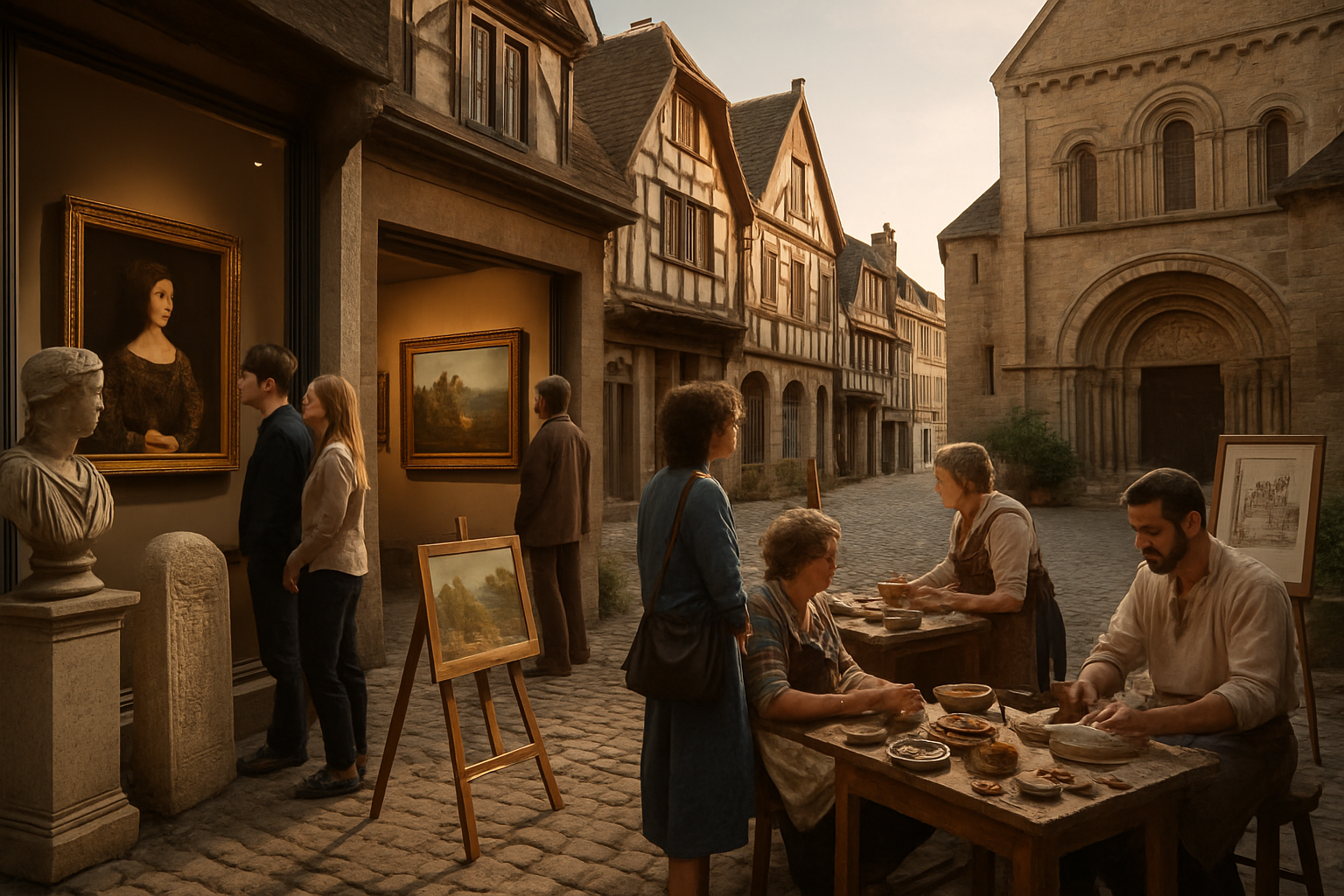
From the collapse of a historic Romanian church tower to groundbreaking literary discoveries and cutting-edge museum exhibitions, February 2026 has marked a pivotal moment in European cultural heritage preservation, revealing both the fragility and resilience of our shared artistic legacy.
A sweeping analysis of cultural developments across eight European nations reveals a continent grappling with preservation challenges while pioneering innovative approaches to protect, present, and perpetuate its artistic treasures. The month's events underscore a broader renaissance in cultural heritage management, driven by technological advancement, international cooperation, and growing recognition of culture as strategic infrastructure.
Crisis and Conservation: Romania's Wake-Up Call
The dramatic collapse of the Reformed Church tower in Cehu Silvaniei, Romania, serves as a stark reminder of heritage vulnerability in the face of time and insufficient maintenance. The tower, described as an "invaluable historic monument," crumbled after four days of successive warnings and accelerated degradation that surpassed all initial technical estimates, according to Romania's Ministry of Culture.
The incident, meticulously documented in a chronological report released by Romanian authorities, highlights the urgent need for systematic heritage maintenance programs. The collapse began on January 30, 2026, with incremental structural failures culminating in the tower's complete destruction by Tuesday evening.
"The degradation was more severe than technical estimates suggested, demonstrating the unpredictable nature of heritage conservation challenges."
— Romanian Ministry of Culture Official Statement
Literary Renaissance: Fernando Pessoa's Lost Masterpiece
In a remarkable contrast to Romania's loss, Portugal celebrates a significant cultural recovery with the first-ever publication of Fernando Pessoa's fragmentary tragedy "The Duke of Parma." The University of Parma will publish this Shakespeare-inspired work in digital format, representing nearly three decades of the Portuguese master's creative dedication.
This posthumous publication demonstrates how digital technology can resurrect literary treasures that might otherwise remain buried in archives. Pessoa, who dedicated almost his entire life to this English-language tragedy, exemplifies the artist's persistent vision across decades of creative work.
Cross-Cultural Literary Influences
The international dimensions of European cultural heritage extend beyond national boundaries, as evidenced by Finnish author Anu Patrakka's unique perspective. Having chosen Portugal as her home 13 years ago, Patrakka's crime novels are all set in Portugal, inspiring some readers to travel in search of her fictional settings. This cultural cross-pollination demonstrates how contemporary artists continue to build bridges between nations through their creative work.
Museums and Markets: Art's Commercial Evolution
Austria's Gartenpalais Liechtenstein presents "Noble Desires" (through April 6), an exhibition challenging perceptions about art markets' role in art history. The show demonstrates how the often-criticized commercial art market has played a crucial role in art historical scholarship, challenging the notion that commerce and culture are incompatible.
This exhibition timing coincides with Finland's art market activity, where a rare mystery painting from the 17th century appears at domestic auctions—a rarity in Finnish art sales. The work raises questions about attribution and provenance, fundamental issues in art historical research that underscore the detective-like nature of cultural preservation work.
Archaeological Discoveries: Ireland's Hidden Heritage
Dr. Marion Dowd of Atlantic Technological University has published groundbreaking research in the Journal of Irish Archaeology, illuminating Ireland's hidden cillíní—unconsecrated burial grounds for unbaptized children. The study focuses on Donegal's sites, revealing how communities across the county historically responded to grief through ritual burial practices.
These discoveries provide new insights into Ireland's social and religious history, demonstrating how archaeological research continues to uncover layers of cultural understanding. The research combines landscape analysis with folklore accounts, showcasing how multiple forms of evidence contribute to heritage comprehension.

UNESCO Recognition: Slovenia's Culinary Heritage
Slovenia's Poljane Valley pursues UNESCO recognition for its traditional chive dumpling soup (Drobnajkovi štruklji na žup'), potentially becoming the country's first UNESCO-listed dish. This initiative reflects broader trends toward recognizing culinary traditions as intangible cultural heritage deserving international protection.
The dish, made from thinly rolled phyllo dough with melted butter, beaten egg, and chopped chives, represents generations of local culinary knowledge. Local residents describe it as evoking "nostalgia and memories of their grandmothers' kitchen," emphasizing food's role in cultural memory transmission.
Expanding Heritage Definitions
Slovenia already boasts seven entries on the UNESCO List of Intangible Cultural Heritage and five UNESCO World Heritage sites, positioning the country as a leader in heritage recognition. The potential addition of a culinary element would expand the definition of what constitutes cultural heritage worthy of international protection.
Poetry and Global Connections: Hungary's Literary Export
"Under the Pannonian Sky" represents Hungary's effort to bring Hungarian women's poetry to international audiences, demonstrating how cultural heritage transcends national boundaries through literary translation and promotion. While specific details remain limited due to access restrictions, the initiative signals Hungary's commitment to sharing its poetic traditions globally.
Technology and Tradition: Digital Preservation Methods
The month's developments reveal how digital technology increasingly supports heritage preservation. From Portugal's digital publication of Pessoa's work to scholarly databases documenting archaeological findings, technology serves as both preservation tool and access gateway for cultural materials.
However, the Romanian church collapse reminds us that physical heritage requires continued maintenance and monitoring. Digital documentation, while valuable, cannot replace structural maintenance and conservation efforts for tangible cultural assets.
International Collaboration Patterns
The February 2026 cultural landscape demonstrates unprecedented international cooperation in heritage preservation. Academic partnerships between Portugal and Italy (Pessoa publication), cross-border archaeological research methodologies, and shared exhibition practices reflect a truly collaborative approach to cultural stewardship.
These partnerships enable resource sharing, expertise exchange, and coordinated preservation strategies that individual nations might struggle to achieve independently. The University of Parma's commitment to publishing Pessoa's work exemplifies how institutional collaboration can rescue endangered cultural materials.
Economic Dimensions of Cultural Heritage
Cultural heritage preservation carries significant economic implications, from tourism revenue generated by heritage sites to the employment created through conservation projects. Finland's rare art auction activity and Austria's major exhibition programming demonstrate culture's economic viability when properly managed.
The collapse in Romania also highlights the economic costs of deferred maintenance—the price of reconstruction will likely far exceed what preventive conservation would have required. This reality reinforces arguments for sustained cultural infrastructure investment.
Challenges and Opportunities Ahead
The varied experiences across European nations in February 2026 reveal both challenges and opportunities in cultural heritage management. Climate change, urbanization, and economic pressures threaten physical heritage, while digital technologies offer new preservation and access possibilities.
Success stories like Portugal's literary recovery and Slovenia's UNESCO bid demonstrate how cultural heritage can thrive when supported by appropriate institutional frameworks, international cooperation, and community engagement. Meanwhile, Romania's structural collapse serves as a cautionary tale about the consequences of inadequate heritage maintenance.
The month's developments suggest a European cultural sector in transition, embracing technological innovation while grappling with traditional preservation challenges. The combination of scholarly research, digital innovation, international cooperation, and community engagement provides a template for sustainable cultural heritage management in the 21st century.
As Europe continues to balance preservation with accessibility, tradition with innovation, and local identity with global cooperation, the experiences of February 2026 offer valuable lessons for cultural stewardship moving forward. The renaissance in cultural heritage awareness, documented across these eight nations, signals a continent committed to protecting its artistic legacy while adapting to contemporary realities.